
Pulp Fiction, 1865 · page 207 of 400
The Argosy — page 207: what you’re looking at
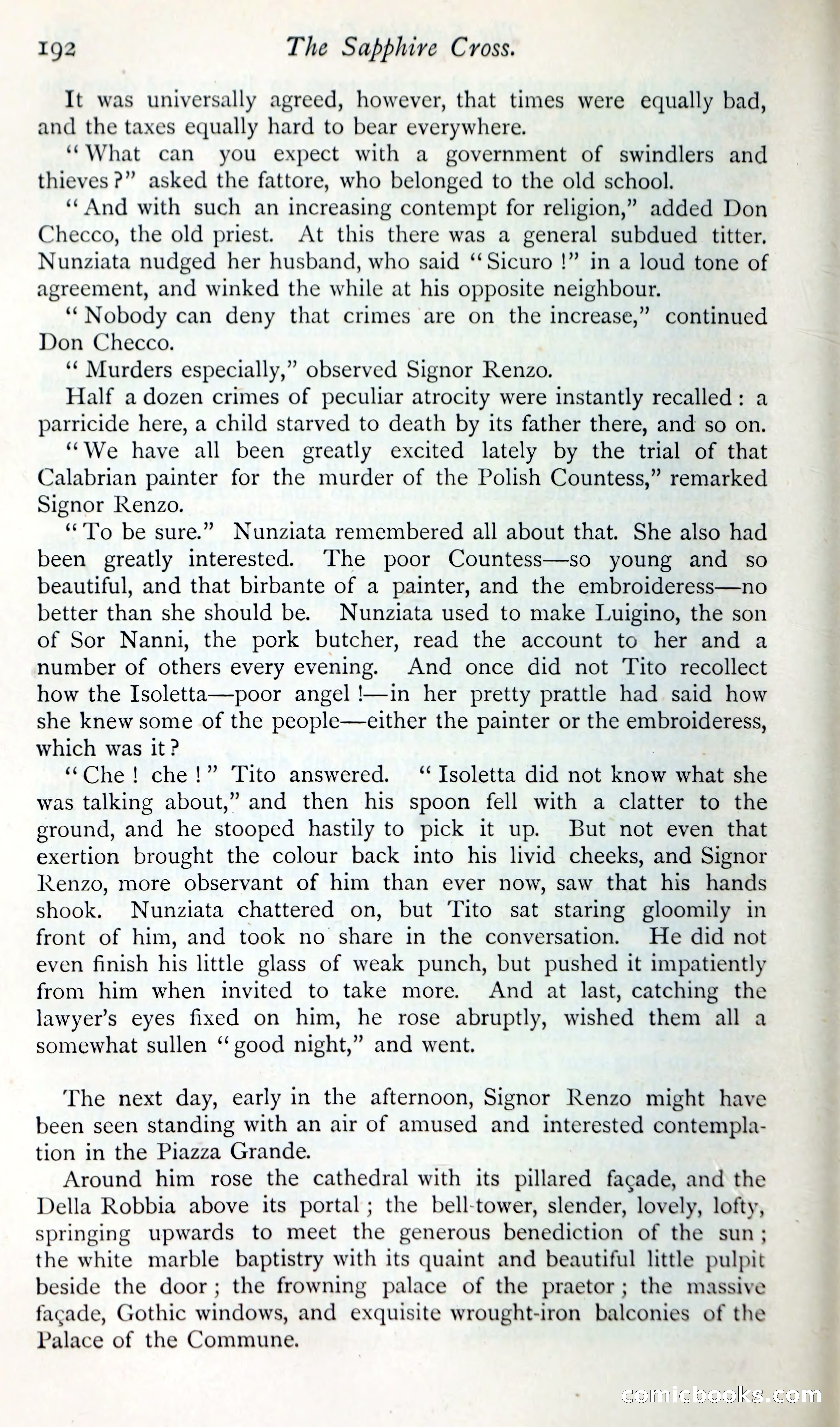
A restored page from Pulp Fiction, 1865. Page through the whole issue in the reader above.
📄 Transcribed text from this page (OCR, searchable)
Machine-transcribed from the original scan — historical spelling and the odd misread are preserved.
192 The Sapphire Cross. It was universally agreed, however, that times were equally bad, and the taxes equally hard to bear everywhere. “What can you expect with a government of swindlers and thieves P” asked the fattore, who belonged to the old school. ‘‘And with such an increasing contempt for religion,” added Don Checco, the old priest. At this there was a general subdued titter, Nunziata nudged her husband, who said ‘‘Sicuro !” in a loud tone of agreement, and winked the while at his opposite neighbour. ‘““ Nobody can deny that crimes are on the increase,” continued Don Checco. ‘‘ Murders especially,” observed Signor Renzo. Half a dozen crimes of peculiar atrocity were instantly recalled: a parricide here, a child starved to death by its father there, and so on. “We have all been greatly excited lately by the trial of that Calabrian painter for the murder of the Polish Countess,” remarked Signor Renzo. “To be sure.” Nunziata remembered all about that. She also had been greatly interested. ‘The poor Countess—so young and so beautiful, and that birbante of a painter, and the embroideress—no better than she should be. Nunziata used to make Luigino, the son of Sor Nanni, the pork butcher, read the account to her and a number of others every evening. And once did not Tito recollect how the Isoletta—poor angel !—in her pretty prattle had said how she knew some of the people—either the painter or the embroideress, which was it? ) | “Che! che!” Tito answered. ‘“ Isoletta did not know what she was talking about,” and then his spoon fell with a clatter to the ground, and he stooped hastily to pick it up. But not even that exertion brought the colour back into his livid cheeks, and Signor Renzo, more observant of him than ever now, saw that his hands shook. Nunziata chattered on, but Tito sat staring gloomily in front of him, and took no share in the conversation. He did not even finish his little glass of weak punch, but pushed it impatiently from him when invited to take more. And at last, catching the lawyer’s eyes fixed on him, he rose abruptly, wished them all a somewhat sullen ‘ good night,” and went. The next day, early in the afternoon, Signor Renzo might have been seen standing with an air of amused and interested contempla- tion in the Piazza Grande. Around him rose the cathedral with its pillared facade, and the Della Robbia above its portal; the bell-tower, slender, lovely, lofty, springing upwards to meet the generous benediction of the sun; the white marble baptistry with its quaint and beautiful little pulpit beside the door; the frowning palace of the praetor; the massive facade, Gothic windows, and exquisite wrought-iron balconies of the Palace of the Commune. ECORNIE OO KS (E(@)