
Pulp Fiction, 1865 · page 206 of 400
The Argosy — page 206: what you’re looking at
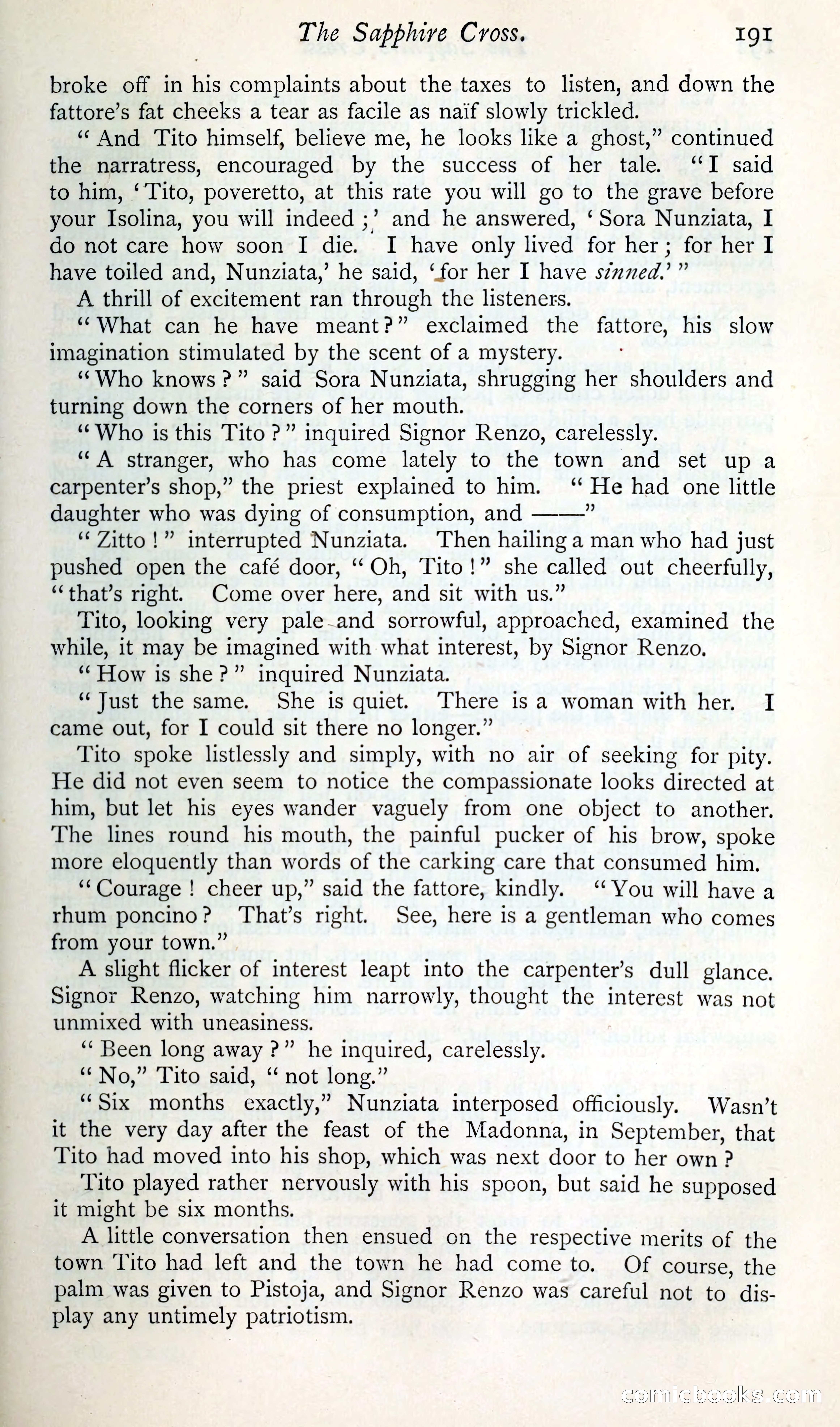
A restored page from Pulp Fiction, 1865. Page through the whole issue in the reader above.
📄 Transcribed text from this page (OCR, searchable)
Machine-transcribed from the original scan — historical spelling and the odd misread are preserved.
The Sapphire Cross. IQI broke off in his complaints about the taxes to listen, and down the fattore’s fat cheeks a tear as facile as naif slowly trickled. “And Tito himself, believe me, he looks like a ghost,” continued the narratress, encouraged by the success of her tale. “I said to him, ‘Tito, poveretto, at this rate you will go to the grave before your Isolina, you will indeed ;’ and he answered, ‘Sora Nunziata, I do not care how soon I die. I have only lived for her; for her I have toiled and, Nunziata,’ he said, ‘for her I have sznmned.’” A thrill of excitement ran through the listeners. ‘What can he have meant?” exclaimed the fattore, his slow imagination stimulated by the scent of a mystery. “Who knows?” said Sora Nunziata, shrugging her shoulders and turning down the corners of her mouth. ‘Who is this Tito ?” inquired Signor Renzo, carelessly. ““A stranger, who has come lately to the town and set up a carpenter’s shop,” the priest explained to him. ‘‘ He had one little daughter who was dying of consumption, and ———” “Zitto!” interrupted Nunziata. Then hailing a man who had just pushed open the café door, ‘“‘Oh, Tito!” she called out cheerfully, “that’s right. Come over here, and sit with us.” Tito, looking very pale-and sorrowful, approached, examined the while, it may be imagined with what interest, by Signor Renzo. “ How is she?” inquired Nunziata. “Just the same. She is quiet. There isa woman with her. I came out, for I could sit there no longer.” Tito spoke listlessly and simply, with no air of seeking for pity. He did not even seem to notice the compassionate looks directed at him, but let his eyes wander vaguely from one object to another. The lines round his mouth, the painful pucker of his brow, spoke more eloquently than words of the carking care that consumed him. ‘“‘Courage ! cheer up,” said the fattore, kindly. ‘You will have a rhum poncino? ‘That’s right. See, here is a gentleman who comes from your town.” A slight flicker of interest leapt into the carpenter’s dull glance. Signor Renzo, watching him narrowly, thought the interest was not unmixed with uneasiness. ‘““ Been long away ?” he inquired, carelessly. “No,” Tito said, “ not long.” “Six months exactly,” Nunziata interposed officiously. Wasn’t it the very day after the feast of the Madonna, in September, that Tito had moved into his shop, which was next door to her own? Tito played rather nervously with his spoon, but said he supposed it might be six months. A little conversation then ensued on the respective merits of the town Tito had left and the town he had come to. Of course, the palm was given to Pistoja, and Signor Renzo was careful not to dis- play any untimely patriotism. ECONNICOOKS.E® mn