
Pulp Fiction, 1865 · page 204 of 400
The Argosy — page 204: what you’re looking at
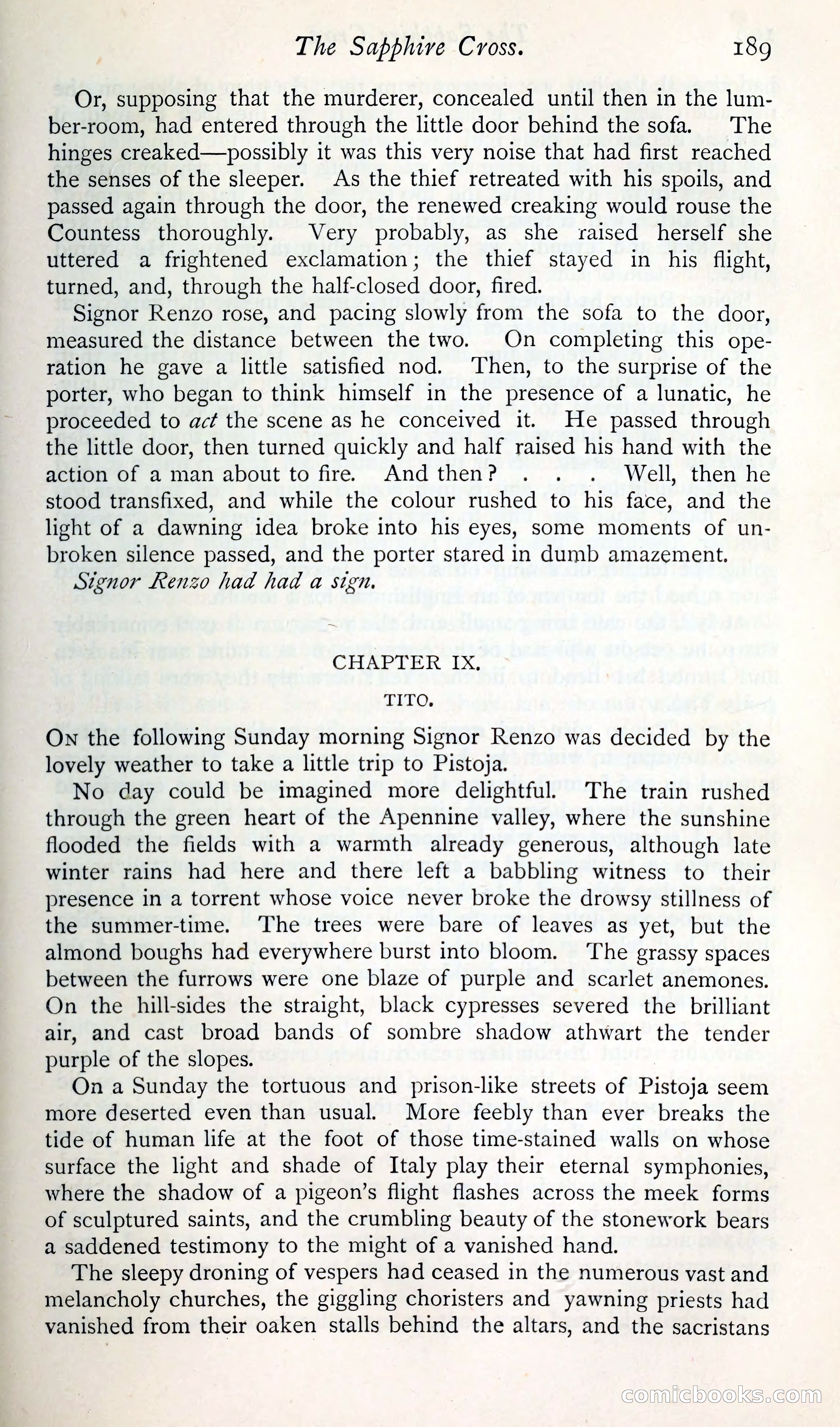
A restored page from Pulp Fiction, 1865. Page through the whole issue in the reader above.
📄 Transcribed text from this page (OCR, searchable)
Machine-transcribed from the original scan — historical spelling and the odd misread are preserved.
The Sapphire Cross. 189 Or, supposing that the murderer, concealed until then in the lum- ber-room, had entered through the little door behind the sofa. The hinges creaked—possibly it was this very noise that had first reached the senses of the sleeper. As the thief retreated with his spoils, and passed again through the door, the renewed creaking would rouse the Countess thoroughly. Very probably, as she raised herself she uttered a frightened exclamation; the thief stayed in his flight, turned, and, through the half-closed door, fired. Signor Renzo rose, and pacing slowly from the sofa to the door, measured the distance between the two. On completing this ope- ration he gave a little satisfied nod. ‘Then, to the surprise of the porter, who began to think himself in the presence of a lunatic, he proceeded to act the scene as he conceived it. He passed through the little door, then turned quickly and half raised his hand with the action Of a man about to fire Andthene . . . Well, then he stood transfixed, and while the colour rushed to his face, and the light of a dawning idea broke into his eyes, some moments of un- broken silence passed, and the porter stared in dumb amazement. Stenor Renzo had had a sign. CHAPTER IX, TITO. On the following Sunday morning Signor Renzo was decided by the lovely weather to take a little trip to Pistoja. No day could be imagined more delightful. The train rushed through the green heart of the Apennine valley, where the sunshine flooded the fields with a warmth already generous, although late winter rains had here and there left a babbling witness to their presence in a torrent whose voice never broke the drowsy stillness of the summer-time. The trees were bare of leaves as yet, but the almond boughs had everywhere burst into bloom. ‘The grassy spaces between the furrows were one blaze of purple and scarlet anemones. On the hill-sides the straight, black cypresses severed the brilliant air, and cast broad bands of sombre shadow athwart the tender purple of the slopes. On a Sunday the tortuous and prison-like streets of Pistoja seem more deserted even than usual. More feebly than ever breaks the tide of human life at the foot of those time-stained walls on whose surface the light and shade of Italy play their eternal symphonies, where the shadow of a pigeon’s flight flashes across the meek forms of sculptured saints, and the crumbling beauty of the stonework bears a saddened testimony to the might of a vanished hand. The sleepy droning of vespers had ceased in the numerous vast and melancholy churches, the giggling choristers and yawning priests had vanished from their oaken stalls behind the altars, and the sacristans CoOnniclooolks (9) (C©)