
Pulp Fiction, 1865 · page 156 of 400
The Argosy — page 156: what you’re looking at
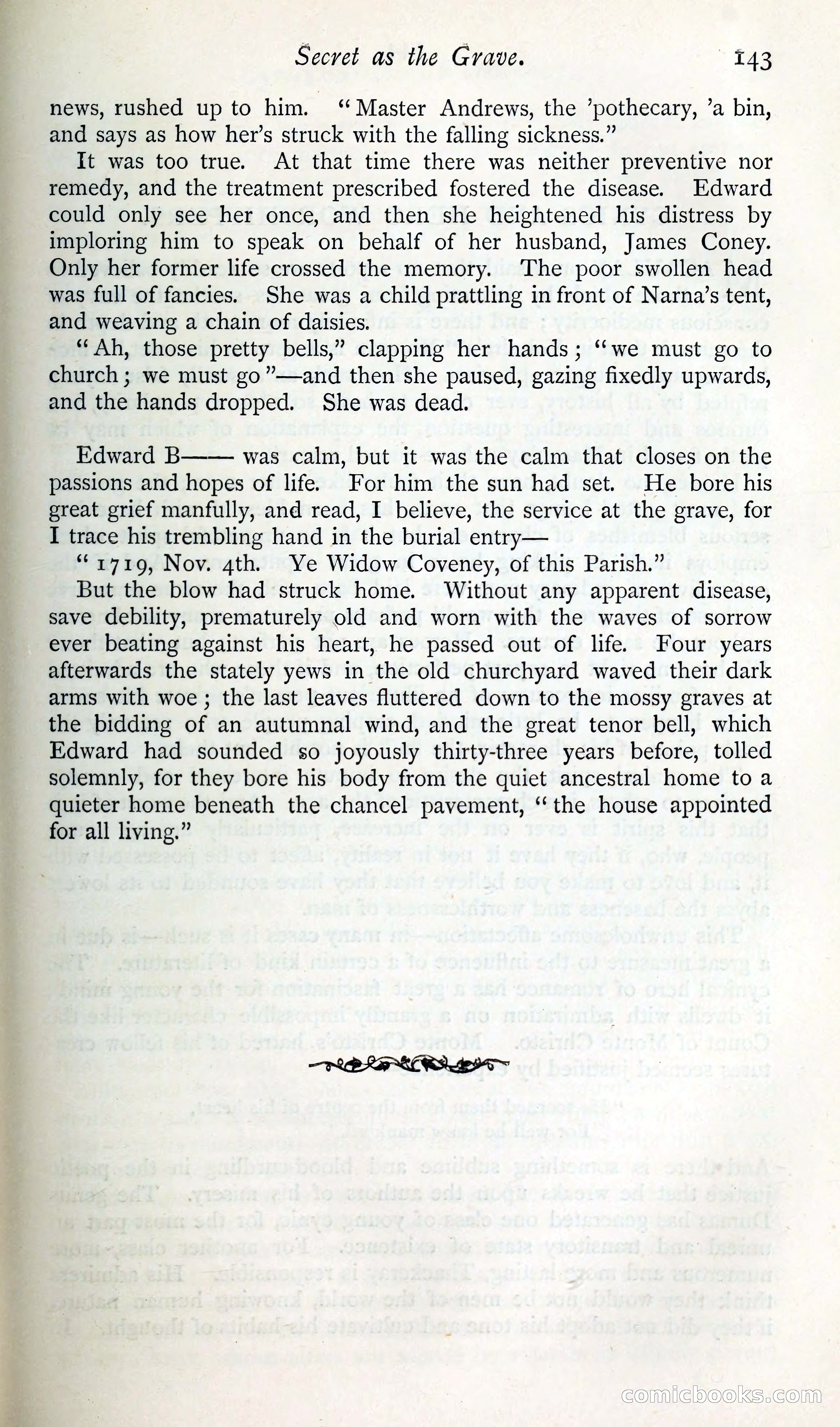
A restored page from Pulp Fiction, 1865. Page through the whole issue in the reader above.
📄 Transcribed text from this page (OCR, searchable)
Machine-transcribed from the original scan — historical spelling and the odd misread are preserved.
Secret as the Grave. 143 news, rushed up to him. ‘ Master Andrews, the ’pothecary, ’a bin, and says as how her’s struck with the falling sickness.” It was too true. At that time there was neither preventive nor remedy, and the treatment prescribed fostered the disease. Edward could only see her once, and then she heightened his distress by imploring him to speak on behalf of her husband, James Coney. Only her former life crossed the memory. ‘The poor swollen head was full of fancies. She was a child prattling in front of Narna’s tent, and weaving a chain of daisies. ““Ah, those pretty bells,” clapping her hands; “‘we must go to church ; we must go”—and then she paused, gazing fixedly upwards, and the hands dropped. She was dead. Edward B—— was calm, but it was the calm that closes on the passions and hopes of life. For him the sun had set. He bore his great grief manfully, and read, I believe, the service at the grave, for I trace his trembling hand in the burial entry— “1719, Nov. 4th. Ye Widow Coveney, of this Parish.” But the blow had struck home. Without any apparent disease, save debility, prematurely old and worn with the waves of sorrow ever beating against his heart, he passed out of life. Four years afterwards the stately yews in the old churchyard waved their dark arms with woe; the last leaves fluttered down to the mossy graves at the bidding of an autumnal wind, and the great tenor bell, which Edward had sounded so joyously thirty-three years before, tolled solemnly, for they bore his body from the quiet ancestral home toa quieter home beneath the chancel pavement, ‘the house appointed for all living.” Conniclooolkks (CO)