
Pulp Fiction, 1865 · page 140 of 400
The Argosy — page 140: what you’re looking at
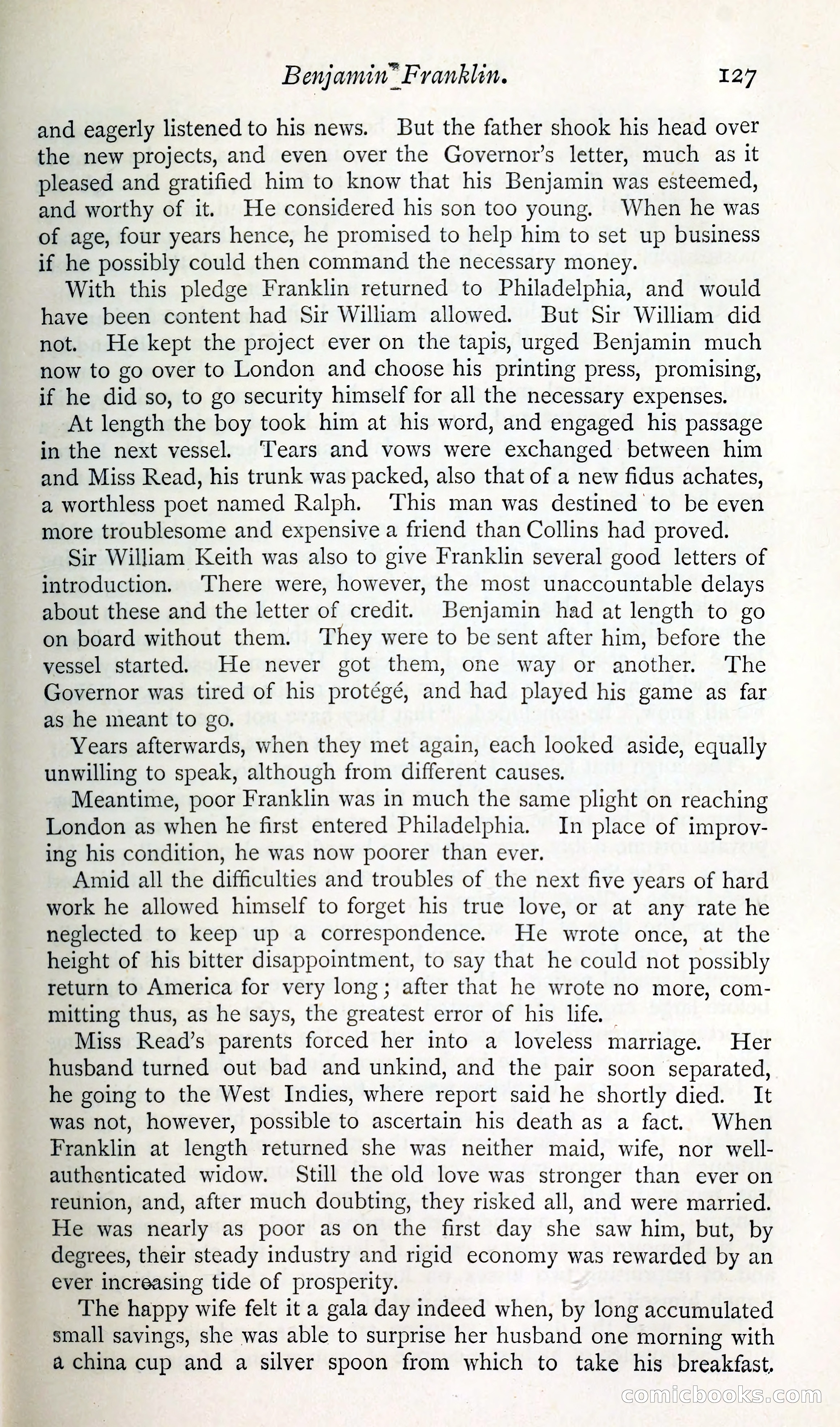
A restored page from Pulp Fiction, 1865. Page through the whole issue in the reader above.
📄 Transcribed text from this page (OCR, searchable)
Machine-transcribed from the original scan — historical spelling and the odd misread are preserved.
Benjamin” Franklin. 127 and eagerly listened to his news. But the father shook his head over the new projects, and even over the Governor’s letter, much as it pleased and gratified him to know that his Benjamin was esteemed, and worthy of it. He considered his son too young. When he was of age, four years hence, he promised to help him to set up business if he possibly could then command the necessary money. With this pledge Franklin returned to Philadelphia, and would have been content had Sir William allowed. But Sir William did not. He kept the project ever on the tapis, urged Benjamin much now to go over to London and choose his printing press, promising, if he did so, to go security himself for all the necessary expenses. At length the boy took him at his word, and engaged his passage in the next vessel. ‘Tears and vows were exchanged between him and Miss Read, his trunk was packed, also that of a new fidus achates, a worthless poet named Ralph. ‘This man was destined to be even more troublesome and expensive a friend than Collins had proved. Sir William Keith was also to give Franklin several good letters of introduction. There were, however, the most unaccountable delays about these and the letter of credit. Benjamin had at length to go on board without them. ‘They were to be sent after him, before the vessel started. He never got them, one way or another. The Governor was tired of his protégé, and had played his game as far as he meant to go. Years afterwards, when they met again, each looked aside, equally unwilling to speak, although from different causes. Meantime, poor Franklin was in much the same plight on reaching London as when he first entered Philadelphia. In place of improy- ing his condition, he was now poorer than ever. Amid all the difficulties and troubles of the next five years of hard work he allowed himself to forget his true love, or at any rate he neglected to keep up a correspondence. He wrote once, at the height of his bitter disappointment, to say that he could not possibly return to America for very long; after that he wrote no more, com- mitting thus, as he says, the greatest error of his life. ~ Miss Read’s parents forced her into a loveless marriage. Her husband turned out bad and unkind, and the pair soon separated, he going to the West Indies, where report said he shortly died. It was not, however, possible to ascertain his death as a fact. When Franklin at length returned she was neither maid, wife, nor well- authenticated widow. Still the old love was stronger than ever on reunion, and, after much doubting, they risked all, and were married. He was nearly as poor as on the first day she saw him, but, by degrees, their steady industry and rigid economy was rewarded by an ever increasing tide of prosperity. The happy wife felt ita gala day indeed when, by long accumulated small savings, she was able to surprise her husband one morning with a china cup and a silver spoon from which to take his breakfast, CONnNICLOOOKS.EO