
Pulp Fiction, 1865 · page 138 of 400
The Argosy — page 138: what you’re looking at
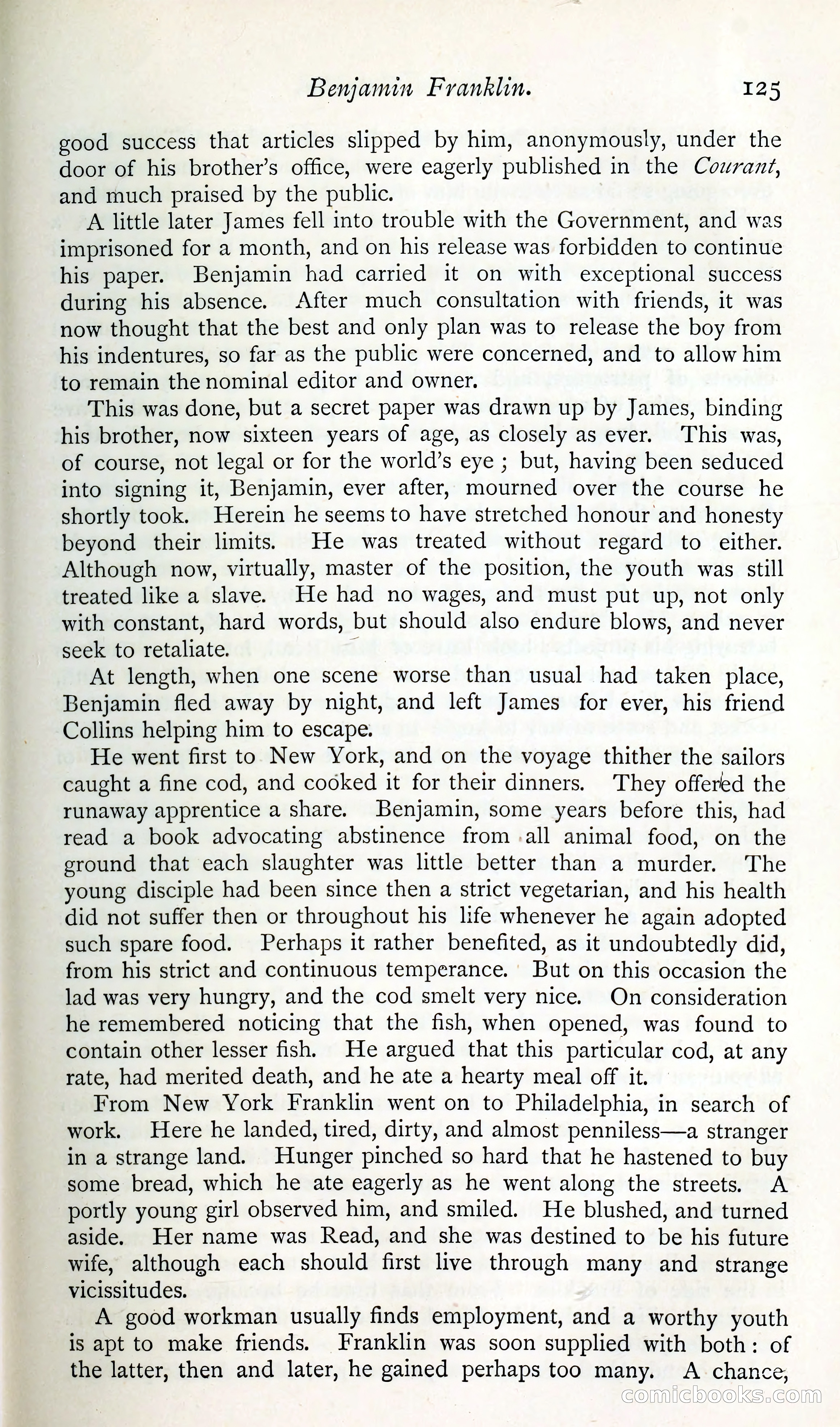
A restored page from Pulp Fiction, 1865. Page through the whole issue in the reader above.
📄 Transcribed text from this page (OCR, searchable)
Machine-transcribed from the original scan — historical spelling and the odd misread are preserved.
Benjamin Franklin. 125 good success that articles slipped by him, anonymously, under the door of his brother’s office, were eagerly published in the Courant, and much praised by the public. A little later James fell into trouble with the Government, and was imprisoned for a month, and on his release was forbidden to continue his paper. Benjamin had carried it on with exceptional success during his absence. After much consultation with friends, it was now thought that the best and only plan was to release the boy from his indentures, so far as the public were concerned, and to allow him to remain the nominal editor and owner. This was done, but a secret paper was drawn up by James, binding his brother, now sixteen years of age, as closely as ever. This was, of course, not legal or for the world’s eye ; but, having been seduced into signing it, Benjamin, ever after, mourned over the course he shortly took. Herein he seems to have stretched honour and honesty beyond their limits.) He was treated without regard to either. Although now, virtually, master of the position, the youth was still treated like a slave. He had no wages, and must put up, not only with constant, hard words, but should also endure blows, and never seek to retaliate. Ait. At length, when one scene worse than usual had taken place, Benjamin fled away by night, and left James for ever, his friend Collins helping him to escape. He went first to New York, and on the voyage thither the sailors caught a fine cod, and cooked it for their dinners. They offered the runaway apprentice a share. Benjamin, some years before this, had read a book advocating abstinence from -all animal food, on the eround that each slaughter was little better than a murder. The young disciple had been since then a strict vegetarian, and his health did not suffer then or throughout his life whenever he again adopted such spare food. Perhaps it rather benefited, as it undoubtedly did, from his strict and continuous temperance. But on this occasion the lad was very hungry, and the cod smelt very nice. On consideration he remembered noticing that the fish, when opened, was found to contain other lesser fish. He argued that this particular cod, at any rate, had merited death, and he ate a hearty meal off it. From New York Franklin went on to Philadelphia, in search of work. Here he landed, tired, dirty, and almost penniless—a stranger in a strange land. Hunger pinched so hard that he hastened to buy some bread, which he ate eagerly as he went along the streets. A portly young girl observed him, and smiled. He blushed, and turned aside. Her name was Read, and she was destined to be his future wife, although each should first live through many and strange vicissitudes. A good workman usually finds employment, and a worthy youth is apt to make friends. Franklin was soon supplied with both: of the latter, then and later, he gained perhaps too many. A chance, CONnNICOOOKS. EO