
Pulp Fiction, 1865 · page 103 of 400
The Argosy — page 103: what you’re looking at
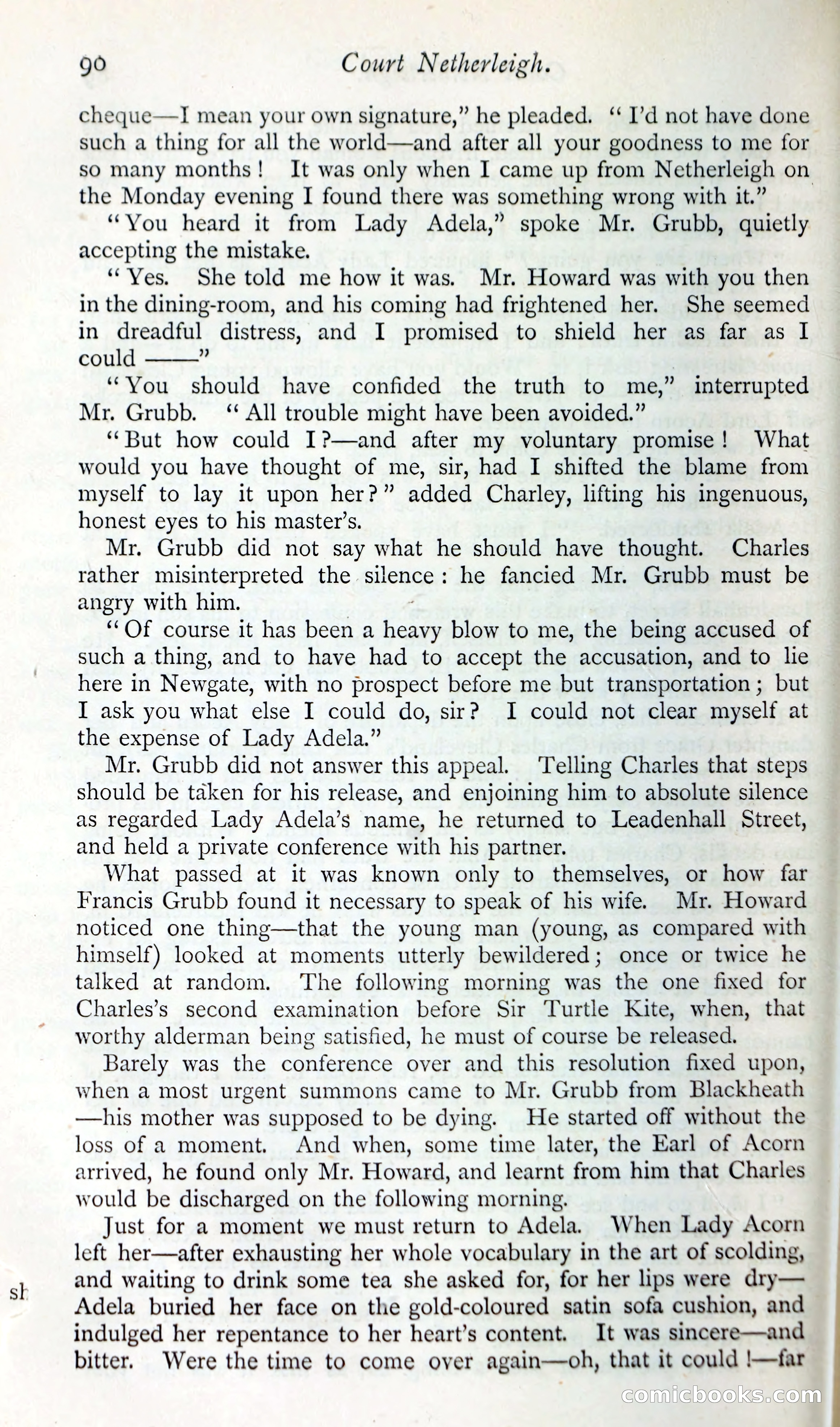
A restored page from Pulp Fiction, 1865. Page through the whole issue in the reader above.
📄 Transcribed text from this page (OCR, searchable)
Machine-transcribed from the original scan — historical spelling and the odd misread are preserved.
90 Court Netherleigh. cheque—I mean your own signature,” he pleaded. ‘‘ I’d not have done such a thing for all the world—and after all your goodness to me for so many months! It was only when I came up from Netherleigh on the Monday evening I found there was something wrong with it.” “You heard it from Lady Adela,” spoke Mr. Grubb, quietly accepting the mistake. “Yes. She told me how it was. Mr. Howard was with you then in the dining-room, and his coming had frightened her. She seemed in dreadful distress, and I promised to shield her as far as I could ¥ “You should have confided the truth to me,” aE Mr. Grubb. ‘ All trouble might have been avoided.” ‘But how could I?—and after my voluntary promise! What would you have thought of me, sir, had I shifted the blame from myself to lay it upon her?” added Charley, lifting his ingenuous, honest eyes to his master’s. Mr. Grubb did not say what he should have thought. Charles rather misinterpreted the silence: he fancied Mr. Grubb must be angry with him. ‘Of course it has been a band blow to me, the being accused of such a thing, and to have had to accept the accusation, and to lie here in Newgate, with no prospect before me but transportation ; but I ask you what else I could do, sir? I could not clear myself at the expense of Lady Adela.” Mr. Grubb did not answer this appeal. ‘Telling Charles that steps should be taken for his release, and enjoining him to absolute silence as regarded Lady Adela’s name, he returned to Leadenhall Street, and held a private conference with his partner. What passed at it was known only to themselves, or how far Francis Grubb found it necessary to speak of his wife. Mr. Howard noticed one thing—that the young man (young, as compared with himself) looked at moments utterly bewildered; once or twice he talked at random. ‘The following morning was the one fixed for Charles’s second examination before Sir Turtle Kite, when, that worthy alderman being satisfied, he must of course be released. Barely was the conference over and this resolution fixed upon, when a most urgent summons came to Mr. Grubb from Blackheath —his mother was supposed to be dying. He started off without the loss of a moment. And when, some time later, the Earl of Acorn arrived, he found only Mr. Howard, and learnt from him that Charles would be discharged on the following morning. Just for a moment we must return to Adela. When Lady Acorn left her—after exhausting her whole vocabulary in the art of scolding, and waiting to drink some tea she asked for, for her lips were dry— Adela buried her face on the gold-coloured satin sofa cushion, and indulged her repentance to her heart’s content. It was sincere—and bitter. Were the time to come over again—oh, that it could !—far COPMIEMOOOKS OL g)