
Pulp Fiction, 1865 · page 266 of 400
The Argosy — page 266: what you’re looking at
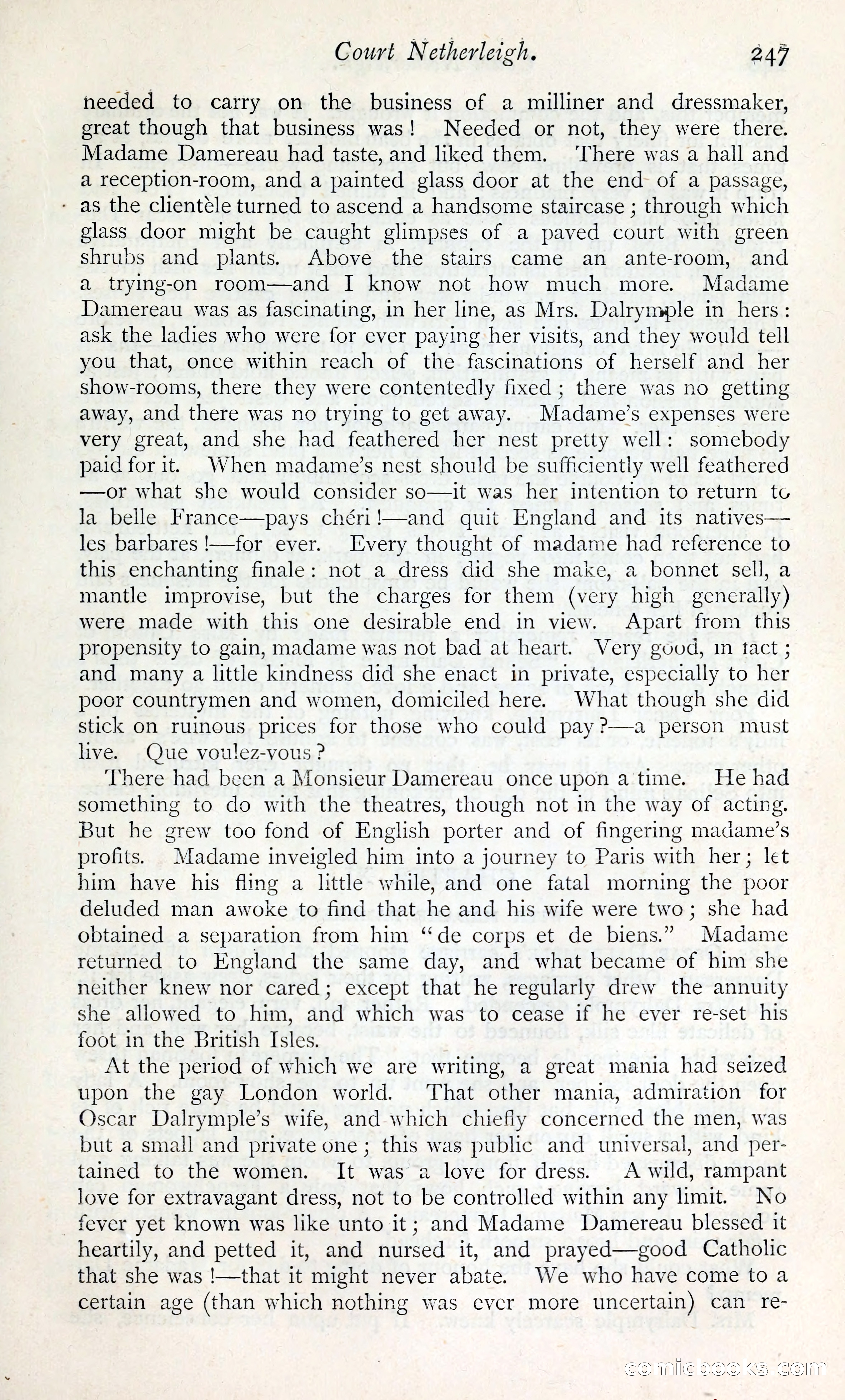
A restored page from Pulp Fiction, 1865. Page through the whole issue in the reader above.
📄 Transcribed text from this page (OCR, searchable)
Machine-transcribed from the original scan — historical spelling and the odd misread are preserved.
Court Netherleigh. 247 heeded to carry on the business of a milliner and dressmaker, great though that business was! Needed or not, they were there. Madame Damereau had taste, and liked them. ‘There was a hall and a reception-room, and a painted glass door at the end of a passage, - as the clientele turned to ascend a handsome staircase ; through which glass door might be caught glimpses of a paved court with green shrubs and plants. Above the stairs came an ante-room, and a trying-on room—and I know not how much more. Madame Damereau was as fascinating, in her line, as Mrs. Dalrymple in hers: ask the ladies who were for ever paying her visits, and they would tell you that, once within reach of the fascinations of herself and her show-rooms, there they were contentedly fixed; there was no getting away, and there was no trying to get away. Madame’s expenses were very great, and she had feathered her nest pretty well: somebody paid for it. When madame’s nest should be sufficiently well feathered —or what she would consider so—it was her intention to return to la belle France—pays chéri!—and quit England and its natives— les barbares !—for ever. Every thought of madame had reference to this enchanting finale: not a dress did she make, a bonnet sell, a mantle improvise, but the charges for them (very high generally) were made with this one desirable end in view. Apart from this propensity to gain, madame was not bad at heart. Very good, 1n tact ; and many a little kindness did she enact in private, especially to her poor countrymen and women, domiciled here. What though she did stick on ruinous prices for those who could pay ?—a person must live. Que voulez-vous ? There had been a Monsieur Damereau once upon a time. He had something to do with the theatres, though not in the way of acting. But he grew too fond of English porter and of fingering madame’s profits. Madame inveigled him into a journey to Paris with her; let him have his fling a lttle while, and one fatal morning the poor deluded man awoke to find that he and his wife were two; sne had obtained a separation from him ‘‘de corps et de biens.” Madame returned to England the same day, and what became of him she neither knew nor cared; except that he regularly drew the annuity she allowed to him, and which was to cease if he ever re-set his foot in the British Isles. At the period of which we are writing, a great mania had seized upon the gay London world. That other mania, admiration for Oscar Dalrymple’s wife, and which chiefiy concerned the men, was but a small and private one; this was public and untversal, and per- tained to the women. It was a love for dress. A wild, rampant love for extravagant dress, not to be controlled within any limit. No _ fever yet known was like unto it; and Madame Damereau blessed it heartily, and petted it, and nursed it, and prayed—good Catholic that she was !—that it might never abate. We who have come toa certain age (than which nothing was ever more uncertain) can re- CORnNICOOOKS. EO im