
Pulp Fiction, 1865 · page 263 of 400
The Argosy — page 263: what you’re looking at
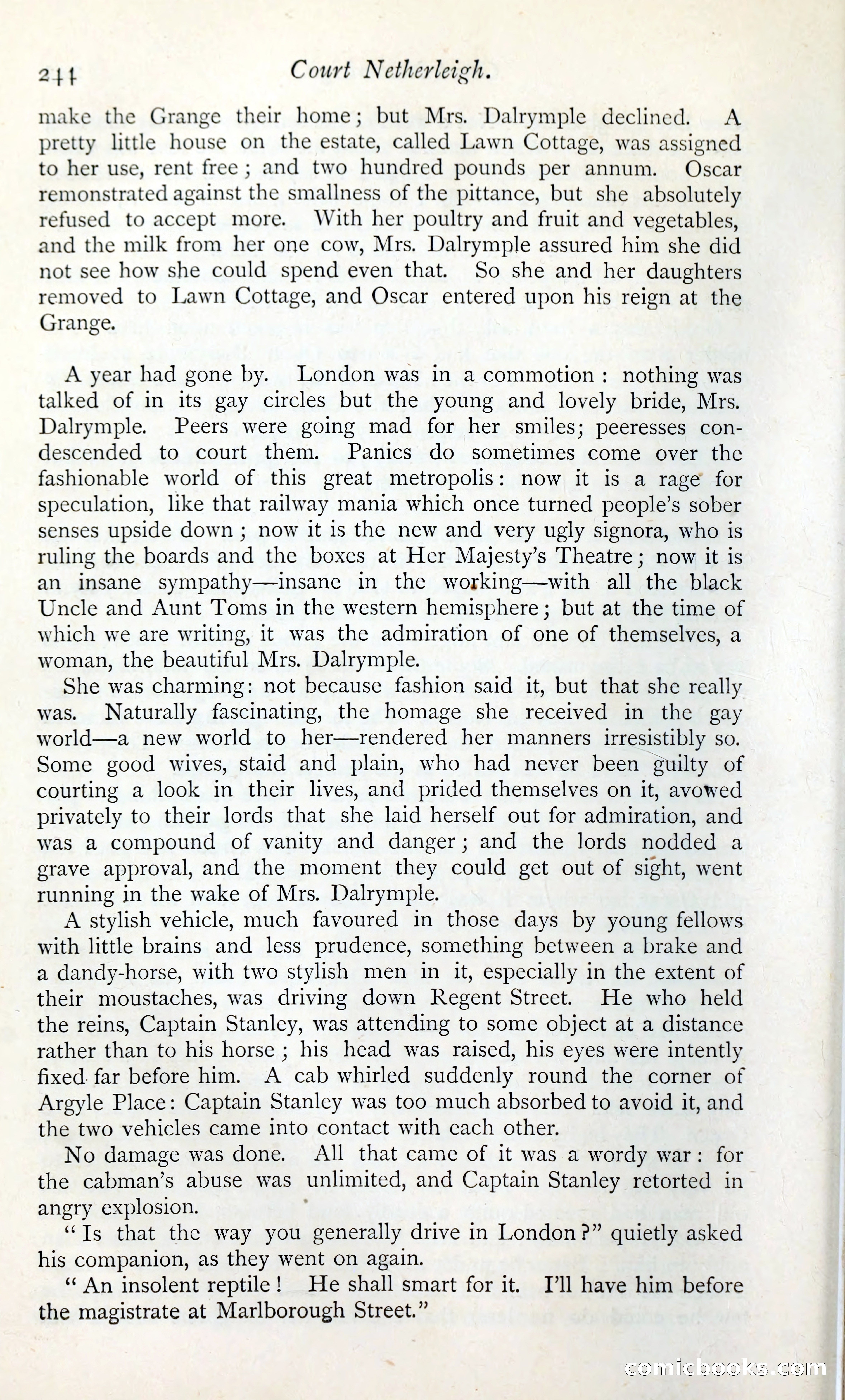
A restored page from Pulp Fiction, 1865. Page through the whole issue in the reader above.
📄 Transcribed text from this page (OCR, searchable)
Machine-transcribed from the original scan — historical spelling and the odd misread are preserved.
244 Court Netherleigh. make the Grange their home; but Mrs. Dalrymple declined. <A pretty little house on the estate, called Lawn Cottage, was assigned to her use, rent free; and two hundred pounds per annum. Oscar remonstrated against the smallness of the pittance, but she absolutely refused to accept more. With her poultry and fruit and vegetables, and the milk from her one cow, Mrs. Dalrymple assured him she did not see how she could spend even that. So she and her daughters removed to Lawn Cottage, and Oscar entered upon his reign at the Grange. A year had gone by. London was in a commotion: nothing was talked of in its gay circles but the young and lovely bride, Mrs. Dalrymple. Peers were going mad for her smiles; peeresses con- descended to court them. Panics do sometimes come over the fashionable world of this great metropolis: now it is a rage for speculation, like that railway mania which once turned people’s sober senses upside down ; now it 1s the new and very ugly signora, who is ruling the boards and the boxes at Her Majesty’s Theatre; now it is an insane sympathy—insane in the working—with all the black Uncle and Aunt Toms in the western hemisphere; but at the time of which we are writing, it was the admiration of one of themselves, a woman, the beautiful Mrs. Dalrymple. She was charming: not because fashion said it, but that she really was. Naturally fascinating, the homage she received in the gay world—a new world to her—rendered her manners irresistibly so. Some good wives, staid and plain, who had never been guilty of courting a look in their lives, and prided themselves on it, avowed privately to their lords that she laid herself out for admiration, and was a compound of vanity and danger; and the lords nodded a erave approval, and the moment they could get out of sight, went running in the wake of Mrs. Dalrymple. A stylish vehicle, much favoured in those days by young fellows with little brains and less prudence, something between a brake and a dandy-horse, with two stylish men in it, especially in the extent of their moustaches, was driving down Regent Street. He who held the reins, Captain Stanley, was attending to some object at a distance rather than to his horse ; his head was raised, his eyes were intently fixed far before him. A cab whirled suddenly round the corner of Argyle Place: Captain Stanley was too much absorbed to avoid it, and the two vehicles came into contact with each other. No damage was done. All that came of it was a wordy war: for the cabman’s abuse was unlimited, and Captain Stanley retorted in angry explosion. “Ts that the way you generally drive in London?” quietly asked his companion, as they went on again. ‘An insolent reptile! He shall smart for it. I’ll have him before the magistrate at Marlborough Street.” EORNIELOOO SS (©) m