
Pulp Fiction, 1865 · page 121 of 400
The Argosy — page 121: what you’re looking at
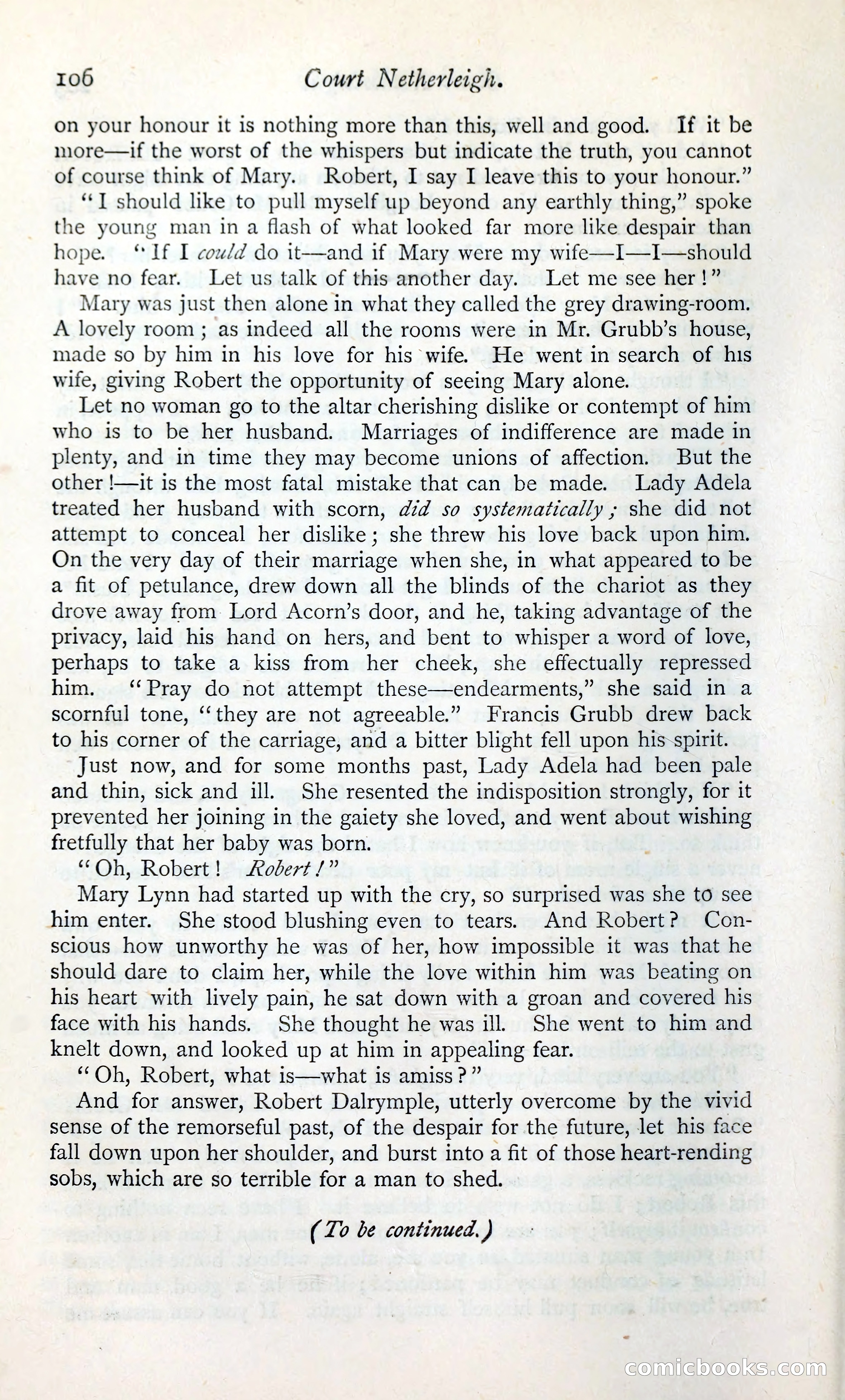
A restored page from Pulp Fiction, 1865. Page through the whole issue in the reader above.
📄 Transcribed text from this page (OCR, searchable)
Machine-transcribed from the original scan — historical spelling and the odd misread are preserved.
106 Court Netherleigh. on your honour it is nothing more than this, well and good. If it be more—if the worst of the whispers but indicate the truth, you cannot of course think of Mary. Robert, I say I leave this to your honour.” “T should like to pull myself up beyond any earthly thing,” spoke the young man in a flash of what looked far more like despair than hope. ‘If I cou/d do it-—and if Mary were my wife—I—I—should have no fear. Let us talk of this another day. Let me see her!” Mary was just then alone in what they called the grey drawing-room. A lovely room ; as indeed all the rooms were in Mr. Grubb’s house, made so by him in his love for his wife. He went in search of his wife, giving Robert the opportunity of seeing Mary alone. Let no woman go to the altar cherishing dislike or contempt of him who is to be her husband. Marriages of indifference are made in plenty, and in time they may become unions of affection. But the other !—it is the most fatal mistake that can be made. Lady Adela treated her husband with scorn, did so systematically ; she did not attempt to conceal her dislike; she threw his love back upon him. On the very day of their marriage when she, in what appeared to be a fit of petulance, drew down all the blinds of the chariot as they drove away from. Lord Acorn’s door, and he, taking advantage of the privacy, laid his hand on hers, and bent to whisper a word of love, perhaps to take a kiss from her cheek, she effectually repressed him. ‘‘Pray do not attempt these—endearments,” she said in a scornful tone, “‘they are not agreeable.” Francis Grubb drew back to his corner of the carriage, and a bitter blight fell upon his-spirit. Just now, and for some months past, Lady Adela had been pale and thin, sick and ill. She resented the indisposition strongly, for it prevented her joining in the gaiety she loved, and went about wishing fretfully that her baby was born. “Oh, Robert! Robert /” Mary Lynn had started up with the cry, so surprised was she to see him enter. She stood blushing even to tears. And Robert? Con- sclous how unworthy he was of her, how impossible it was that he should dare to claim her, while the love within him was beating on his heart with lively pain, he sat down with a groan and covered his face with his hands. She thought he was ill. She went to him and knelt down, and looked up at him in appealing fear. “Oh, Robert, what is—what is amiss ?” And for answer, Robert Dalrymple, utterly overcome by the vivid sense of the remorseful past, of the despair for the future, let his face fall down upon her shoulder, and burst into a fit of those heart-rending sobs, which are so terrible for a man to shed. (Zo be continued. ) EONMIELNOOLKS (C(O) mM