
Pulp Fiction, 1865 · page 296 of 400
The Argosy — page 296: what you’re looking at
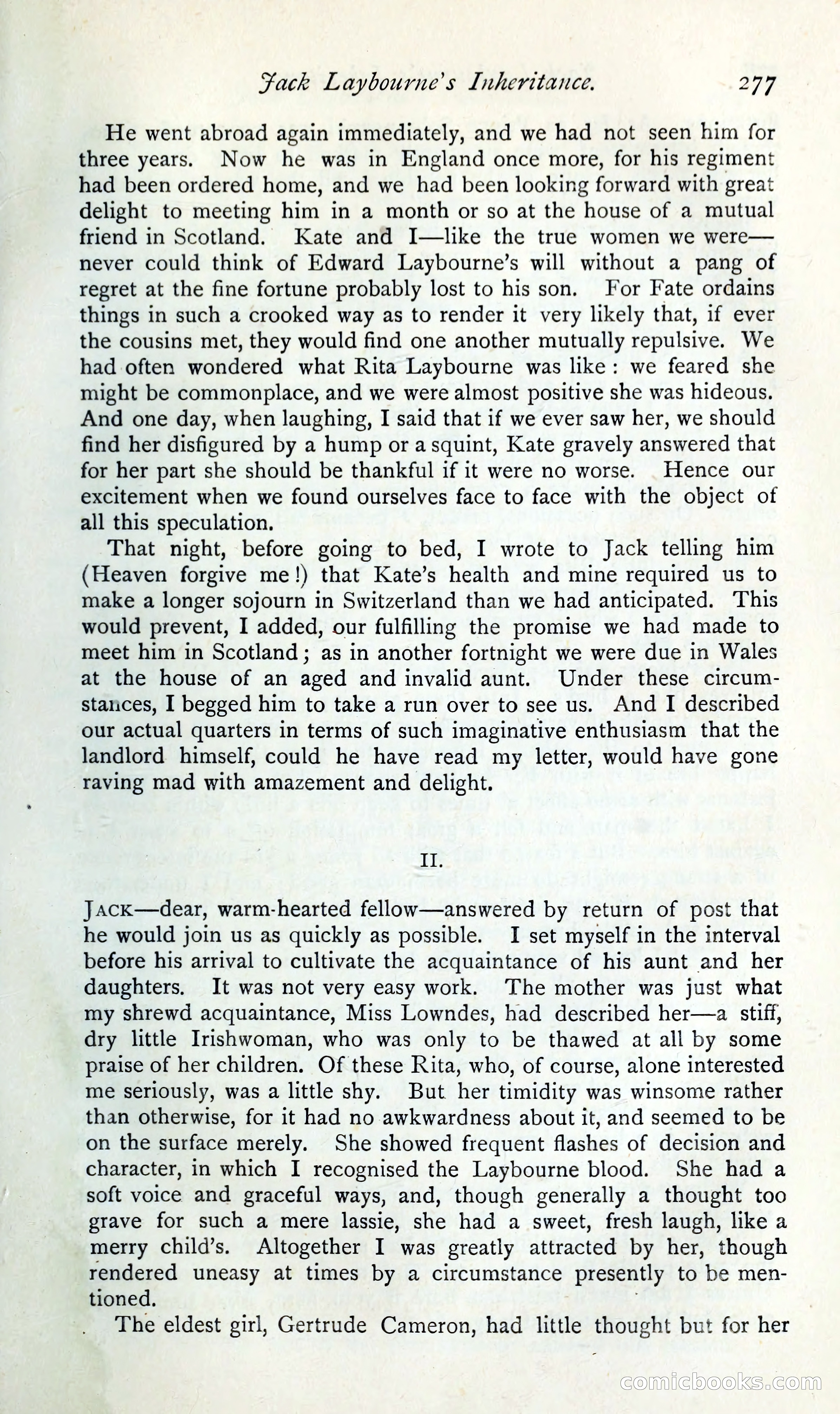
A restored page from Pulp Fiction, 1865. Page through the whole issue in the reader above.
📄 Transcribed text from this page (OCR, searchable)
Machine-transcribed from the original scan — historical spelling and the odd misread are preserved.
Sack Laybourne’s Inheritance. 277 He went abroad again immediately, and we had not seen him for three years. Now he was in England once more, for his regiment had been ordered home, and we had been looking forward with great delight to meeting him in a month or so at the house of a mutual friend in Scotland. Kate and I—lke the true women we were— never could think of Edward Laybourne’s will without a pang of regret at the fine fortune probably lost to his son. For Fate ordains things in such a crooked way as to render it very likely that, if ever the cousins met, they would find one another mutually repulsive. We had often wondered what Rita Laybourne was like: we feared she might be commonplace, and we were almost positive she was hideous. And one day, when laughing, I said that if we ever saw her, we should find her disfigured by a hump or asquint, Kate gravely answered that for her part she should be thankful if it were no worse. Hence our excitement when we found ourselves face to face with the object of all this speculation. That night, before going to bed, I wrote to Jack telling him (Heaven forgive me!) that Kate’s health and mine required us to make a longer sojourn in Switzerland than we had anticipated. This would prevent, I added, our fulfilling the promise we had made to meet him in Scotland; as in another fortnight we were due in Wales at the house of an aged and invalid aunt. Under these circum- stances, I begged him to take a run over to see us. And I described our actual quarters in terms of such imaginative enthusiasm that the landlord himself, could he have read my letter, would have gone ‘raving mad with amazement and delight. If. JacK—dear, warm-hearted fellow—answered by return of post that he would join us as quickly as possible. I set myself in the interval before his arrival to cultivate the acquaintance of his aunt and her daughters. It was not very easy work. ‘The mother was just what my shrewd acquaintance, Miss Lowndes, had described her—a stiff, dry little Irishwoman, who was only to be thawed at all by some praise of her children. Of these Rita, who, of course, alone interested me seriously, was a little shy. But her timidity was winsome rather than otherwise, for it had no awkwardness about it, and seemed to be on the surface merely. She showed frequent flashes of decision and character, in which I recognised the Laybourne blood. She had a soft voice and graceful ways, and, though generally a thought too grave for such a mere lassie, she had a sweet, fresh laugh, like a merry child’s. Altogether I was greatly attracted by her, though rendered uneasy at times by a circumstance presently to be men- tioned. 7 The eldest girl, Gertrude Cameron, had little thought but for her COMIC OOOKS.CO an