
Pulp Fiction, 1865 · page 285 of 400
The Argosy — page 285: what you’re looking at
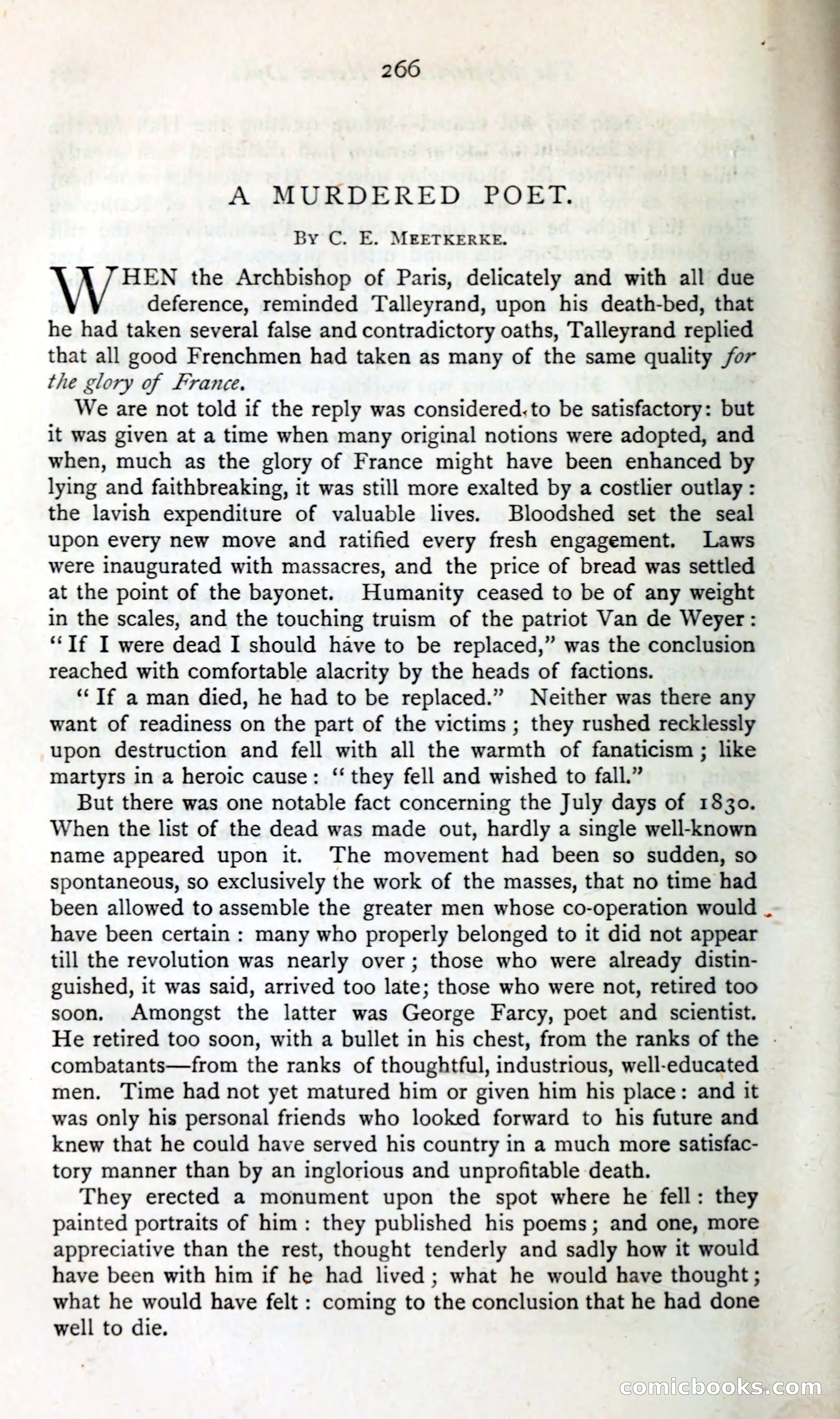
A restored page from Pulp Fiction, 1865. Page through the whole issue in the reader above.
📄 Transcribed text from this page (OCR, searchable)
Machine-transcribed from the original scan — historical spelling and the odd misread are preserved.
266 A MURDERED POET. By C. E. MEETKERKE. HEN the Archbishop of Paris, delicately and with all due deference, reminded Talleyrand, upon his death-bed, that he had taken several false and contradictory oaths, Talleyrand replied that all good Frenchmen had taken as many of the same quality for the glory of France. We are not told if the reply was considered.to be satisfactory: but it was given at a time when many original notions were adopted, and when, much as the glory of France might have been enhanced by lying and faithbreaking, it was still more exalted by a costlier outlay : the lavish expenditure of valuable lives. Bloodshed set the seal upon every new move and ratified every fresh engagement. Laws were Inaugurated with massacres, and the price of bread was settled at the point of the bayonet. Humanity ceased to be of any weight in the scales, and the touching truism of the patriot Van de Weyer: “If I were dead I should have to be replaced,” was the conclusion reached with comfortable alacrity by the heads of factions. ‘“‘ Tf a man died, he had to be replaced.” Neither was there any want of readiness on the part of the victims ; they rushed recklessly upon destruction and fell with all the warmth of fanaticism ; like martyrs in a heroic cause: ‘‘ they fell and wished to fall.” But there was one notable fact concerning the July days of 1830. When the list of the dead was made out, hardly a single well-known name appeared upon it. The movement had been so sudden, so spontaneous, so exclusively the work of the masses, that no time had been allowed to assemble the greater men whose co-operation would have been certain : many who properly belonged to it did not appear till the revolution was nearly over; those who were already distin- guished, it was said, arrived too late; those who were not, retired too soon. Amongst the latter was George Farcy, poet and scientist. He retired too soon, with a bullet in his chest, from the ranks of the . combatants—from the ranks of thoughtful, industrious, well-educated men. Time had not yet matured him or given him his place: and it was only his personal friends who looked forward to his future and knew that he could have served his country in a much more satisfac- tory manner than by an inglorious and unprofitable death. They erected a monument upon the spot where he fell: they painted portraits of him: they published his poems; and one, more appreciative than the rest, thought tenderly and sadly how it would have been with him if he had lived; what he would have thought; what he would have felt : coming to the conclusion that he had done well to die. Gomilcbooks (E(0)