
Pulp Fiction, 1865 · page 215 of 400
The Argosy — page 215: what you’re looking at
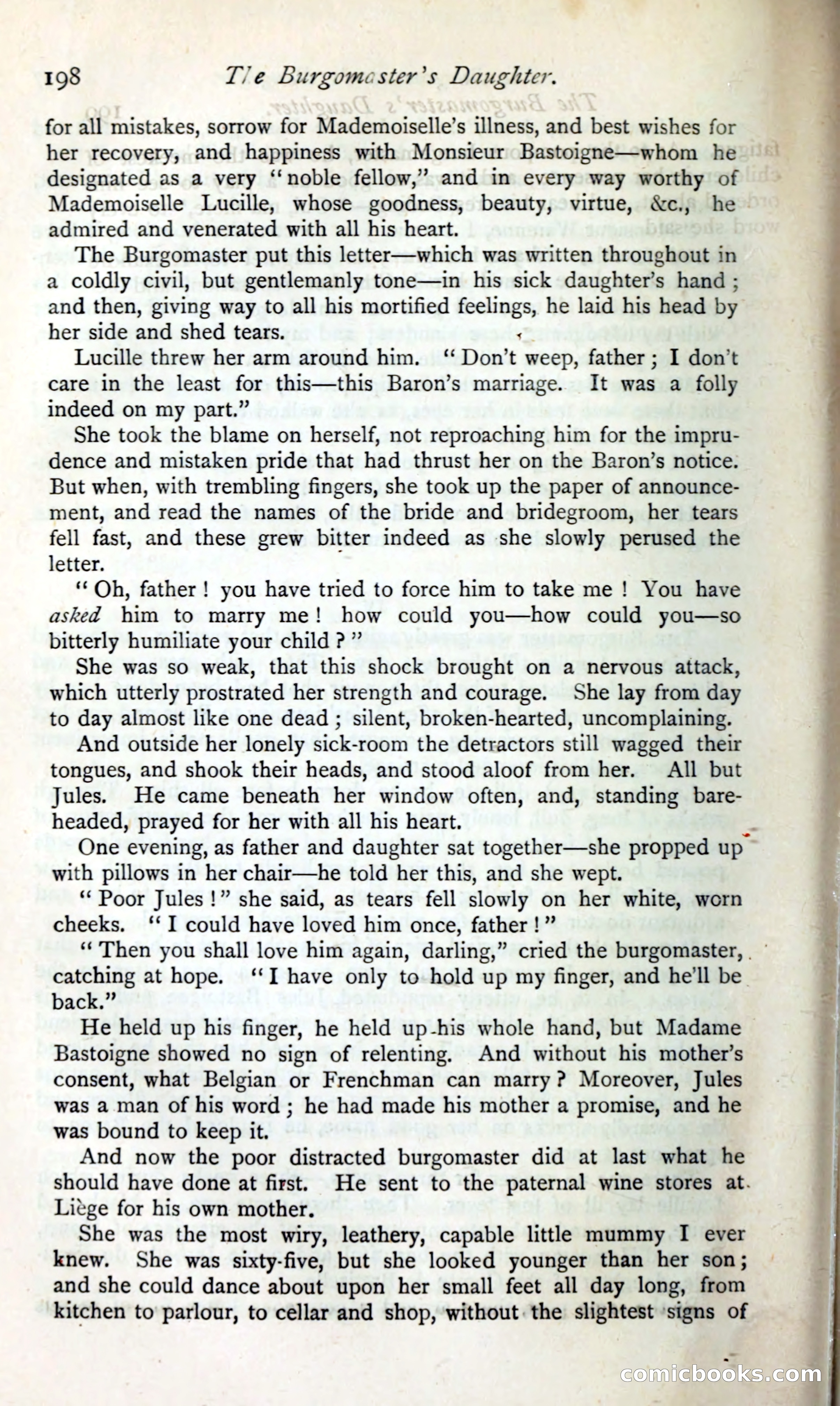
A restored page from Pulp Fiction, 1865. Page through the whole issue in the reader above.
📄 Transcribed text from this page (OCR, searchable)
Machine-transcribed from the original scan — historical spelling and the odd misread are preserved.
198 T/e Burgomester’s Daughter. for all mistakes, sorrow for Mademoiselle’s illness, and best wishes for her recovery, and happiness with Monsieur Bastoigne—whom he designated as a very ‘‘noble fellow,” and in every way worthy of Mademoiselle Lucille, whose goodness, beauty, virtue, &c., he. admired and venerated with all his heart. The Burgomaster put this letter—which was written throughout in a coldly civil, but gentlemanly tone—in his sick daughter’s hand ; and then, giving way to all his mortified feelings, he laid his head by her side and shed tears. oe Lucille threw her arm around him. ‘“ Don’t weep, father; I don’t care in the least for this—this Baron’s marriage. It was a folly indeed on my part.” She took the blame on herself, not reproaching him for the impru- dence and mistaken pride that had thrust her on the Baron’s notice. But when, with trembling fingers, she took up the paper of announce- ment, and read the names of the bride and bridegroom, her tears fell fast, and these grew bitter indeed as she slowly perused the letter. ‘Oh, father! you have tried to force him to take me! You have asked him to marry me! how could you—how could you—so bitterly humiliate your child ?” She was so weak, that this shock brought on a nervous attack, which utterly prostrated her strength and courage. She lay from day to day almost like one dead ; silent, broken-hearted, uncomplaining. And outside her lonely sick-room the detractors still wagged their tongues, and shook their heads, and stood aloof from her. All but Jules. He came beneath her window often, and, standing bare- headed, prayed for her with all his heart. a One evening, as father and daughter sat together—she propped up ~ with pillows in her chair—he told her this, and she wept. “Poor Jules!” she said, as tears fell slowly on her white, worn cheeks. ‘‘ I could have loved him once, father!” “Then you shall love him again, darling,” cried the burgomaster, . ' catching at hope. ‘‘I have only to hold up my finger, and he'll be back.” He held up his finger, he held up-his whole hand, but Madame > Bastoigne showed no sign of relenting. And without his mother’s consent, what Belgian or Frenchman can marry ? Moreover, Jules was a man of his word ; he had made his mother a promise, and he was bound to keep it. And now the poor distracted burgomaster did at last what he should have done at first. He sent to the paternal wine stores at. Liége for his own mother. She was the most wiry, leathery, capable little mummy I ever knew. She was sixty-five, but she looked younger than her son; and she could dance about upon her small feet all day long, from kitchen to parlour, to cellar and shop, without the slightest signs of Gomichooks: