
Pulp Fiction, 1865 · page 214 of 400
The Argosy — page 214: what you’re looking at
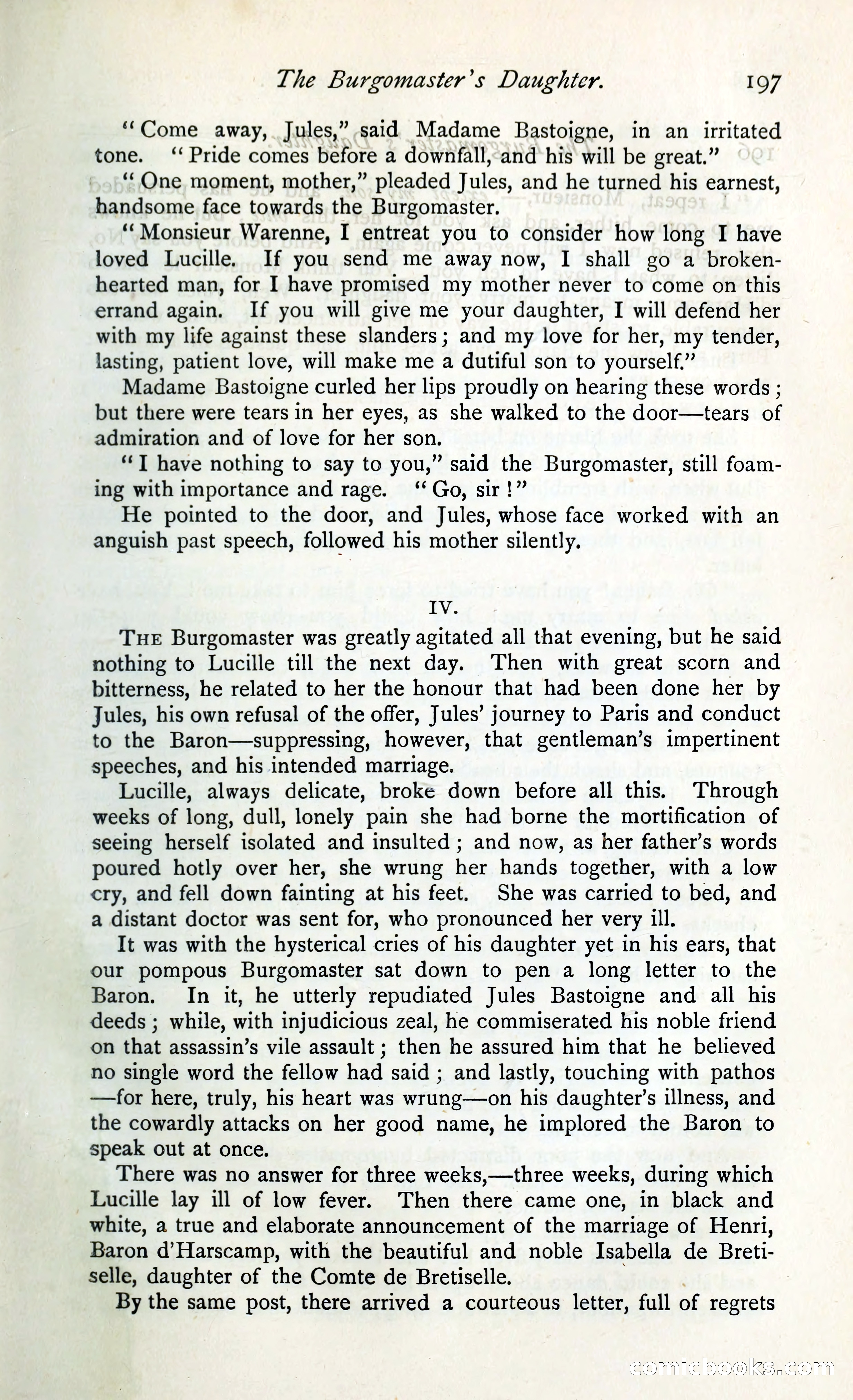
A restored page from Pulp Fiction, 1865. Page through the whole issue in the reader above.
📄 Transcribed text from this page (OCR, searchable)
Machine-transcribed from the original scan — historical spelling and the odd misread are preserved.
The Burgomaster’s Daughter. 197 “Come away, Jules,” said Madame Bastoigne, in an irritated tone. ‘‘ Pride comes before a downfall, and his will be great.” “‘One moment, mother,” pleaded Jules, and he turned his earnest, handsome face towards the Burgomaster. ‘Monsieur Warenne, I entreat you to consider how long I have loved Lucille. If you send me away now, I shall go a broken- hearted man, for I have promised my mother never to come on this errand again. If you will give me your daughter, I will defend her with my life against these slanders; and my love for her, my tender, lasting, patient love, will make me a dutiful son to yourself.” Madame Bastoigne curled her lips proudly on hearing these words ; but there were tears in her eyes, as she walked to the door—tears of admiration and of love for her son. “‘T have nothing to say to you,” said the Burgomaster, still foam- ing with importance and rage. ‘‘ Go, sir!” He pointed to the door, and Jules, whose face worked with an anguish past speech, followed his mother silently. IV. Tue Burgomaster was greatly agitated all that evening, but he said nothing to Lucille till the next day. Then with great scorn and bitterness, he related to her the honour that had been done her by Jules, his own refusal of the offer, Jules’ journey to Paris and conduct to the Baron—suppressing, however, that gentleman’s impertinent speeches, and his intended marriage. Lucille, always delicate, broke down before all this. Through weeks of long, dull, lonely pain she had borne the mortification of seeing herself isolated and insulted ; and now, as her father’s words poured hotly over her, she wrung her hands together, with a low cry, and fell down fainting at his feet. She was carried to bed, and a distant doctor was sent for, who pronounced her very ill. It was with the hysterical cries of his daughter yet in his ears, that our pompous Burgomaster sat down to pen a long letter to the Baron. In it, he utterly repudiated Jules Bastoigne and all his deeds ; while, with injudicious zeal, he commiserated his noble friend on that assassin’s vile assault ; then he assured him that he believed no single word the fellow had said ; and lastly, touching with pathos —for here, truly, his heart was wrung—on his daughter’s illness, and the cowardly attacks on her good name, he implored the Baron to speak out at once. There was no answer for three weeks,—three weeks, during which Lucille lay ill of low fever. Then there came one, in black and white, a true and elaborate announcement of the marriage of Henri, Baron d’Harscamp, with the beautiful and noble Isabella de Breti- selle, daughter of the Comte de Bretiselle. By the same post, there arrived a courteous letter, full of regrets ConnicloOolkKxs (C(O)