
Pulp Fiction, 1865 · page 210 of 400
The Argosy — page 210: what you’re looking at
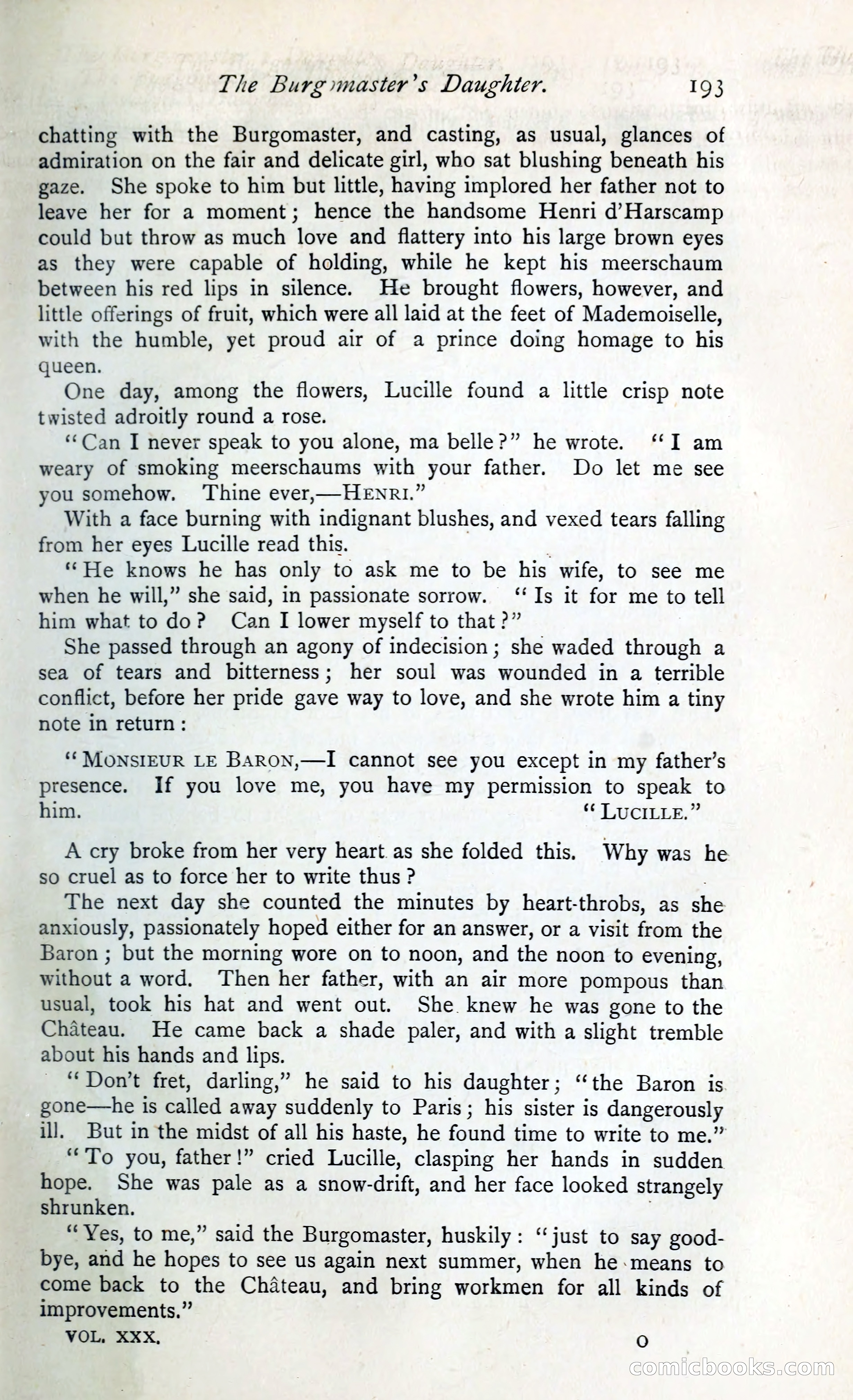
A restored page from Pulp Fiction, 1865. Page through the whole issue in the reader above.
📄 Transcribed text from this page (OCR, searchable)
Machine-transcribed from the original scan — historical spelling and the odd misread are preserved.
The Burgimaster’s Daughier. 193 chatting with the Burgomaster, and casting, as usual, glances of admiration on the fair and delicate girl, who sat blushing beneath his gaze. She spoke to him but little, having implored her father not to leave her for a moment; hence the handsome Henri d’Harscamp could but throw as much love and flattery into his large brown eyes as they were capable of holding, while he kept his meerschaum between his red lips in silence. He brought flowers, however, and little offerings of fruit, which were all laid at the feet of Mademoiselle, with the humble, yet proud air of a prince doing homage to his queen. One day, among the flowers, Lucille found a little crisp note twisted adroitly round a rose. “Can I never speak to you alone, ma belle?” he wrote. ‘‘I am weary of smoking meerschaums with your father. Do let me see you somehow. ‘Thine ever,—HENRI.” With a face burning with indignant blushes, and vexed tears falling from her eyes Lucille read this. “He knows he has only to ask me to be his wife, to see me when he will,” she said, in passionate sorrow. ‘Is it for me to tell him what to do? Can I lower myself to that ?” She passed through an agony of indecision; she waded through a sea of tears and bitterness; her soul was wounded in a terrible conflict, before her pride gave way to love, and she wrote him a tiny note in return: ‘MONSIEUR LE BAaRON,—I cannot see you except in my father’s presence. If you love me, you have my permission to speak to him. *¢ LUCILLE,” A cry broke from her very heart.as she folded this. Why was he so cruel as to force her to write thus? The next day she counted the minutes by heart- throbs, as she anxiously, passionately hoped either for an answer, or a visit from the Baron ; but the morning wore on to noon, and the noon to evening, without a word. ‘Then her father, with an air more pompous than usual, took his hat and went out. She knew he was gone to the Chateau. He came back a shade paler, and with a slight tremble about his hands and lips. “Don’t fret, darling,” he said to his daughter ; “the Baron is gone—he is called away suddenly to Paris; his sister is dangerously ill. But in the midst of all his haste, he found time to write to me.” “To you, father!” cried Lucille, clasping her hands in sudden hope. She was pale as a snow- -drift, and her face looked strangely shrunken. “Yes, to me,” said the Burgomaster, huskily: “just to say good- bye, and he hopes to see us again next summer, when he-means to come back to the Chateau, and bring workmen for all kinds of improvements.” VOL, XXX, O CONIIClOoO© (CO)