
Pulp Fiction, 1865 · page 139 of 400
The Argosy — page 139: what you’re looking at
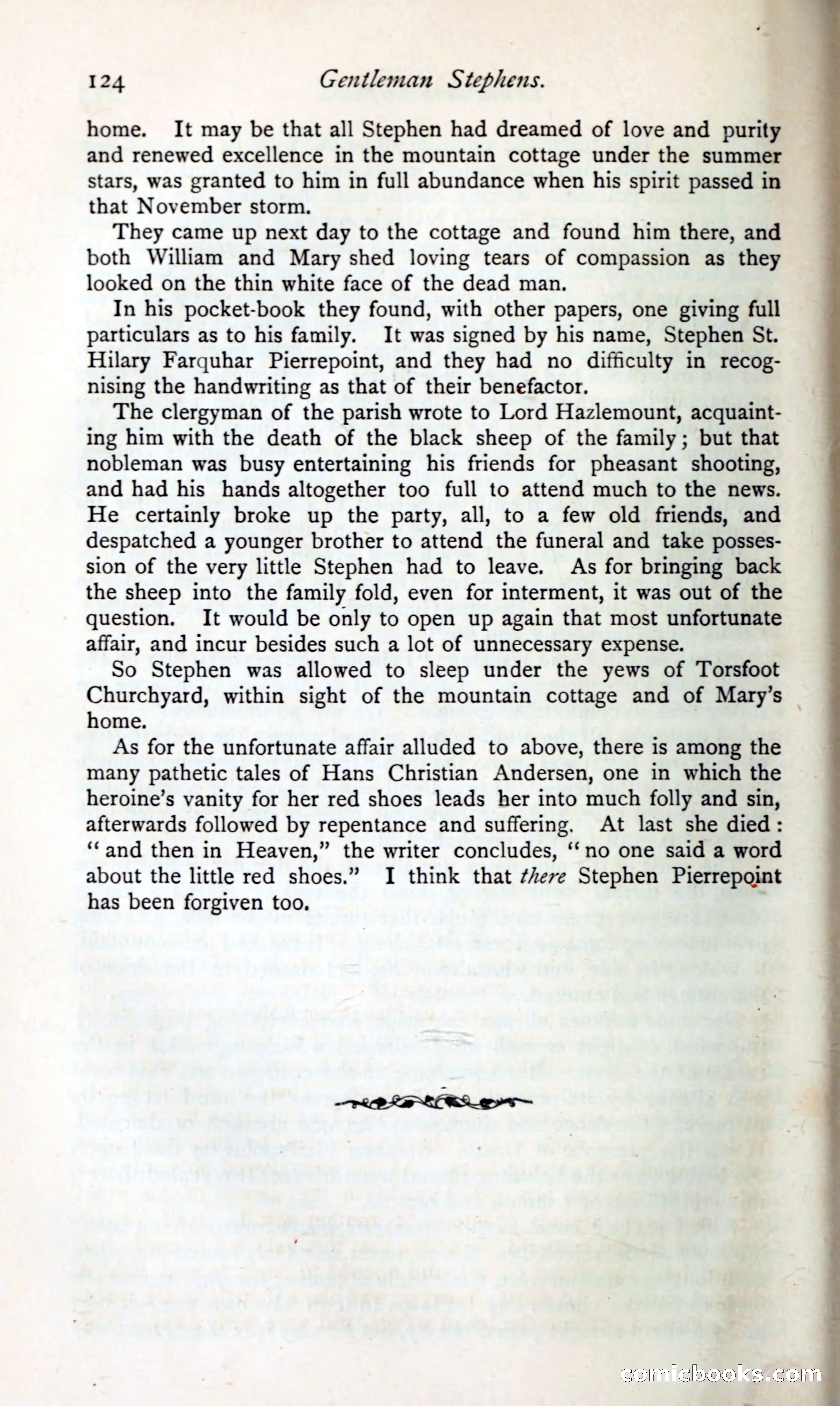
A restored page from Pulp Fiction, 1865. Page through the whole issue in the reader above.
📄 Transcribed text from this page (OCR, searchable)
Machine-transcribed from the original scan — historical spelling and the odd misread are preserved.
124 Gentleman Stephens. home. It may be that all Stephen had dreamed of love and purity and renewed excellence in the mountain cottage under the summer stars, was granted to him in full abundance when his spirit passed in that November storm. They came up next day to the cottage and found him there, and both William and Mary shed loving tears of compassion as they looked on the thin white face of the dead man. In his pocket-book they found, with other papers, one giving full particulars as to his family. It was signed by his name, Stephen St. Hilary Farquhar Pierrepoint, and they had no difficulty in recog- nising the handwriting as that of their benefactor. The clergyman of the parish wrote to Lord Hazlemount, acquaint- ing him with the death of the black sheep of the family; but that nobleman was busy entertaining his friends for pheasant shooting, and had his hands altogether too full to attend much to the news. He certainly broke up the party, all, to a few old friends, and despatched a younger brother to attend the funeral and take posses- sion of the very little Stephen had to leave. As for bringing back the sheep into the family fold, even for interment, it was out of the question. It would be only to open up again that most unfortunate affair, and incur besides such a lot of unnecessary expense. So Stephen was allowed to sleep under the yews of Torsfoot Churchyard, within sight of the mountain cottage and of Mary’s — home. As for the unfortunate affair alluded to above, there is among the many pathetic tales of Hans Christian Andersen, one in which the heroine’s vanity for her red shoes leads her into much folly and sin, afterwards followed by repentance and suffering. At last she died: ‘‘and then in Heaven,” the writer concludes, ‘‘no one said a word about the little red shoes.” I think that steve Stephen Pierrepoint has been forgiven too. Eomichbooks.co