
Pulp Fiction, 1865 · page 170 of 400
The Argosy — page 170: what you’re looking at
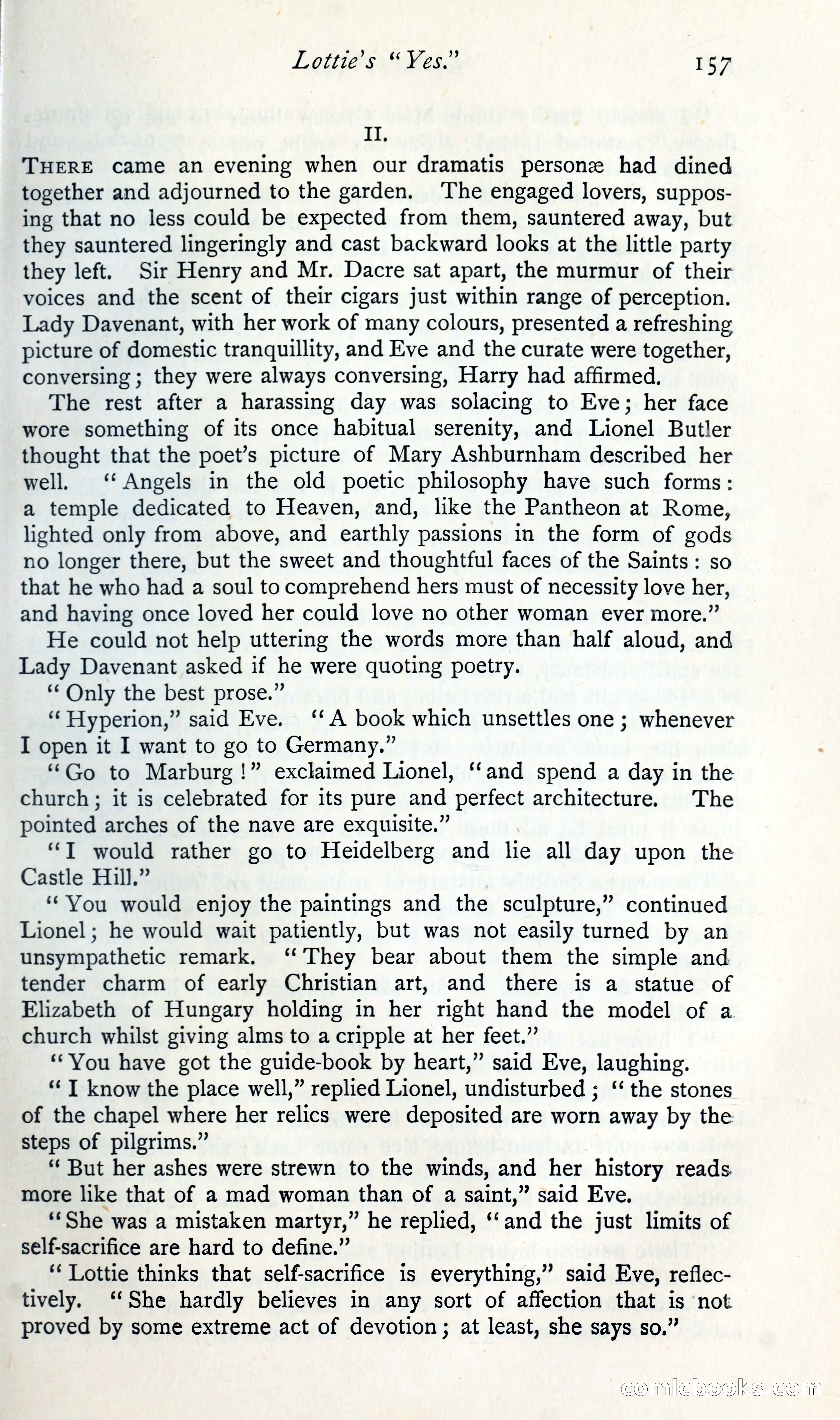
A restored page from Pulp Fiction, 1865. Page through the whole issue in the reader above.
📄 Transcribed text from this page (OCR, searchable)
Machine-transcribed from the original scan — historical spelling and the odd misread are preserved.
Lottie 5“ ¥es.! 157 II, THERE came an evening when our dramatis persone had dined together and adjourned to the garden. ‘The engaged lovers, suppos- ing that no less could be expected from them, sauntered away, but they sauntered lingeringly and cast backward looks at the little party they left. Sir Henry and Mr. Dacre sat apart, the murmur of their voices and the scent of their cigars just within range of perception. Lady Davenant, with her work of many colours, presented a refreshing picture of domestic tranquillity, and Eve and the curate were together, conversing ; they were always conversing, Harry had affirmed. The rest after a harassing day was solacing to Eve; her face wore something of its once habitual serenity, and Lionel Butler thought that the poet’s picture of Mary Ashburnham described her well. ‘‘ Angels in the old poetic philosophy have such forms: a temple dedicated to Heaven, and, like the Pantheon at Rome, lighted only from above, and earthly passions in the form of gods no longer there, but the sweet and thoughtful faces of the Saints: so that he who had a soul to comprehend hers must of necessity love her, and having once loved her could love no other woman ever more.” He could not help uttering the words more than half aloud, and Lady Davenant asked if he were quoting poetry. ‘Only the best prose.” ‘‘ Hyperion,” said Eve. ‘‘A book which unsettles one ; whenever I open it I want to go to Germany.” ‘“Go to Marburg!” exclaimed Lionel, ‘“‘and spend a day in the church; it is celebrated for its pure and perfect architecture. The pointed arches of the nave are exquisite.” ‘T would rather go to Heidelberg and he all day upon the Castle Hill.” ‘You would enjoy the paintings and the sculpture,” continued Lionel; he would wait patiently, but was not easily turned by an unsympathetic remark. ‘“‘ They bear about them the simple and tender charm of early Christian art, and there is a statue of Elizabeth of Hungary holding in her right hand the model of a church whilst giving alms to acripple at her feet.” ‘You have got the guide-book by heart,” said Eve, laughing. ‘¢ T know the place well,” replied Lionel, undisturbed ; ‘‘ the stones of the chapel where her relics were deposited are worn away by the steps of pilgrims.” ‘‘ But her ashes were strewn to the winds, and her history reads more like that of a mad woman than of a saint,” said Eve. ‘She was a mistaken martyr,” he replied, ‘‘and the just limits of self-sacrifice are hard to define.” ‘* Lottie thinks that self-sacrifice 1s everything,” said Eve, reflec- tively. ‘‘She hardly believes in any sort of affection that is not proved by some extreme act of devotion; at least, she says so.” COMIC OOO SS im