
Pulp Fiction, 1865 · page 165 of 400
The Argosy — page 165: what you’re looking at
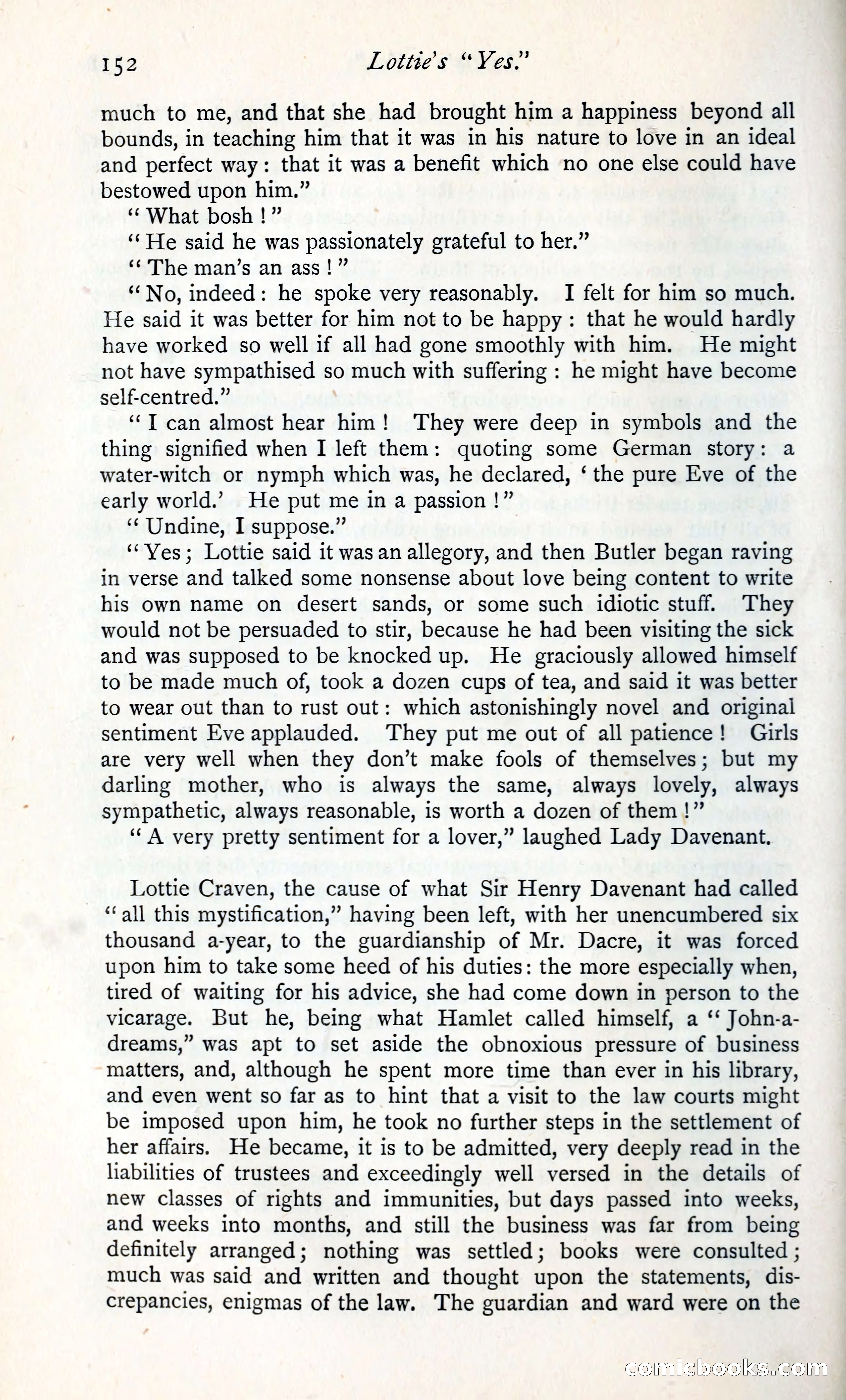
A restored page from Pulp Fiction, 1865. Page through the whole issue in the reader above.
📄 Transcribed text from this page (OCR, searchable)
Machine-transcribed from the original scan — historical spelling and the odd misread are preserved.
152 Lottte’s “ Yes.” much to me, and that she had brought him a happiness beyond all bounds, in teaching him that it was in his nature to love in an ideal and perfect way: that it was a benefit which no one else could have bestowed upon him,” ‘¢ What bosh !” ‘‘He said he was passionately grateful to her.” ‘The man’s an ass!” ‘No, indeed: he spoke very reasonably. I felt for him so much. He said it was better for him not to be happy: that he would hardly have worked so well if all had gone smoothly with him. He might not have sympathised so much with suffering : he might have become self-centred.” ‘“T can almost hear him! They were deep in symbols and the thing signified when I left them: quoting some German story: a water-witch or nymph which was, he declared, ‘ the pure Eve of the early world.’ He put me in a passion !” ‘¢ Undine, I suppose.” ‘Ves; Lottie said it was an allegory, and then Butler began raving in verse and talked some nonsense about love being content to write his own name on desert sands, or some such idiotic stuff. They would not be persuaded to stir, because he had been visiting the sick and was supposed to be knocked up. He graciously allowed himself to be made much of, took a dozen cups of tea, and said it was better to wear out than to rust out: which astonishingly novel and original sentiment Eve applauded. They put me out of all patience! Girls are very well when they don’t make fools of themselves; but my darling mother, who is always the same, always lovely, always sympathetic, always reasonable, 1s worth a dozen of them !” ‘A very pretty sentiment for a lover,” laughed Lady Davenant. Lottie Craven, the cause of what Sir Henry Davenant had called ‘all this mystification,” having been left, with her unencumbered six thousand a-year, to the guardianship of Mr. Dacre, it was forced upon him to take some heed of his duties: the more especially when, tired of waiting for his advice, she had come down in person to the vicarage. But he, being what Hamlet called himself, a ‘‘ John-a- dreams,” was apt to set aside the obnoxious pressure of business matters, and, although he spent more time than ever in his library, and even went so far as to hint that a visit to the law courts might be imposed upon him, he took no further steps in the settlement of her affairs. He became, it is to be admitted, very deeply read in the liabilities of trustees and exceedingly well versed in the details of new classes of rights and immunities, but days passed into weeks, and weeks into months, and still the business was far from being definitely arranged; nothing was settled; books were consulted ; much was said and written and thought upon the statements, dis- crepancies, enigmas of the law. The guardian and ward were on the ECORNICLOOKS, (EC) m