
Pulp Fiction, 1865 · page 152 of 400
The Argosy — page 152: what you’re looking at
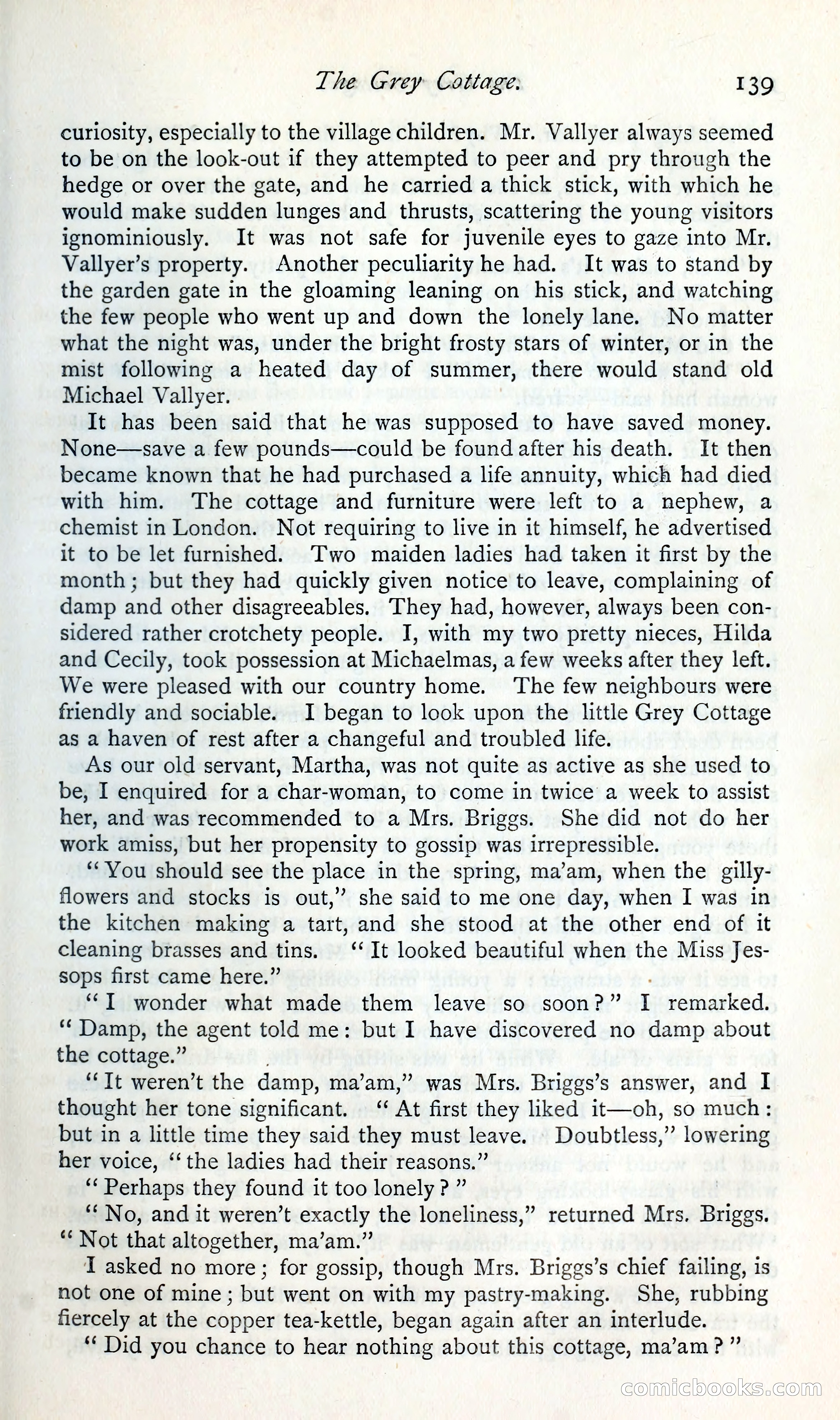
A restored page from Pulp Fiction, 1865. Page through the whole issue in the reader above.
📄 Transcribed text from this page (OCR, searchable)
Machine-transcribed from the original scan — historical spelling and the odd misread are preserved.
The Grey Cottage. 139 curiosity, especially to the village children. Mr. Vallyer always seemed to be on the look-out if they attempted to peer and pry through the hedge or over the gate, and he carried a thick stick, with which he would make sudden lunges and thrusts, scattering the young visitors ignominiously. It was not safe for juvenile eyes to gaze into Mr. Vallyer’s property. Another peculiarity he had. It was to stand by the garden gate in the gloaming leaning on his stick, and watching the few people who went up and down the lonely lane. No matter what the night was, under the bright frosty stars of winter, or in the mist following a heated day of summer, there would stand old Michael Vallyer. It has been said that he was supposed to have saved money. None—save a few pounds—could be found after his death. It then became known that he had purchased a life annuity, which had died with him. The cottage and furniture were left to a nephew, a chemist in London. Not requiring to live in it himself, he advertised it to be let furnished. ‘Two maiden ladies had taken it first by the month; but they had quickly given notice to leave, complaining of damp and other disagreeables. They had, however, always been con- sidered rather crotchety people. I, with my two pretty nieces, Hilda and Cecily, took possession at Michaelmas, a few weeks after they left. We were pleased with our country home. ‘The few neighbours were friendly and sociable. I began to look upon the little Grey Cottage as a haven of rest after a changeful and troubled life. As our old servant, Martha, was not quite as active as she used to. be, I enquired for a char-woman, to come in twice a week to assist her, and was recommended to a Mrs. Briggs. She did not do her work amiss, but her propensity to gossip was irrepressible. “You should see the place in the spring, ma’am, when the gilly- flowers and stocks is out,” she said to me one day, when I was in the kitchen making a tart, and she stood at the other end of it cleaning brasses and tins. ‘It looked beautiful when the Miss Jes- sops first came here.” ‘“I wonder what made them leave so soon?” JI remarked. ‘* Damp, the agent told me: but I have discovered no damp about the cottage.” | “It weren’t the damp, ma’am,” was Mrs. Briggs’s answer, and I thought her tone significant. ‘ At first they liked it—oh, so much: but in a little time they said they must leave. Doubtless,” lowering her voice, ‘‘ the ladies had their reasons.” ‘* Perhaps they found it too lonely ? ” ‘“ No, and it weren’t exactly the loneliness,” returned Mrs. Briggs. ‘* Not that altogether, ma’am.” I asked no more; for gossip, though Mrs. Briggs’s chief failing, is not one of mine; but went on with my pastry-making. She, rubbing fiercely at the copper tea-kettle, began again after an interlude. *‘ Did you chance to hear nothing about this cottage, ma’am ? ” CoOnniclboooks (C©) im