
Pulp Fiction, 1865 · page 151 of 400
The Argosy — page 151: what you’re looking at
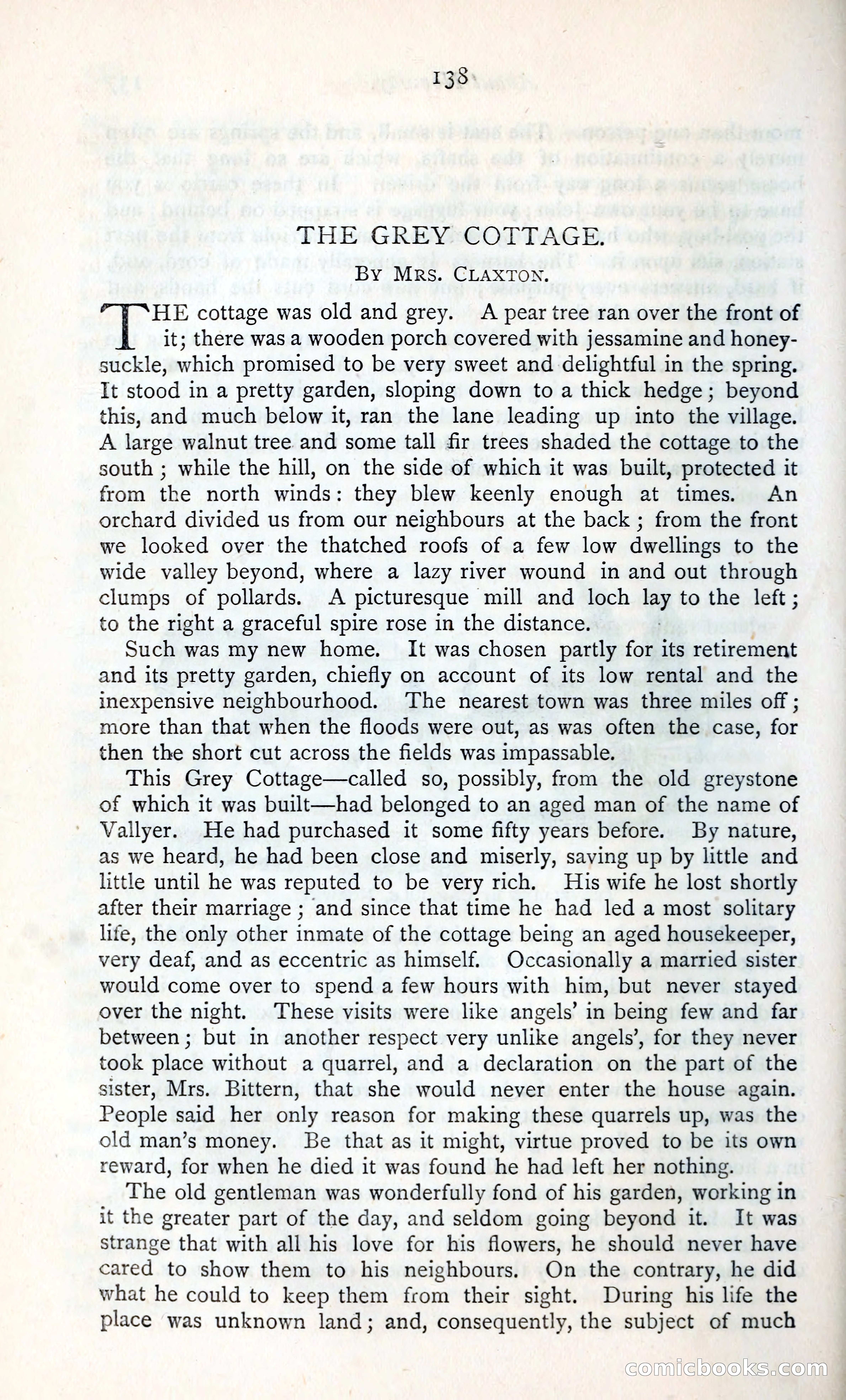
A restored page from Pulp Fiction, 1865. Page through the whole issue in the reader above.
📄 Transcribed text from this page (OCR, searchable)
Machine-transcribed from the original scan — historical spelling and the odd misread are preserved.
THE GREY COTTAGE. By MRS. CLAXTON. HE cottage was old and grey. A pear tree ran over the front of it; there was a wooden porch covered with jessamine and honey- suckle, which promised to be very sweet and delightful in the spring. It stood in a pretty garden, sloping down to a thick hedge; beyond this, and much below it, ran the lane leading up into the village. A large walnut tree and some tall fir trees shaded the cottage to the south ; while the hill, on the side of which it was built, protected it from the north winds: they blew keenly enough at times. An orchard divided us from our neighbours at the back ; from the front we looked over the thatched roofs of a few low dwellings to the wide valley beyond, where a lazy river wound in and out through clumps of pollards. A picturesque mill and loch lay to the left ; to the right a graceful spire rose in the distance. : Such was my new home. It was chosen partly for its retirement and its pretty garden, chiefly on account of its low rental and the inexpensive neighbourhood. ‘The nearest town was three miles off ; more than that when the floods were out, as was often the case, for then the short cut across the fields was impassable. This Grey Cottage—called so, possibly, from the old greystone of which it was built—had belonged to an aged man of the name of Vallyer. He had purchased it some fifty years before. By nature, as we heard, he had been close and miserly, saving up by little and little until he was reputed to be very rich. His wife he lost shortly after their marriage ; and since that time he had led a most solitary life, the only other inmate of the cottage being an aged housekeeper, very deaf, and as eccentric as himself. Occasionally a married sister would come over to spend a few hours with him, but never stayed over the night. These visits were like angels’ in being few and far between ; but in another respect very unlike angels’, for they never took place without a quarrel, and a declaration on the part of the sister, Mrs. Bittern, that she would never enter the house again. People said her only reason for making these quarrels up, was the old man’s money. Be that as it might, virtue proved to be its own reward, for when he died it was found he had left her nothing. The old gentleman was wonderfully fond of his garden, working in it the greater part of the day, and seldom going beyond it. It was strange that with all his love for his flowers, he should never have cared to show them to his neighbours. On the contrary, he did what he could to keep them from their sight. During his life the place was unknown land; and, consequently, the subject of much ECORNICLOOKS (EO) m