
Pulp Fiction, 1865 · page 112 of 400
The Argosy — page 112: what you’re looking at
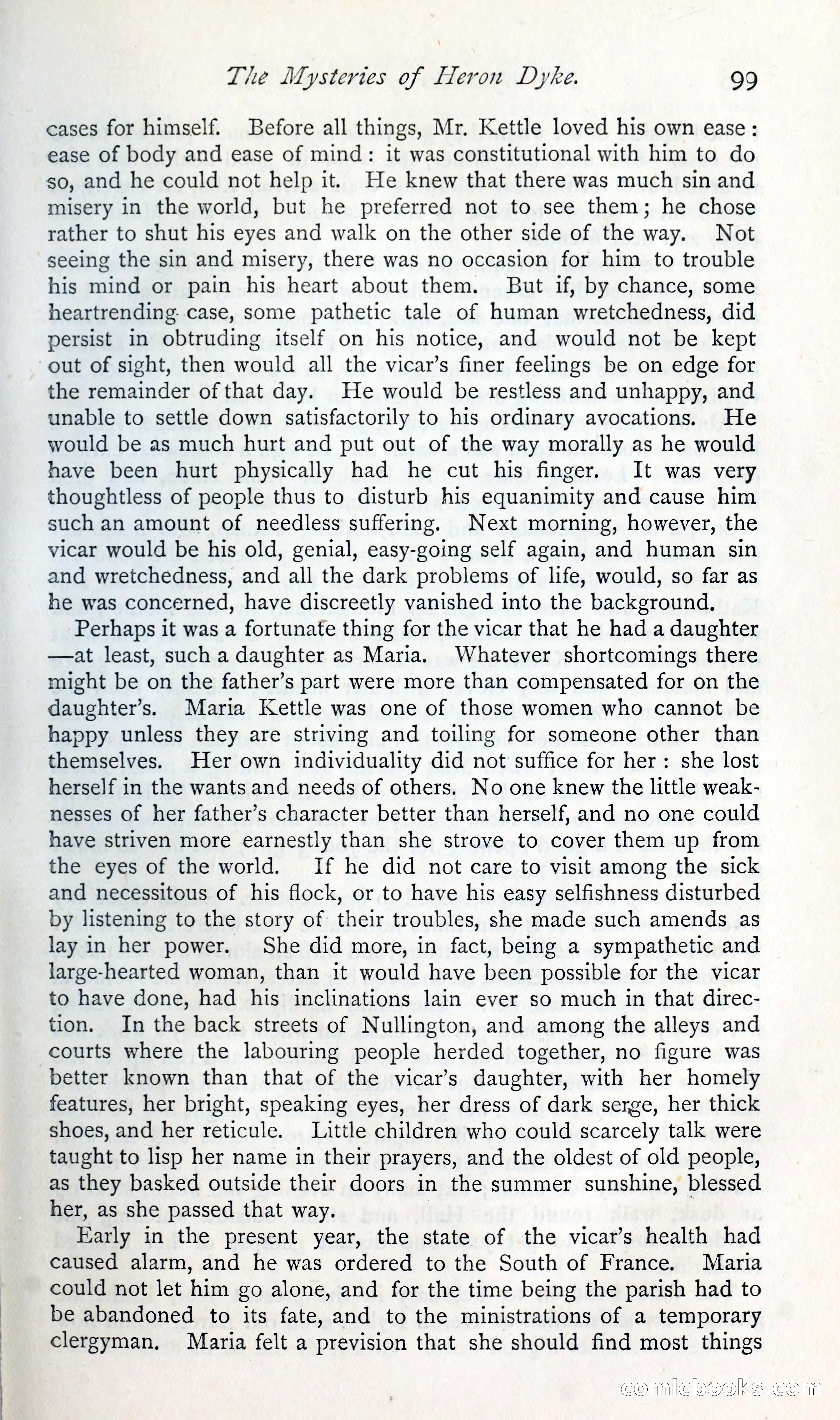
A restored page from Pulp Fiction, 1865. Page through the whole issue in the reader above.
📄 Transcribed text from this page (OCR, searchable)
Machine-transcribed from the original scan — historical spelling and the odd misread are preserved.
Oe é Mysteries of [feron Dyke. 99 cases for himself. Before all things, Mr. Kettle loved his own ease: ease of body and ease of mind: it was constitutional with him to do so, and he could not help it. He knew that there was much sin and misery in the world, but he preferred not to see them; he chose rather to shut his eyes and walk on the other side of the way. Not seeing the sin and misery, there was no occasion for him to trouble his mind or pain his heart about them. But if, by chance, some heartrending. case, some pathetic tale of human wretchedness, did persist in obtruding itself on his notice, and would not be kept out of sight, then would all the vicar’s finer feelings be on edge for the remainder of that day. He would be restless and unhappy, and unable to settle down satisfactorily to his ordinary avocations. He would be as much hurt and put out of the way morally as he would have been hurt physically had he cut his finger. It was very thoughtless of people thus to disturb his equanimity and cause him such an amount of needless suffering. Next morning, however, the vicar would be his old, genial, easy-going self again, and human sin and wretchedness, and all the dark problems of life, would, so far as he was concerned, have discreetly vanished into the background. Perhaps it was a fortunate thing for the vicar that he had a daughter —at least, such a daughter as Maria. Whatever shortcomings there might be on the father’s part were more than compensated for on the daughter’s. Maria Kettle was one of those women who cannot be happy unless they are striving and toiling for someone other than themselves. Her own individuality did not suffice for her: she lost herself in the wants and needs of others. No one knew the little weak- nesses of her father’s character better than herself, and no one could have striven more earnestly than she strove to cover them up from the eyes of the world. If he did not care to visit among the sick and necessitous of his flock, or to have his easy selfishness disturbed by listening to the story of their troubles, she made such amends as lay in her power. She did more, in fact, being a sympathetic and large-hearted woman, than it would have been possible for the vicar to have done, had his inclinations lain ever so much in that direc- tion. In the back streets of Nullington, and among the alleys and courts where the labouring people herded together, no figure was better known than that of the vicar’s daughter, with her homely features, her bright, speaking eyes, her dress of dark serge, her thick shoes, and her reticule. Little children who could scarcely talk were taught to lisp her name in their prayers, and the oldest of old people, as they basked outside their doors in the summer sunshine, blessed her, as she passed that way. | : Karly in the present year, the state of the vicar’s health had caused alarm, and he was ordered to the South of France. Maria could not let him go alone, and for the time being the parish had to be abandoned to its fate, and to the ministrations of a temporary clergyman, Maria felt a prevision that she should find most things CoORnnicboooks (S©) im