
Pulp Fiction, 1865 · page 111 of 400
The Argosy — page 111: what you’re looking at
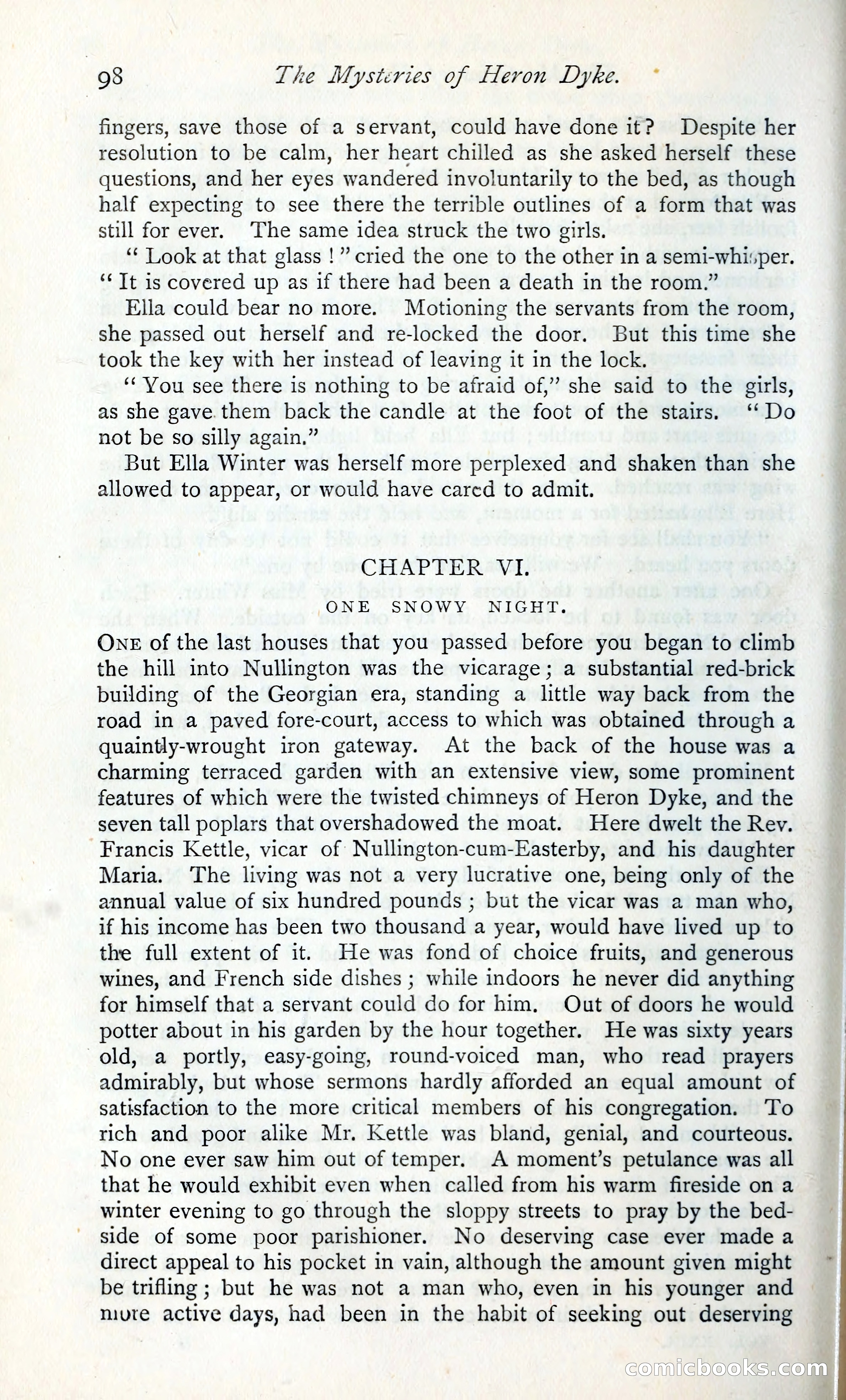
A restored page from Pulp Fiction, 1865. Page through the whole issue in the reader above.
📄 Transcribed text from this page (OCR, searchable)
Machine-transcribed from the original scan — historical spelling and the odd misread are preserved.
98 The Mysteries of fleron Dyke. * fingers, save those of a servant, could have done it? Despite her resolution to be calm, her heart chilled as she asked herself these questions, and her eyes wandered involuntarily to the bed, as though half expecting to see there the terrible outlines of a form that was still for ever. ‘The same idea struck the two girls. ‘‘ Look at that glass !” cried the one to the other in a semi-whi: per. ‘Tt is covered up as if there had been a death in the room.” Ella could bear no more. Motioning the servants from the room, she passed out herself and re-locked the door. But this time she took the key with her instead of leaving it in the lock. ‘‘ You see there is nothing to be afraid of,’”’ she said to the girls, as she gave.them back the candle at the foot of the stairs. ‘‘ Do not be so silly again.” But Ella Winter was herself more perplexed and shaken than she allowed to appear, or would have cared to admit. CHAPTER VI. ONE SNOWY NIGHT. OnE of the last houses that you passed before you began to climb the hill into Nullington was the vicarage; a substantial red-brick building of the Georgian era, standing a little way back from the road in a paved fore-court, access to which was obtained through a quaintly-wrought iron gateway. At the back of the house was a charming terraced garden with an extensive view, some prominent features of which were the twisted chimneys of Heron Dyke, and the seven tall poplars that overshadowed the moat. Here dwelt the Rev. Francis Kettle, vicar of Nullington-cum-Easterby, and his daughter Maria. ‘The living was not a very lucrative one, being only of the annual value of six hundred pounds ; but the vicar was a man who, if his income has been two thousand a year, would have lived up to the full extent of it. He was fond of choice fruits, and generous wines, and French side dishes ; while indoors he never did anything for himself that a servant could do for him. Out of doors he would potter about in his garden by the hour together. He was sixty years old, a portly, easy-going, round-voiced man, who read prayers admirably, but whose sermons hardly afforded an equal amount of satisfaction to the more critical members of his congregation. To rich and poor alike Mr. Kettle was bland, genial, and courteous. No one ever saw him out of temper. A moment’s petulance was all that he would exhibit even when called from his warm fireside on a winter evening to go through the sloppy streets to pray by the bed- side of some poor parishioner. No deserving case ever made a direct appeal to his pocket in vain, although the amount given might be trifling; but he was not a man who, even in his younger and mute active days, had been in the habit of seeking out deserving ECORNIECLIIOOKS,(E0)