
Pulp Fiction, 1865 · page 308 of 400
The Argosy — page 308: what you’re looking at
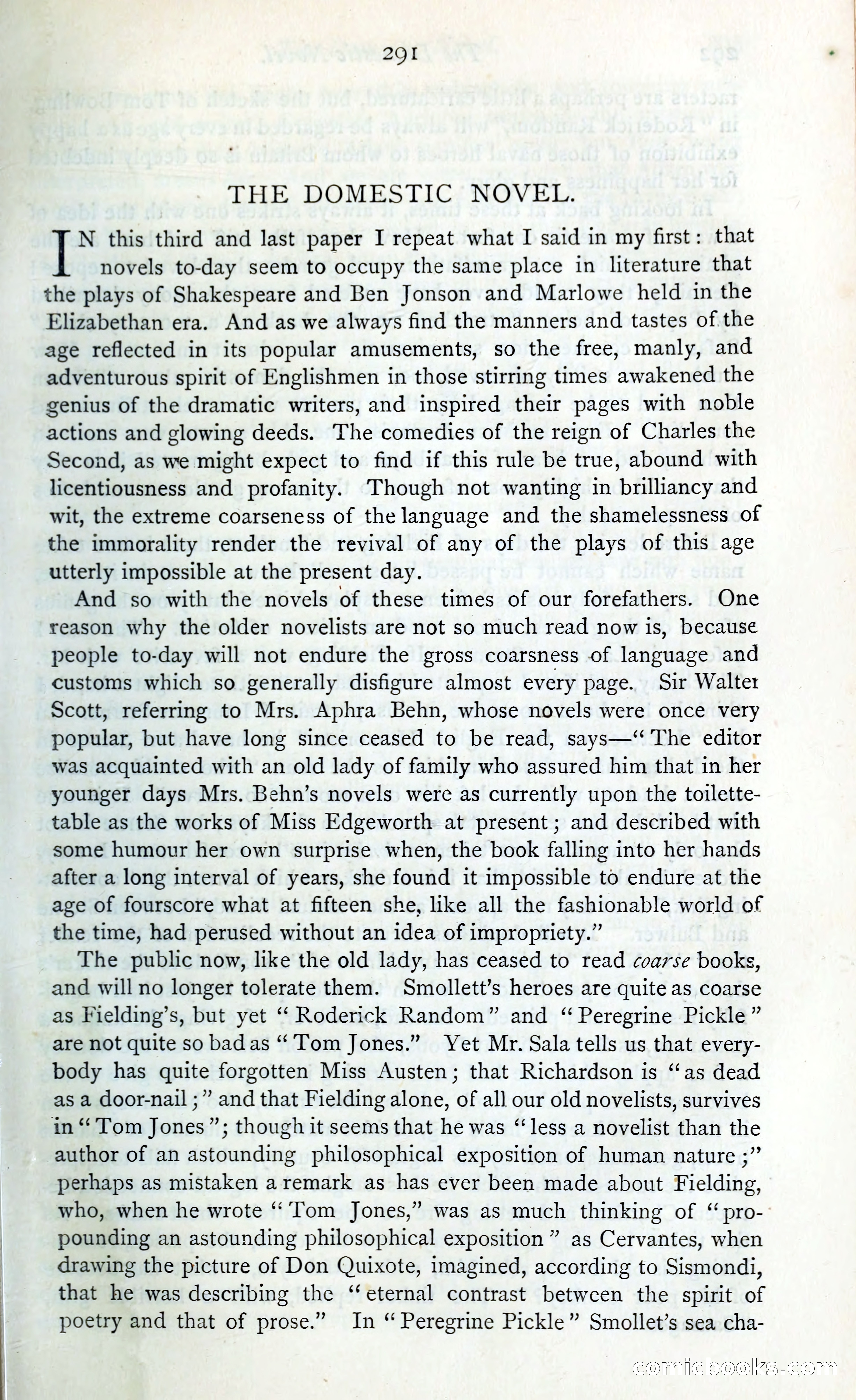
A restored page from Pulp Fiction, 1865. Page through the whole issue in the reader above.
📄 Transcribed text from this page (OCR, searchable)
Machine-transcribed from the original scan — historical spelling and the odd misread are preserved.
THE DOMESTIC NOVEL. N this third and last paper I repeat what I said in my first: that novels to-day seem to occupy the same place in literature that the plays of Shakespeare and Ben Jonson and Marlowe held in the Elizabethan era. And as we always find the manners and tastes of the age reflected in its popular amusements, so the free, manly, and adventurous spirit of Englishmen in those stirring times awakened the genius of the dramatic writers, and inspired their pages with noble actions and glowing deeds. The comedies of the reign of Charles the Second, as we might expect to find if this rule be true, abound with licentiousness and profanity. Though not wanting in brilliancy and wit, the extreme coarseness of the language and the shamelessness of the immorality render the revival of any of the plays of this age utterly impossible at the present day. And so with the novels of these times of our forefathers. One reason why the older novelists are not so much read now is, because people to-day will not endure the gross coarsness of language and customs which so generally disfigure almost every page. Sir Walter Scott, referring to Mrs. Aphra Behn, whose novels were once very popular, but have long since ceased to be read, says—‘‘ The editor was acquainted with an old lady of family who assured him that in her younger days Mrs. Behn’s novels were as currently upon the toilette- table as the works of Miss Edgeworth at present ; and described with some humour her own surprise when, the book falling into her hands after a long interval of years, she found it impossible to endure at the age of fourscore what at fifteen she, like all the fashionable world of the time, had perused without an idea of impropriety.” The public now, like the old lady, has ceased to read coarse books, and will no longer tolerate them. Smollett’s heroes are quite as coarse as Fielding’s, but yet ‘‘ Roderick Random” and “ Peregrine Pickle ” are not quite so badas “Tom Jones.” Yet Mr. Sala tells us that every- body has quite forgotten Miss Austen; that Richardson is ‘‘as dead as a door-nail ;” and that Fielding alone, of all our old novelists, survives in “Tom Jones”; though it seems that he was ‘less a novelist than the author of an astounding philosophical exposition of human nature ;” perhaps as mistaken aremark as has ever been made about Fielding, who, when he wrote ‘‘ Tom Jones,’ was as much thinking of “ pro- pounding an astounding philosophical exposition” as Cervantes, when drawing the picture of Don Quixote, imagined, according to Sismondi, that he was describing the ‘‘ eternal contrast between the spirit of poetry and that of prose.” In “ Peregrine Pickle” Smollet’s sea cha- CoOnniiclooolxs (CO)