
Pulp Fiction, 1875 · page 301 of 400
The Argosy — page 301: what you’re looking at
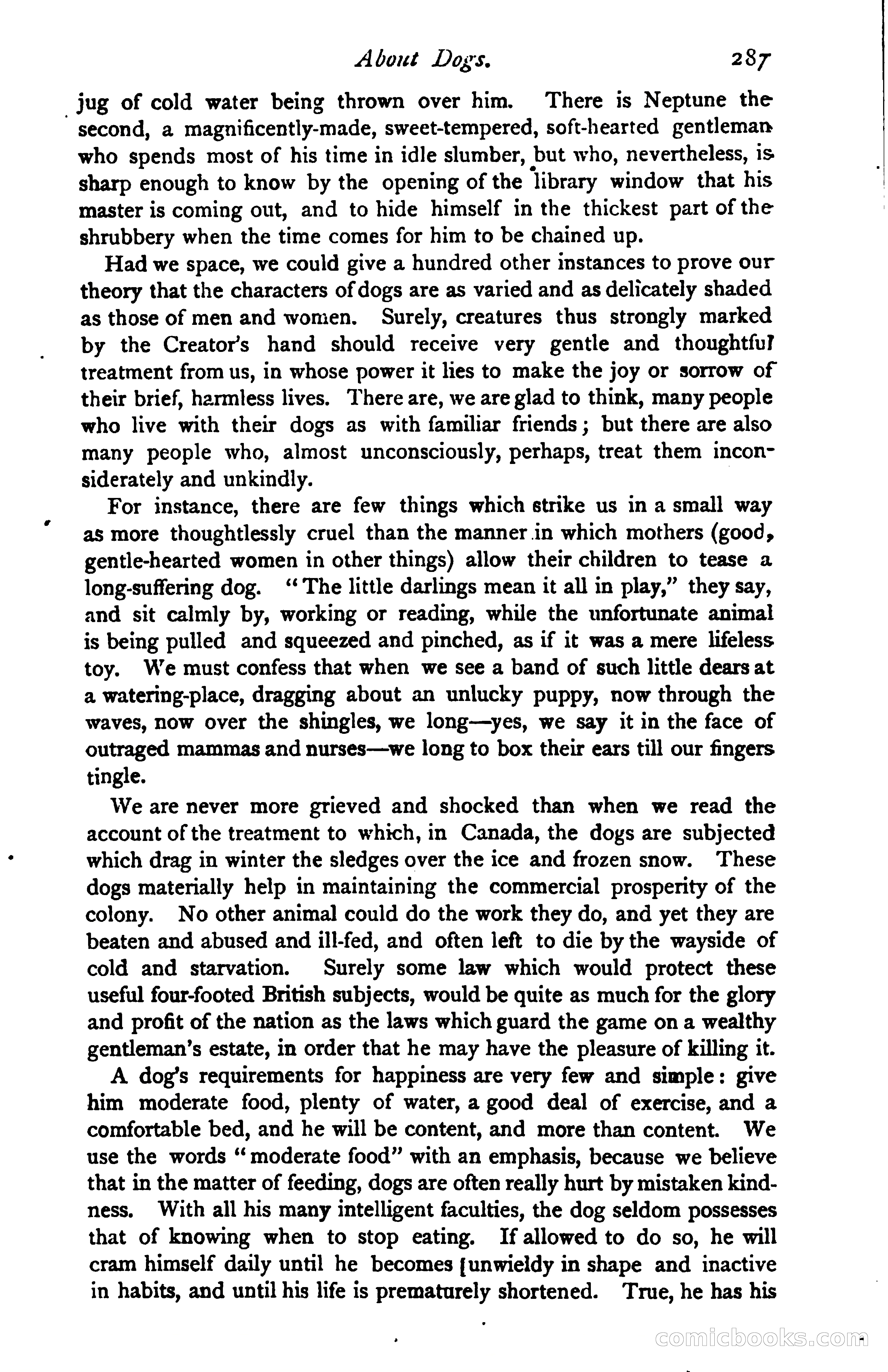
A restored page from Pulp Fiction, 1875. Page through the whole issue in the reader above.
📄 Transcribed text from this page (OCR, searchable)
Machine-transcribed from the original scan — historical spelling and the odd misread are preserved.
About Dogs. 287 jug of cold water being thrown over him. There is Neptune the second, a magnificently-made, sweet-tempered, soft-hearted gentleman who spends most of his time in idle slumber, but who, nevertheless, 1s sharp enough to know by the opening of the library window that his master is coming out, and to hide himself in the thickest part of the shrubbery when the time comes for him to be chained up. Had we space, we could give a hundred other instances to prove our theory that the characters of dogs are as varied and as delicately shaded as those of men and women. Surely, creatures thus strongly marked by the Creators hand should receive very gentle and thoughtful treatment from us, in whose power it hes to make the joy or sorrow of their brief, harmless lives. There are, we are glad to think, many people who live with their dogs as with familiar friends; but there are also many people who, almost unconsciously, perhaps, treat them incon- siderately and unkindly. | For instance, there are few things which stnke us ina small way as more thoughtlessly cruel than the manner in which mothers (good, gentle-hearted women in other things) allow their children to tease a long-suffering dog. ‘‘ The little darlings mean it all in play,” they say, and sit calmly by, working or reading, while the unfortunate animal is being pulled and squeezed and pinched, as if it was a mere lifeless toy. We must confess that when we see a band of such little dears at a watering-place, dragging about an unlucky puppy, now through the waves, now over the shingles, we long—yes, we say it in the face of outraged mammas and nurses—we long to box their ears till our fingers tingle. We are never more grieved and shocked than when we read the account of the treatment to which, in Canada, the doys are subjected which drag in winter the sledges over the ice and frozen snow. These dogs materially help in maintaining the commercial prosperity of the colony. No other animal could do the work they do, and yet they are beaten and abused and ill-fed, and often left to die by the wayside of cold and starvation. Surely some law which would protect these useful four-footed British subjects, would be quite as much for the glory and profit of the nation as the laws which guard the game on a wealthy gentleman’s estate, in order that he may have the pleasure of killing it. A dog’s requirements for happiness are very few and simple: give him moderate food, plenty of water, a good deal of exercise, and a comfortable bed, and he will be content, and more than content. We use the words “‘ moderate food” with an emphasis, because we believe that in the matter of feeding, dogs are often really hurt by mistaken kind- ness, With all his many intelligent faculties, the dog seldom possesses that of knowing when to stop eating. If allowed to do so, he will cram himself daily until he becomes {unwieldy in shape and inactive in habits, and until his life is prematurely shortened. True, he has his GONMGIOO SS (CO)