
Pulp Fiction, 1875 · page 229 of 400
The Argosy — page 229: what you’re looking at
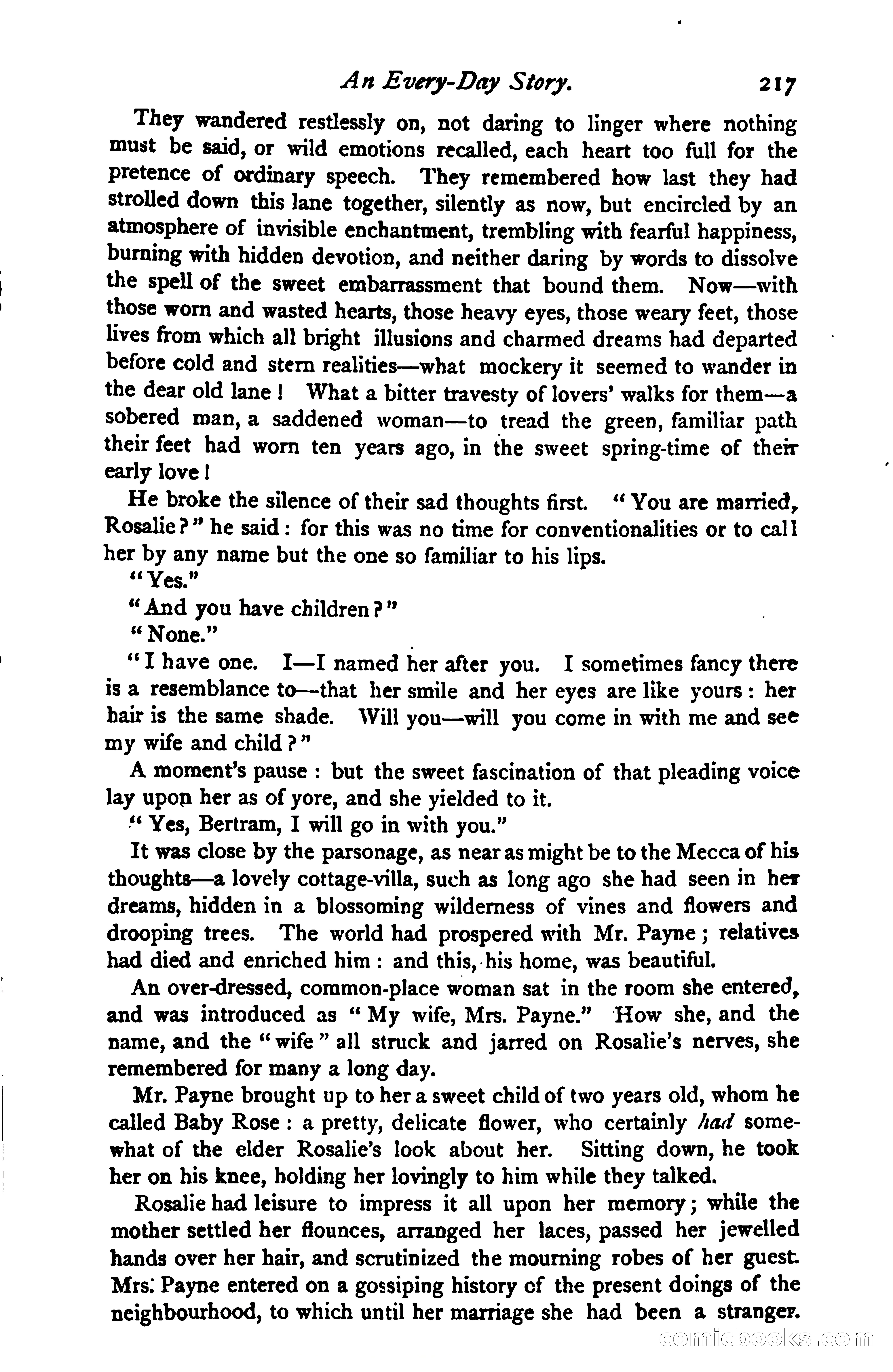
A restored page from Pulp Fiction, 1875. Page through the whole issue in the reader above.
📄 Transcribed text from this page (OCR, searchable)
Machine-transcribed from the original scan — historical spelling and the odd misread are preserved.
An Every-Day Story. 217 They wandered restlessly on, not daring to linger where nothing must be said, or wild emotions recalled, each heart too full for the pretence of ordinary speech. They remembered how last they had strolled down this lane together, silently as now, but encircled by an atmosphere of invisible enchantment, trembling with fearful happiness, burning with hidden devotion, and neither daring by words to dissolve the spell of the sweet embarrassment that bound them. Now—with those worn and wasted hearts, those heavy eyes, those weary feet, those lives from which all bright illusions and charmed dreams had departed before cold and stern realities—what mockery it seemed to wander in the dear old lane! What a bitter travesty of lovers’ walks for them—a sobered man, a saddened woman—to tread the green, familiar path their feet had worn ten years ago, in the sweet spring-time of their early love ! He broke the silence of their sad thoughts first. ‘‘ You are married, Rosalie?” he said: for this was no time for conventionalities or to call her by any name but the one so familiar to his lips. 66 Yes. 99 “And you have children ?” * None.” | ‘“‘Thave one. I—I named her after you. I sometimes fancy there is a resemblance to—that her smile and her eyes are like yours: her hair is the same shade. Will you—will you come in with me and see my wife and child ?” A moment's pause : but the sweet fascination of that pleading voice lay upon her as of yore, and she yielded to it. ** Yes, Bertram, I will go in with you.” It was close by the parsonage, as near as might be to the Mecca of his thoughts—a lovely cottage-villa, such as long ago she had seen in her dreams, hidden in a blossoming wilderness of vines and flowers and drooping trees. The world had prospered with Mr. Payne ; relatives had died and enriched him: and this,-his home, was beautiful. An over-dressed, common-place woman sat in the room she entered, and was introduced as “ My wife, Mrs. Payne.” ‘How she, and the name, and the “wife ” all struck and jarred on Rosalie’s nerves, she remembered for many a long day. Mr. Payne brought up to her a sweet child of two years old, whom he called Baby Rose: a pretty, delicate flower, who certainly ad some- what of the elder Rosalie’s look about her. Sitting down, he took her on his knee, holding her lovingly to him while they talked. Rosalie had leisure to impress it all upon her memory; while the mother settled her flounces, arranged her laces, passed her jewelled hands over her hair, and scrutinized the mourning robes of her guest. Mrs: Payne entered on a gossiping history cf the present doings of the neighbourhood, to which until her marriage she had been a stranger. ecomniclooolkks _ (CO)