
Pulp Fiction, 1865 · page 65 of 399
The Argosy — page 65: what you’re looking at
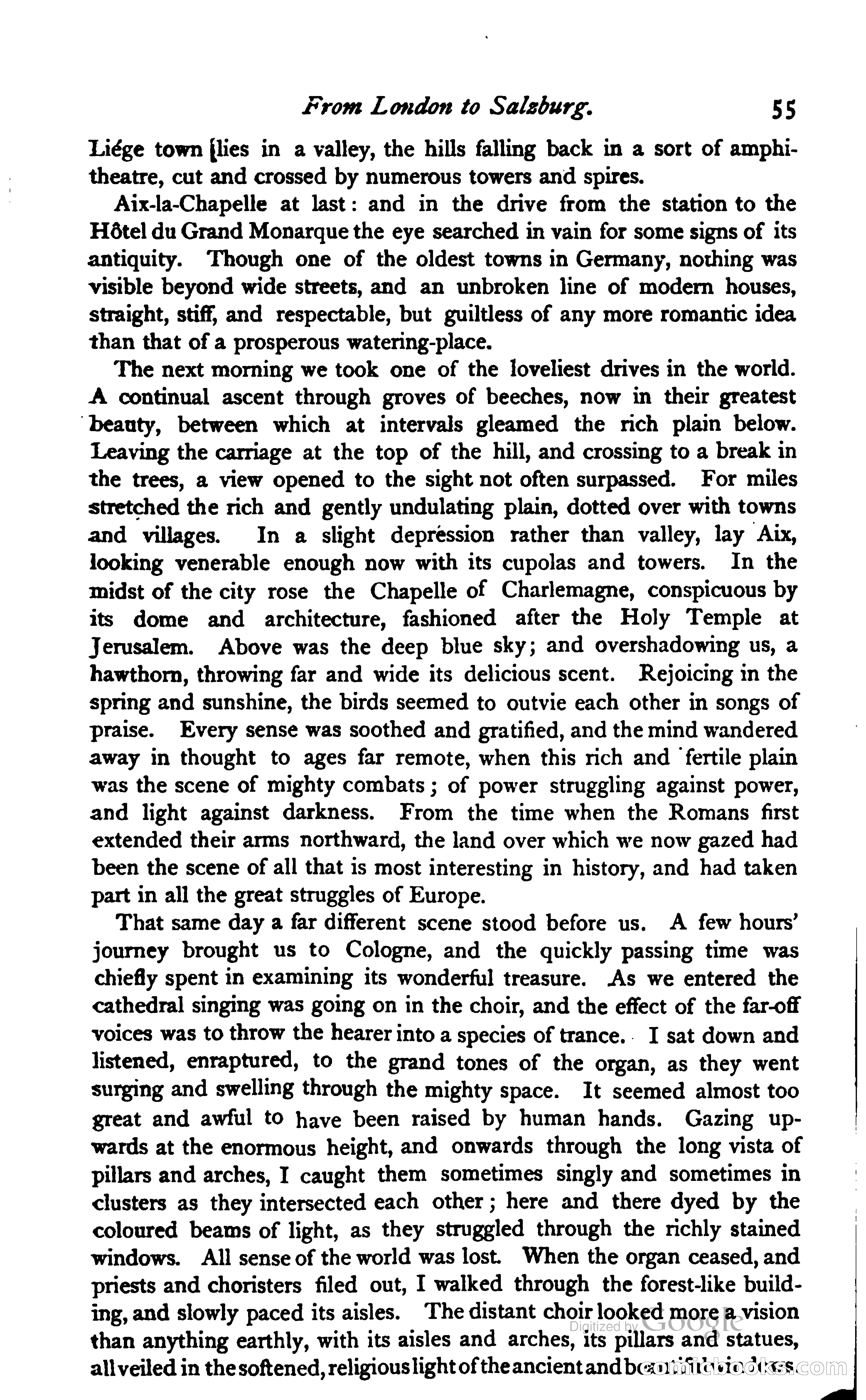
A restored page from Pulp Fiction, 1865. Page through the whole issue in the reader above.
📄 Transcribed text from this page (OCR, searchable)
Machine-transcribed from the original scan — historical spelling and the odd misread are preserved.
from London to Salzburg. 55 Liége town jlies in a valley, the hills falling back in a sort of amphi- theatre, cut and crossed by numerous towers and spires. Aix-la-Chapelle at last: and in the drive from the station to the H6tel du Grand Monarque the eye searched in vain for some signs of its antiquity. Though one of the oldest towns in Germany, nothing was visible beyond wide streets, and an unbroken line of modern houses, straight, stiff, and respectable, but guiltless of any more romantic idea than that of a prosperous watering-place. The next morning we took one of the loveliest drives in the world. A continual ascent through groves of beeches, now in their greatest beauty, between which at intervals gleamed the nich plain below. Leaving the carriage at the top of the hill, and crossing to a break in the trees, a view opened to the sight not often surpassed. For miles stretched the rich and gently undulating plain, dotted over with towns and villages. In a slight depression rather than valley, lay Aix, jooking venerable enough now with its cupolas and towers. In the midst of the city rose the Chapelle of Charlemagne, conspicuous by its dome and architecture, fashioned after the Holy Temple at Jerusalem. Above was the deep blue sky; and overshadowing us, a hawthorn, throwing far and wide its delicious scent. Rejoicing in the spring and sunshine, the birds seemed to outvie each other in songs of praise. Every sense was soothed and gratified, and the mind wandered away in thought to ages far remote, when this nich and fertile plain was the scene of mighty combats ; of power struggling against power, and light against darkness. From the time when the Romans first extended their arms northward, the land over which we now gazed had been the scene of all that is most interesting in history, and had taken part in all the great struggles of Europe. That same day a far different scene stood before us. A few hours’ journey brought us to Cologne, and the quickly passing time was chiefly spent in examining its wonderful treasure. As we entered the cathedral singing was going on in the choir, and the effect of the far-off voices was to throw the hearer into a species of trance.. I sat down and listened, enraptured, to the grand tones of the organ, as they went surging and swelling through the mighty space. It seemed almost too great and awful to have been raised by human hands. Gazing up- wards at the enormous height, and onwards through the long vista of pillars and arches, I caught them sometimes singly and sometimes in clusters as they intersected each other; here and there dyed by the coloured beams of light, as they struggled through the richly stained windows. All sense of the world was lost. When the organ ceased, and priests and choristers filed out, I walked through the forest-like build- ing, and slowly paced its aisles. The distant choir looked more a.vision than anything earthly, with its aisles and arches, its pillars and statues, all veiled in the softened, religiouslight of theancientand b@aniitto tases com _