
Pulp Fiction, 1865 · page 64 of 399
The Argosy — page 64: what you’re looking at
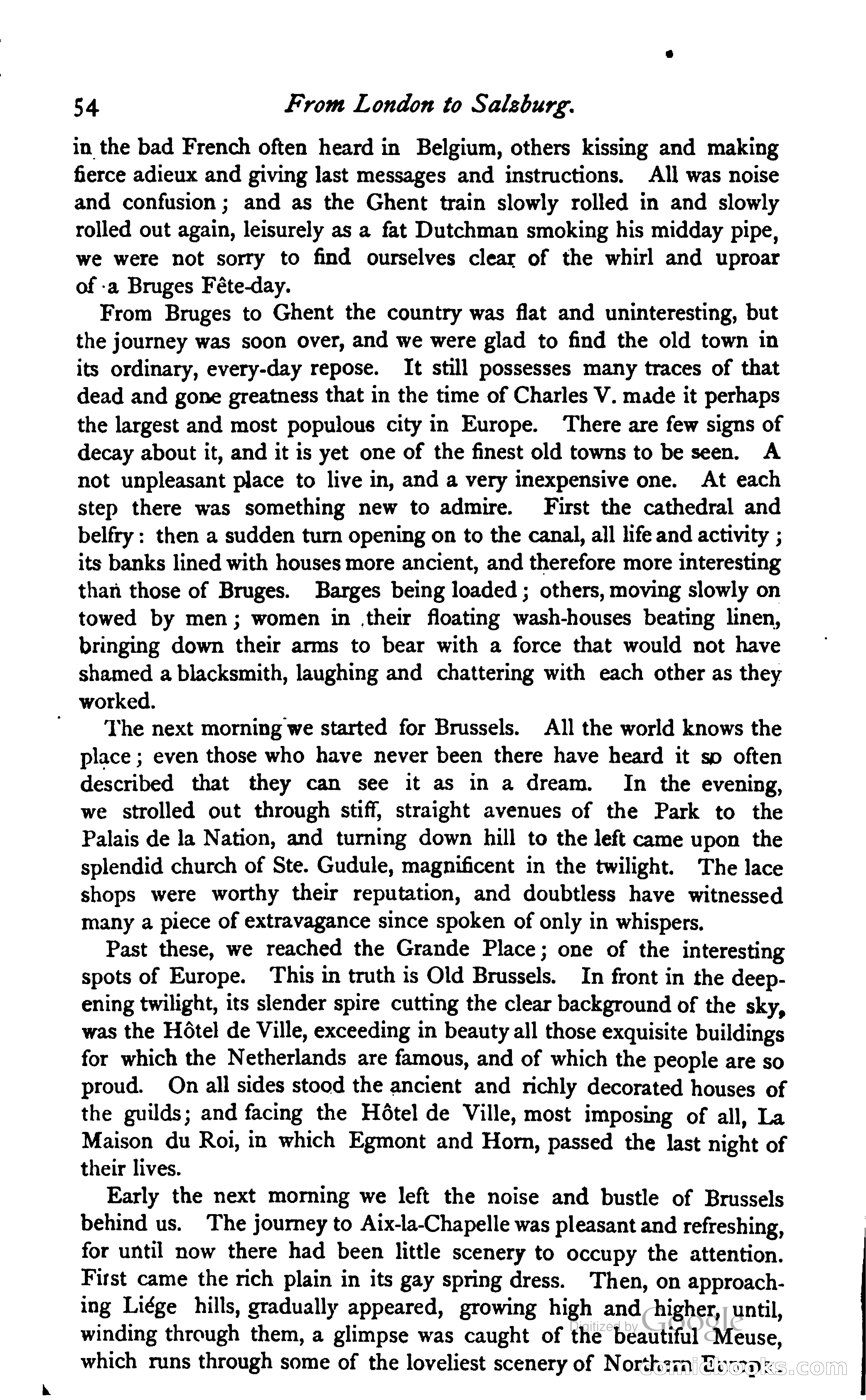
A restored page from Pulp Fiction, 1865. Page through the whole issue in the reader above.
📄 Transcribed text from this page (OCR, searchable)
Machine-transcribed from the original scan — historical spelling and the odd misread are preserved.
54 From London to Salzburg. in the bad French often heard in Belgium, others kissing and making fierce adieux and giving last messages and instructions. All was noise and confusion ; and as the Ghent train slowly rolled in and slowly rolled out again, leisurely as a fat Dutchman smoking his midday pipe, we were not sorry to find ourselves clear of the whirl and uproar of -a Bruges Féte-day. From Bruges to Ghent the country was flat and uninteresting, but the journey was soon over, and we were glad to find the old town in its ordinary, every-day repose. It still possesses many traces of that dead and gone greatness that in the time of Charles V. made it perhaps the largest and most populous city in Europe. There are few signs of decay about it, and it is yet one of the finest old towns to be seen. A not unpleasant place to live in, and a very inexpensive one. At each step there was something new to admire. First the cathedral and belfry : then a sudden turn opening on to the canal, all life and activity ; its banks lined with houses more ancient, and therefore more interesting than those of Bruges. Barges being loaded ; others, moving slowly on towed by men; women in their floating wash-houses beating linen, bringing down their arms to bear with a force that would not have shamed a blacksmith, laughing and chattering with each other as they worked. _ The next morning we started for Brussels. All the world knows the place ; even those who have never been there have heard it sp often described that they can see it as in a dream. In the evening, we strolled out through stiff, straight avenues of the Park to the Palais de la Nation, and turning down hill to the left came upon the splendid church of Ste. Gudule, magnificent in the twilight. The lace shops were worthy their reputation, and doubtless have witnessed many a piece of extravagance since spoken of only in whispers. Past these, we reached the Grande Place; one of the interesting spots of Europe. This in truth is Old Brussels. In front in the deep- ening twilight, its slender spire cutting the clear background of the sky, was the Hotel de Ville, exceeding in beauty all those exquisite buildings for which the Netherlands are famous, and of which the people are so proud. On all sides stood the ancient and richly decorated houses of the guilds; and facing the Hotel de Ville, most Imposing of all, La Maison du Rol, in which Egmont and Horn, passed the last night of their lives. Early the next morning we left the noise and bustle of Brussels behind us. The journey to Aix-la-Chapelle was pleasant and refreshing, for until now there had been little scenery to occupy the attention. First came the nch plain in its gay spring dress. Then, on approach- ing Lidge hills, gradually appeared, growing high and_ higher, until, winding through them, a glimpse was caught of the beautiful “Meuse, which runs through some of the loveliest scenery of Northzza Dont = (C(O) in