
Pulp Fiction, 1865 · page 316 of 399
The Argosy — page 316: what you’re looking at
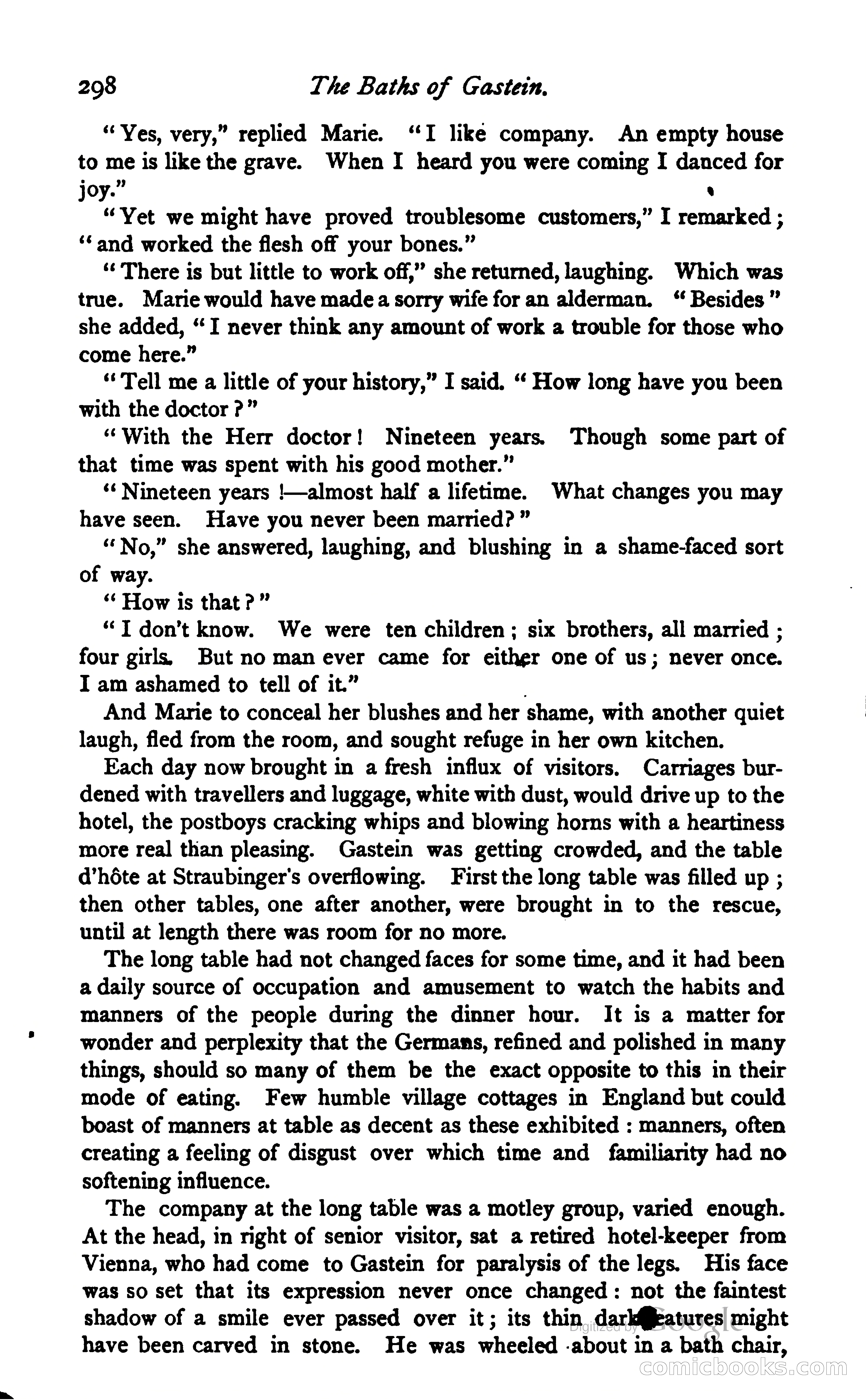
A restored page from Pulp Fiction, 1865. Page through the whole issue in the reader above.
📄 Transcribed text from this page (OCR, searchable)
Machine-transcribed from the original scan — historical spelling and the odd misread are preserved.
208 The Baths of Gastein. “Yes, very,” replied Marie. ‘I like company. An empty house to me is like the grave. When I heard you were coming I danced for Joy.” ° “Yet we might have proved troublesome customers,” I remarked ; ‘*and worked the flesh off your bones.” ‘¢ There is but little to work off,” she returned, laughing. Which was true. Marie would have made a sorry wife for an alderman. ‘“ Besides ” she added, “I never think any amount of work a trouble for those who come here.” ‘Tell me a little of your history,” I said. “‘ How long have you been with the doctor ?” ‘With the Herr doctor! Nineteen years. Though some part of that time was spent with his good mother.” ‘¢ Nineteen years !—almost half a lifetime. What changes you may have seen. Have you never been married? ” “No,” she answered, laughing, and blushing in a shame-faced sort of way. ‘‘ How is that ?” ‘‘I don’t know. We were ten children; six brothers, all married ; four girls, But no man ever came for either one of us; never once. I am ashamed to tell of it.” | And Marie to conceal her blushes and her shame, with another quiet laugh, fled from the room, and sought refuge in her own kitchen. Each day now brought in a fresh influx of visitors. Carriages bur- dened with travellers and luggage, white with dust, would drive up to the hotel, the postboys cracking whips and blowing horns with a heartiness more real than pleasing. Gastein was getting crowded, and the table d’héte at Straubinger's overflowing. First the long table was filled up ; then other tables, one after another, were brought in to the rescue, until at length there was room for no more. | The long table had not changed faces for some time, and it had been a daily source of occupation and amusement to watch the habits and manners of the people during the dinner hour. It is a matter for wonder and perplexity that the Germans, refined and polished in many things, should so many of them be the exact opposite to this in their mode of eating. Few humble village cottages in England but could boast of manners at table as decent as these exhibited : manners, often creating a feeling of disgust over which time and familiarity had no softening influence. The company at the long table was a motley group, varied enough. At the head, in right of senior visitor, sat a retired hotel-keeper from Vienna, who had come to Gastein for paralysis of the legs. His face was so set that its expression never once changed: not the faintest shadow of a smile ever passed over it; its thin dark@eatures might have been carved in stone. He was wheeled -about in a bath chair, Ecomicloooks (C(O) mn —_)