
Pulp Fiction, 1865 · page 315 of 399
The Argosy — page 315: what you’re looking at
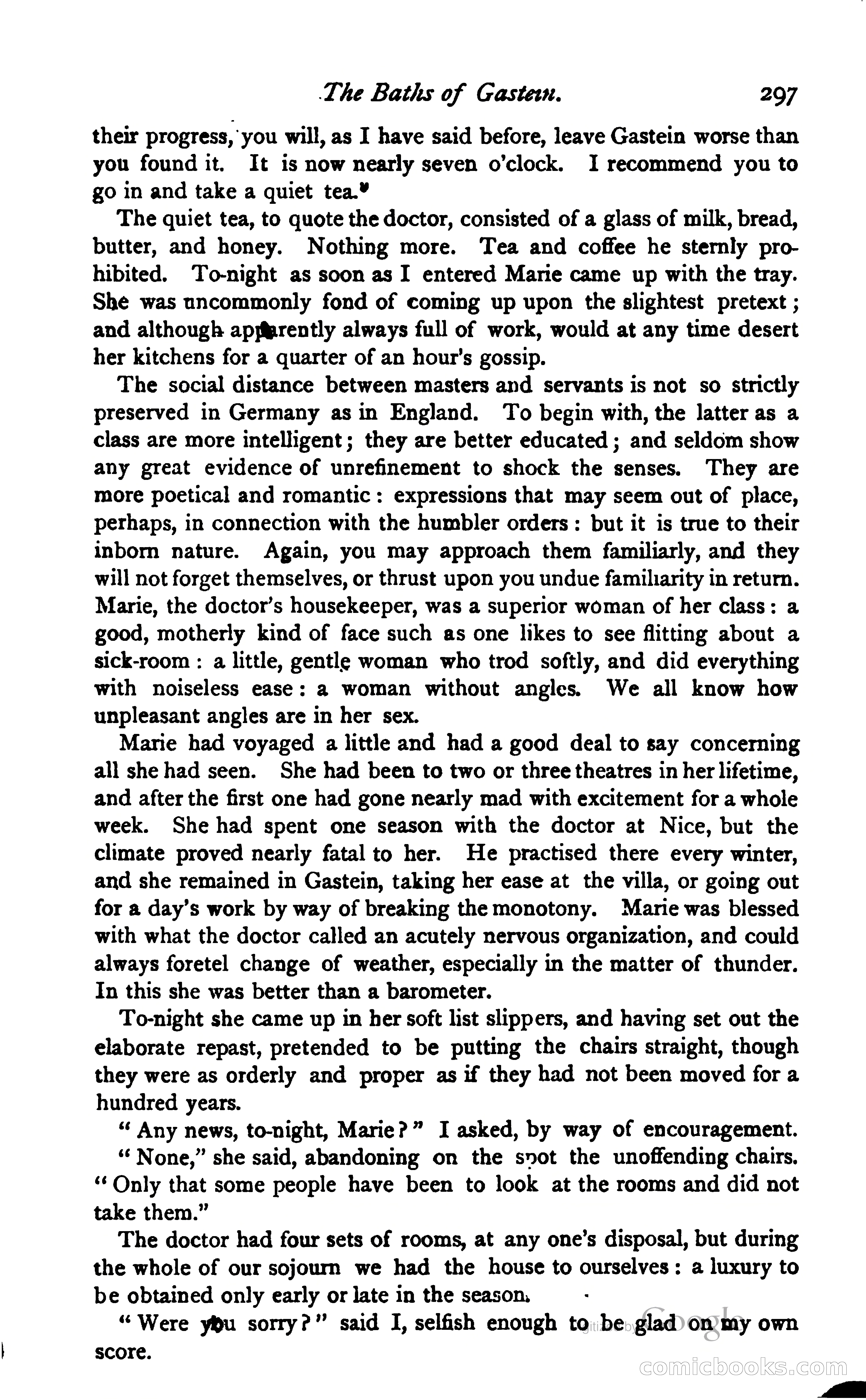
A restored page from Pulp Fiction, 1865. Page through the whole issue in the reader above.
📄 Transcribed text from this page (OCR, searchable)
Machine-transcribed from the original scan — historical spelling and the odd misread are preserved.
The Baths of Gastetn. 297 their progress, you will, as I have said before, leave Gastein worse than you found it. It 1s now nearly seven o’clock. I recommend you to go in and take a quiet tea.” The quiet tea, to quote the doctor, consisted of a glass of milk, bread, butter, and honey. Nothing more. Tea and coffee he sternly pro- hibited. To-night as soon as I entered Marie came up with the tray. She was uncommonly fond of coming up upon the slightest pretext ; and although apyfrently always full of work, would at any time desert her kitchens for a quarter of an hour's gossip. The social distance between masters and servants is not so strictly preserved in Germany asin England. To begin with, the latter as a class are more intelligent; they are better educated ; and seldom show any great evidence of unrefinement to shock the senses. They are more poetical and romantic: expressions that may seem out of place, perhaps, in connection with the humbler orders: but it is true to their inborn nature. Again, you may approach them familiarly, and they will not forget themselves, or thrust upon you undue familiarity in return. Marie, the doctor’s housekeeper, was a superior woman of her class: a good, motherly kind of face such as one likes to see flitting about a sick-room : a little, gentle woman who trod softly, and did everything with noiseless ease: a woman without angles. We all know how unpleasant angles are in her sex. Marie had voyaged a little and had a good deal to say concerning all she had seen. She had been to two or three theatres in her lifetime, and after the first one had gone nearly mad with excitement for a whole week. She had spent one season with the doctor at Nice, but the climate proved nearly fatal to her. He practised there every winter, and she remained in Gastein, taking her ease at the villa, or going out for a day’s work by way of breaking the monotony. Marie was blessed with what the doctor called an acutely nervous organization, and could always foretel change of weather, especially in the matter of thunder. In this she was better than a barometer. To-night she came up mn her soft list slippers, and having set out the elaborate repast, pretended to be putting the chairs straight, though they were as orderly and proper as if they had not Deen moved for a hundred years. “ Any news, to-night, Marie?” I asked, by way of encouragement. ‘‘ None,” she said, abandoning on the snot the unoffending chairs. ‘¢ Only that some people have been to look at the rooms and did not take them.” The doctor had four sets of rooms, at any one’s disposal, but during the whole of our sojoum we had the house to ourselves: a luxury to be obtained only early or late in the season, “Were y®u sorry?” said I, selfish enough to\ be.glad)on)my own score. ECOMicoOOKS.CoOm yl