
Pulp Fiction, 1865 · page 22 of 399
The Argosy — page 22: what you’re looking at
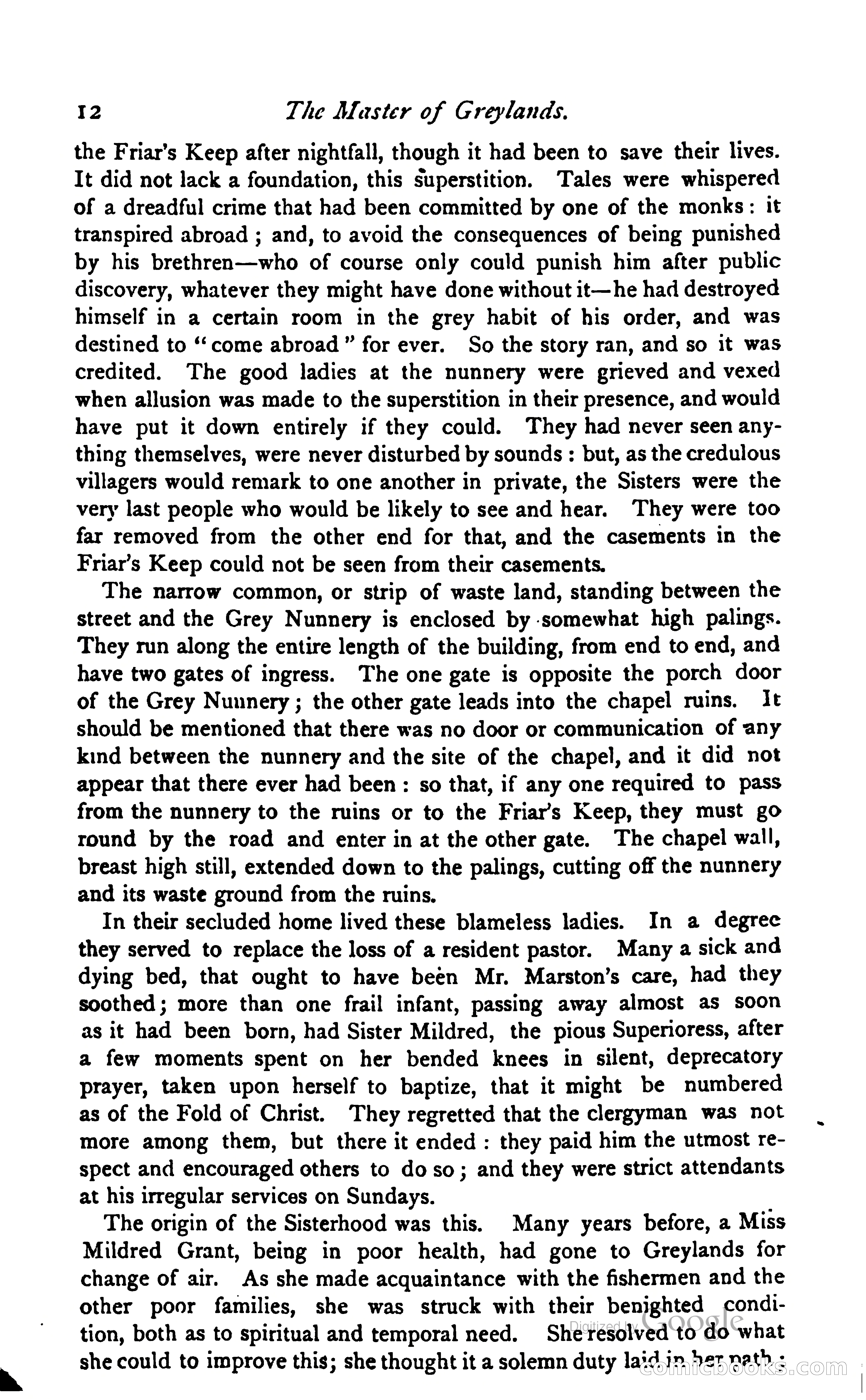
A restored page from Pulp Fiction, 1865. Page through the whole issue in the reader above.
📄 Transcribed text from this page (OCR, searchable)
Machine-transcribed from the original scan — historical spelling and the odd misread are preserved.
12 The Master of Greylands. the Friar’s Keep after nightfall, though it had been to save their lives. It did not lack a foundation, this superstition. Tales were whispered of a dreadful crime that had been committed by one of the monks: It transpired abroad ; and, to avoid the consequences of being punished by his brethren—who of course only could punish him after public discovery, whatever they might have done without it—he had destroyed himself in a certain room in the grey habit of his order, and was destined to ‘‘come abroad ” for ever. So the story ran, and so it was credited. The good ladies at the nunnery were grieved and vexed when allusion was made to the superstition in their presence, and would have put it down entirely if they could. They had never seen any- thing themselves, were never disturbed by sounds : but, as the credulous villagers would remark to one another in private, the Sisters were the very last people who would be likely to see and hear. They were too far removed from the other end for that, and the casements in the Friar’s Keep could not be seen from their casements. The narrow common, or strip of waste land, standing between the street and the Grey Nunnery is enclosed by somewhat high palings. They run along the entire length of the building, from end to end, and have two gates of ingress. The one gate is opposite the porch door of the Grey Nunnery ; the other gate leads into the chapel ruins. It should be mentioned that there was no door or communication of any kind between the nunnery and the site of the chapel, and it did not appear that there ever had been: so that, if any one required to pass from the nunnery to the ruins or to the Friar’s Keep, they must go round by the road and enter in at the other gate. The chapel wall, breast high still, extended down to the palings, cutting off the nunnery and its waste ground from the ruins. In their secluded home lived these blameless ladies. In a degrec they served to replace the loss of a resident pastor. Many a sick and dying bed, that ought to have been Mr. Marston’s care, had they soothed; more than one frail infant, passing away almost as soon as it had been born, had Sister Mildred, the pious Superioress, after a few moments spent on her bended knees in silent, deprecatory prayer, taken upon herself to baptize, that it might be numbered as of the Fold of Christ. They regretted that the clergyman was not more among them, but there it ended : they paid him the utmost re- spect and encouraged others to do so; and they were strict attendants at his irregular services on Sundays. The origin of the Sisterhood was this. Many years before, a Miss Mildred Grant, being in poor health, had gone to Greylands for change of air. As she made acquaintance with the fishermen and the other poor families, she was struck with their benighted condi- tion, both as to spiritual and temporal need. She resolved to do what she could to improve this; she thought it a solemn duty laid.jn. yet nat. (C(O)