
Pulp Fiction, 1865 · page 214 of 399
The Argosy — page 214: what you’re looking at
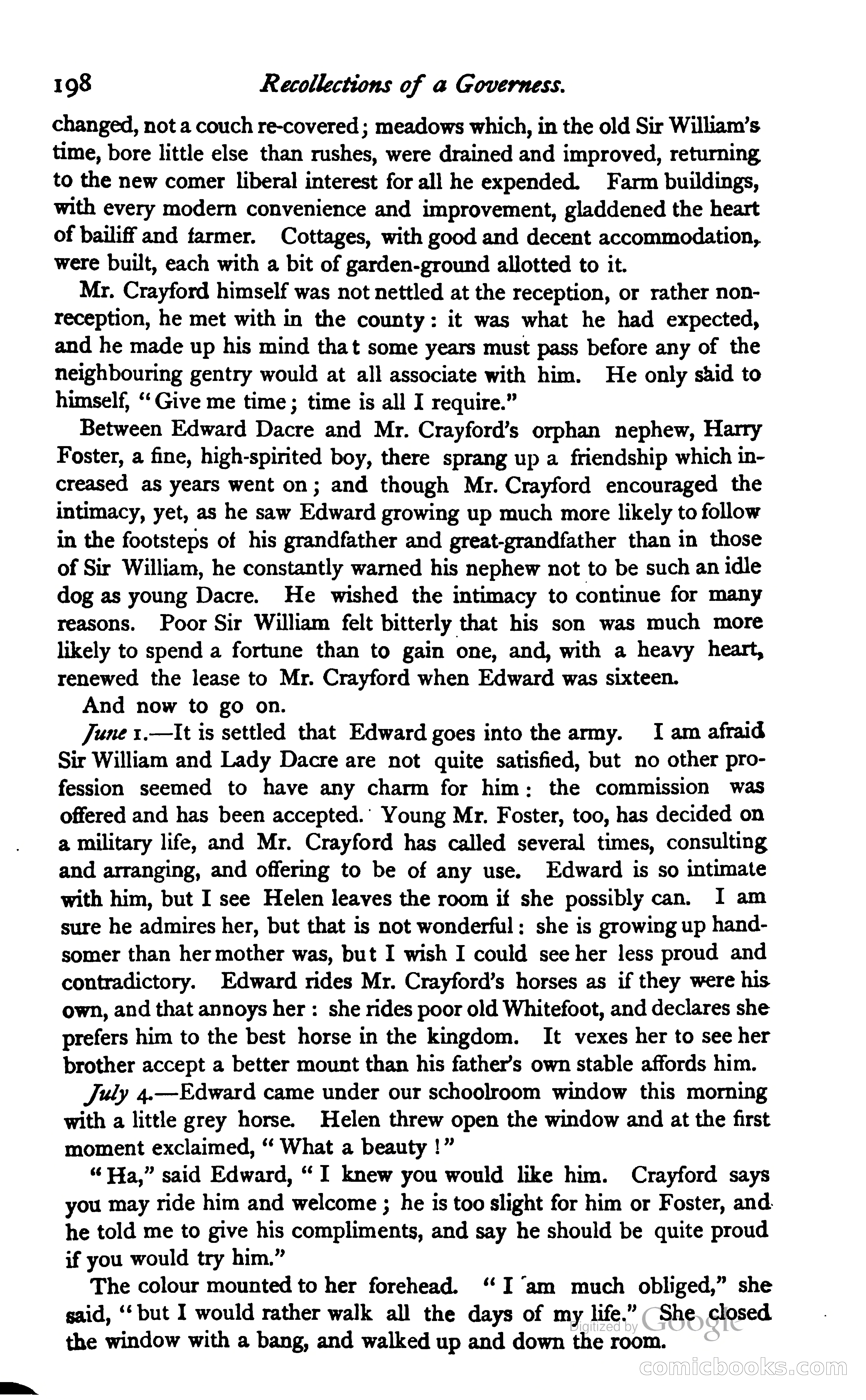
A restored page from Pulp Fiction, 1865. Page through the whole issue in the reader above.
📄 Transcribed text from this page (OCR, searchable)
Machine-transcribed from the original scan — historical spelling and the odd misread are preserved.
198 Recollections of a Governess. changed, not a couch re-covered ; meadows which, in the old Sir William’s time, bore little else than rushes, were drained and improved, returning to the new comer liberal interest for all he expended. Farm buildings, with every modern convenience and improvement, gladdened the heart of bailiff and farmer. Cottages, with good and decent accommodation, were built, each with a bit of garden-ground allotted to it. Mr. Crayford himself was not nettled at the reception, or rather non- reception, he met with in the county: it was what he had expected, and he made up his mind that some years must pass before any of the neighbouring gentry would at all associate with him. He only said to himself, ‘‘Give me time; time is all I require.” Between Edward Dacre and Mr. Crayford’s orphan nephew, Harry Foster, a fine, high-spirited boy, there sprang up a friendship which in- creased as years went on; and though Mr. Crayford encouraged the intimacy, yet, as he saw Edward growing up much more likely to follow in the footsteps of his grandfather and great-grandfather than in those of Sir William, he constantly warned his nephew not to be such an idle dog as young Dacre. He wished the intimacy to continue for many reasons. Poor Sir William felt bitterly that his son was much more likely to spend a fortune than to gain one, and, with a heavy heart, renewed the lease to Mr. Crayford when Edward was sixteen. And now to go on. June 1.—It is settled that Edward goes into the army. I am afraid Sir William and Lady Dacre are not quite satisfied, but no other pro- fession seemed to have any charm for him: the commission was offered and has been accepted.’ Young Mr. Foster, too, has decided on a military life, and Mr. Crayford has called several times, consulting and arranging, and offering to be of any use. Edward is so intimate with him, but I see Helen leaves the room if she possibly can. I am sure he admires her, but that is not wonderful: she is growing up hand- somer than her mother was, but I wish I could see her less proud and contradictory. Edward rides Mr. Crayford’s horses as if they were his own, and that annoys her: she ndes poor old Whitefoot, and declares she prefers him to the best horse in the kingdom. It vexes her to see her brother accept a better mount than his father’s own stable affords him. July 4.—Edward came under our schoolroom window this morning with a little grey horse. Helen threw open the window and at the first moment exclaimed, ‘“‘ What a beauty !” “Ha.” said Edward, “ I knew you would like him. Crayford says you may ride him and welcome ; he is too slight for him or Foster, and. he told me to give his compliments, and say he should be quite proud if you would try him.” The colour mounted to her forehead. ‘Iam much obliged,” she said, ‘‘ but I would rather walk all the days of my life.” ( She, closed the window with a bang, and walked up and down the room. ECoOMmicloooks (C(O) in —_)