
Pulp Fiction, 1865 · page 208 of 399
The Argosy — page 208: what you’re looking at
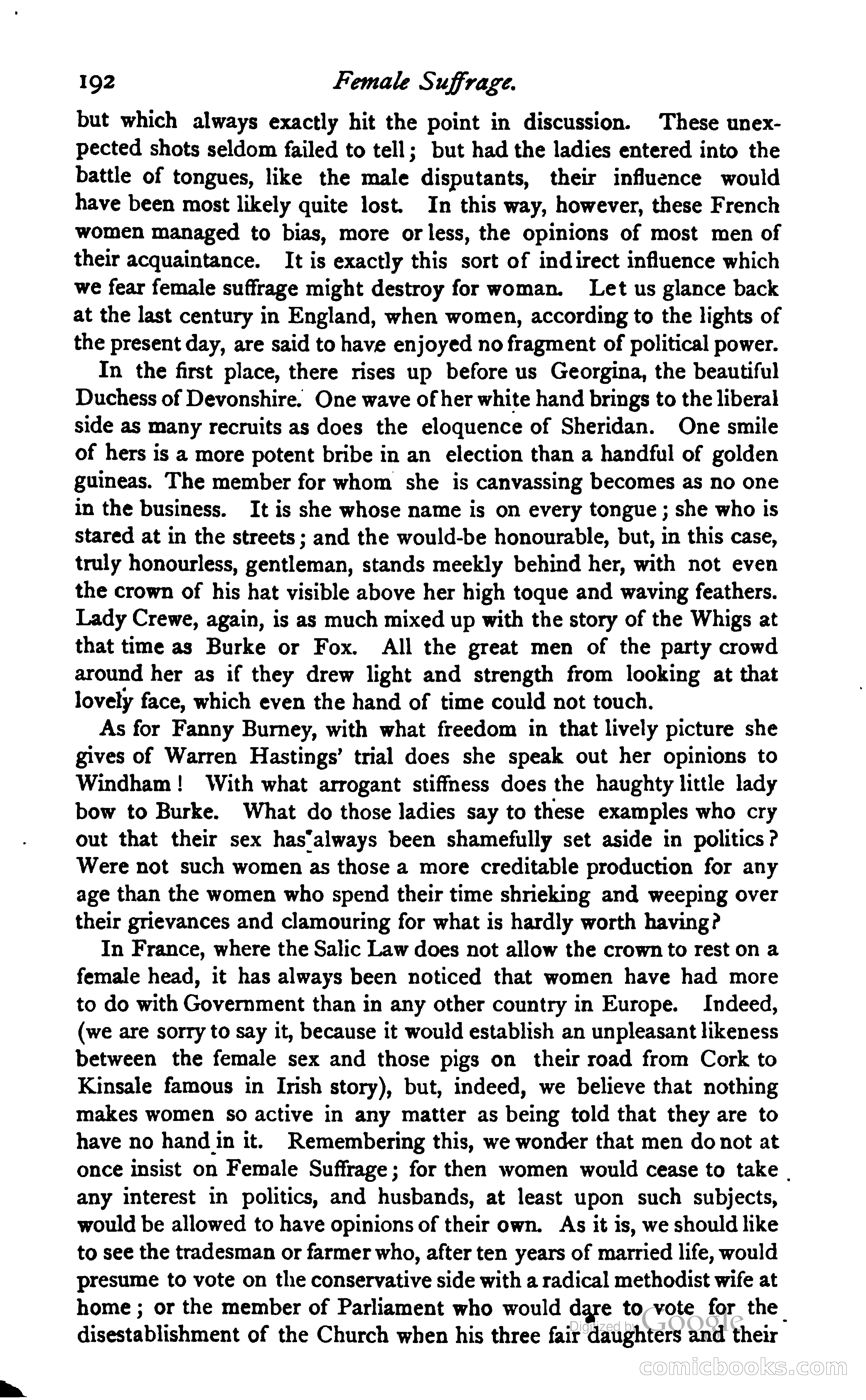
A restored page from Pulp Fiction, 1865. Page through the whole issue in the reader above.
📄 Transcribed text from this page (OCR, searchable)
Machine-transcribed from the original scan — historical spelling and the odd misread are preserved.
192 Female Suffrage. but which always exactly hit the point in discussion. These unex- pected shots seldom failed to tell; but had the ladies entered into the battle of tongues, like the male disputants, their influence would have been most likely quite lost. In this way, however, these French women managed to bias, more orless, the opinions of most men of their acquaintance. It is exactly this sort of indirect influence which we fear female suffrage might destroy for woman. Let us glance back at the last century in England, when women, according to the lights of the present day, are said to have enjoyed no fragment of political power. In the first place, there rises up before us Georgina, the beautiful Duchess of Devonshire. One wave of her white hand brings to the liberal side as many recruits as does the eloquence of Sheridan. One smile of hers is a more potent bribe in an election than a handful of golden guineas. The member for whom she is canvassing becomes as no one in the business. It is she whose name is on every tongue ; she who is stared at in the streets ; and the would-be honourable, but, in this case, truly honourless, gentleman, stands meekly behind her, with not even the crown of his hat visible above her high toque and waving feathers. Lady Crewe, again, is as much mixed up with the story of the Whigs at that time as Burke or Fox. All the great men of the party crowd around her as if they drew light and strength from looking at that lovely face, which even the hand of time could not touch. As for Fanny Bumey, with what freedom in that lively picture she gives of Warren Hastings’ trial does she speak out her opinions to Windham! With what arrogant stiffness does the haughty little lady bow to Burke. What do those ladies say to these examples who cry out that their sex has’always been shamefully set aside in politics? Were not such women as those a more creditable production for any age than the women who spend their time shneking and weeping over their grievances and clamouring for what is hardly worth having? In France, where the Salic Law does not allow the crown to rest on a female head, it has always been noticed that women have had more to do with Government than in any other country in Europe. Indeed, (we are sorry to say it, because it would establish an unpleasant hkeness between the female sex and those pigs on their road from Cork to Kinsale famous in Irish story), but, indeed, we believe that nothing makes women so active in any matter as being told that they are to have no hand in it. Remembering this, we wonder that men donot at once insist on Female Suffrage; for then women would cease to take © any interest in politics, and husbands, at least upon such subjects, would be allowed to have opinions of their own. As it is, we should hike to see the tradesman or farmer who, after ten years of married life, would presume to vote on the conservative side with a radical methodist wife at home ; or the member of Parliament who would dare to, vote for the disestablishment of the Church when his three fair daughters and their ECoOMmicloooks (C(O) in —_)