
Pulp Fiction, 1887 · page 354 of 399
The Argosy — page 354: what you’re looking at
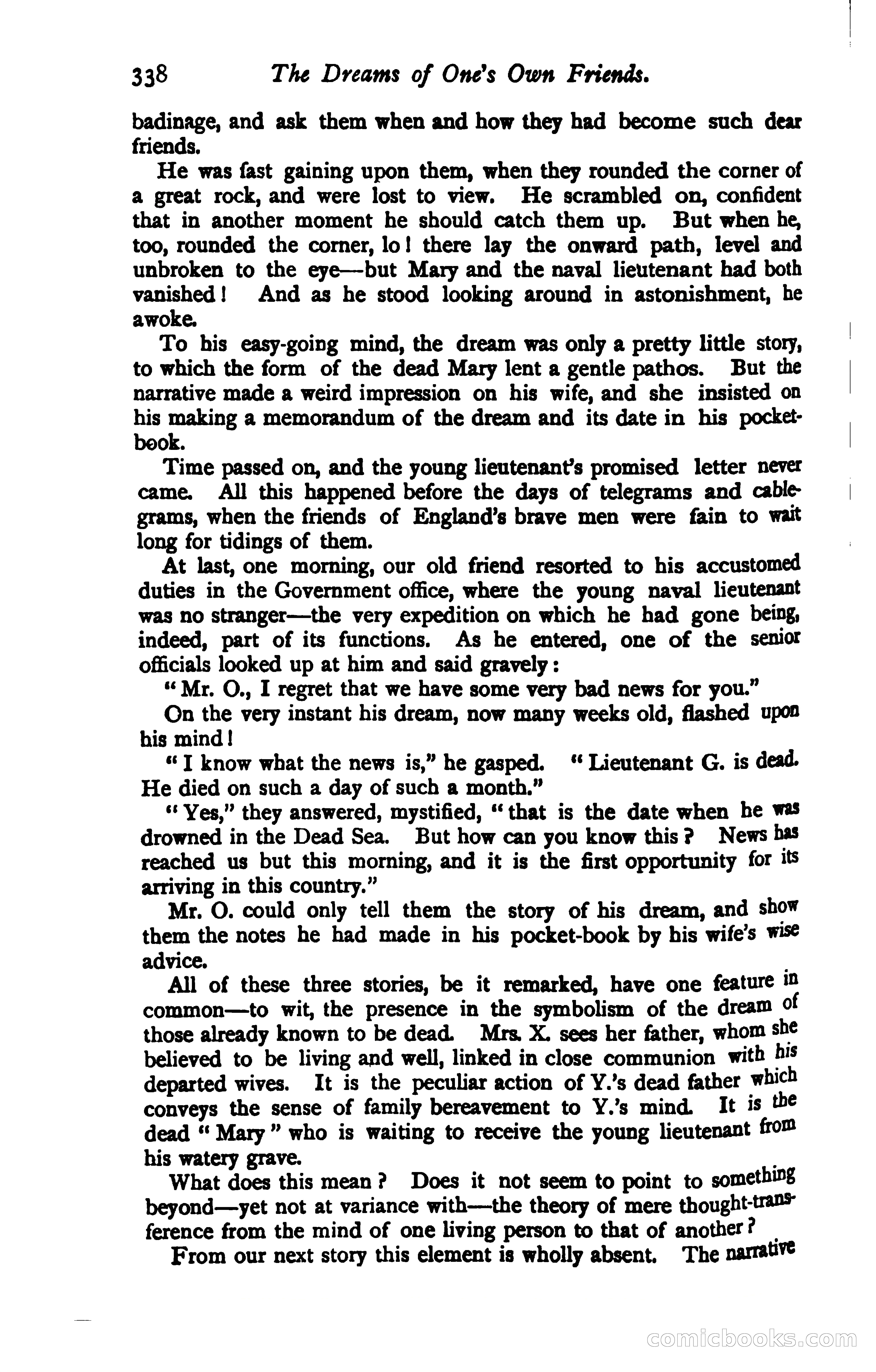
A restored page from Pulp Fiction, 1887. Page through the whole issue in the reader above.
📄 Transcribed text from this page (OCR, searchable)
Machine-transcribed from the original scan — historical spelling and the odd misread are preserved.
338 The Dreams of One's Own Friends. badinage, and ask them when and how they had become such dear friends. He was fast gaining upon them, when they rounded the corner of a great rock, and were lost to view. He scrambled on, confident that in another moment he should catch them up. But when he, too, rounded the corner, lo! there lay the onward path, level and unbroken to the eye—but Mary and the naval lieutenant had both vanished! And as he stood looking around in astonishment, he awoke. To his easy-going mind, the dream was only a pretty little story, to which the form of the dead Mary lent a gentle pathos. But the narrative made a weird impression on his wife, and she insisted on his making a memorandum of the dream and its date in his pocket- book. Time passed on, and the young lieutenant’s promised letter never came. All this happened before the days of telegrams and cable- grams, when the friends of England’s brave men were fain to wait long for tidings of them. At last, one morning, our old friend resorted to his accustomed duties in the Government office, where the young naval lieutenant was no stranger—the very expedition on which he had gone being, indeed, part of its functions. As he entered, one of the senior officials looked up at him and said gravely : “Mr. O., I regret that we have some very bad news for you.” Cn the very instant his dream, now many weeks old, flashed upon his mind! ‘I know what the news is,” he gasped. ‘ Lieutenant G. is dead. He died on such a day of such a month.” ‘¢ Ves,” they answered, mystified, ‘that is the date when he was drowned in the Dead Sea. But how can you know this? News bas reached us but this morning, and it is the first opportunity for 1t arriving in this country.” Mr. O. could only tell them the story of his dream, and show them the notes he had made in his pocket-book by his wife's wi advice. All of these three stories, be it remarked, have one feature 10 common—to wit, the presence in the symbolism of the dream ° those already known to be dead. Mrs. X. sees her father, whom she believed to be living and well, linked in close communion with his departed wives. It is the peculiar action of Y.’s dead father which conveys the sense of family bereavement to Y.’s mind. It is te dead ** Mary” who is waiting to receive the young lieutenant from his watery grave. What does this mean? Does it not seem to point to something beyond—yet not at variance with—the theory of mere thought-traD> ference from the mind of one living person to that of another? _ From our next story this element is wholly absent. The narrative ECOMICOOOKS. CO i