
Pulp Fiction, 1887 · page 328 of 399
The Argosy — page 328: what you’re looking at
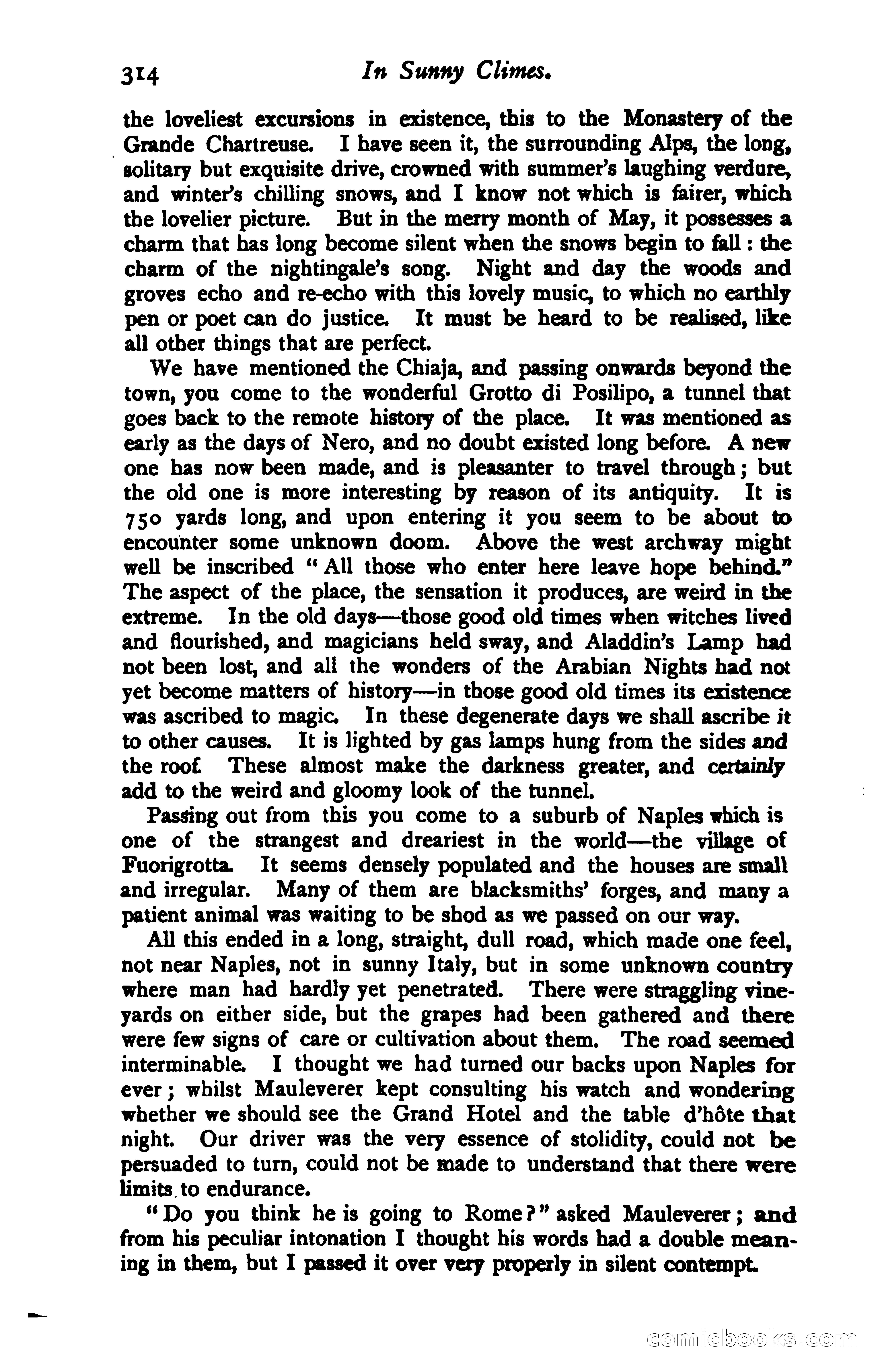
A restored page from Pulp Fiction, 1887. Page through the whole issue in the reader above.
📄 Transcribed text from this page (OCR, searchable)
Machine-transcribed from the original scan — historical spelling and the odd misread are preserved.
314 In Sunny Climes. the loveliest excursions in existence, this to the Monastery of the Grande Chartreuse. I have seen it, the surrounding Alps, the long, solitary but exquisite drive, crowned with summer’s laughing verdure, and winter’s chilling snows, and I know not which is fairer, which the lovelier picture. But in the merry month of May, it possesses a charm that has long become silent when the snows begin to fall : the charm of the nightingale’s song. Night and day the woods and groves echo and re-echo with this lovely music, to which no earthly pen or poet can do justice. It must be heard to be realised, like all other things that are perfect. We have mentioned the Chiaja, and passing onwards beyond the town, you come to the wonderful Grotto di Posilipo, a tunnel that goes back to the remote history of the place. It was mentioned as early as the days of Nero, and no doubt existed long before. A new one has now been made, and is pleasanter to travel through; but the old one is more interesting by reason of its antiquity. It is 750 yards long, and upon entering it you seem to be about to encounter some unknown doom. Above the west archway might well be inscribed ‘ All those who enter here leave hope behind.” The aspect of the place, the sensation it produces, are weird in the extreme. In the old days—those good old times when witches lived and flourished, and magicians held sway, and Aladdin’s Lamp had not been lost, and all the wonders of the Arabian Nights had not yet become matters of history—in those good old times its existence was ascribed to magic. In these degenerate days we shall ascribe it to other causes. It 1s lighted by gas lamps hung from the sides and the roof These almost make the darkness greater, and certainly add to the weird and gloomy look of the tunnel. Passing out from this you come to a suburb of Naples which is one of the strangest and dreariest in the world—the village of Fuorigrotta. It seems densely populated and the houses are small and irregular. Many of them are blacksmiths’ forges, and many a patient animal was waiting to be shod as we passed on our way. All this ended 1n a long, straight, dull road, which made one feel, not near Naples, not in sunny Italy, but in some unknown country where man had hardly yet penetrated. There were straggling vine- yards on either side, but the grapes had been gathered and there were few signs of care or cultivation about them. The road seemed interminable. I thought we had turned our backs upon Naples for ever ; whilst Mauleverer kept consulting his watch and wondering whether we should see the Grand Hotel and the table d’héte that night. Our driver was the very essence of stolidity, could not be persuaded to turn, could not be made to understand that there were limits to endurance. * Do you think he is going to Rome?” asked Mauleverer; and from his peculiar intonation I thought his words had a double mean- ing in them, but I passed it over very properly in silent contempt. CORNICE LOOKS (GO) i