
Pulp Fiction, 1887 · page 321 of 399
The Argosy — page 321: what you’re looking at
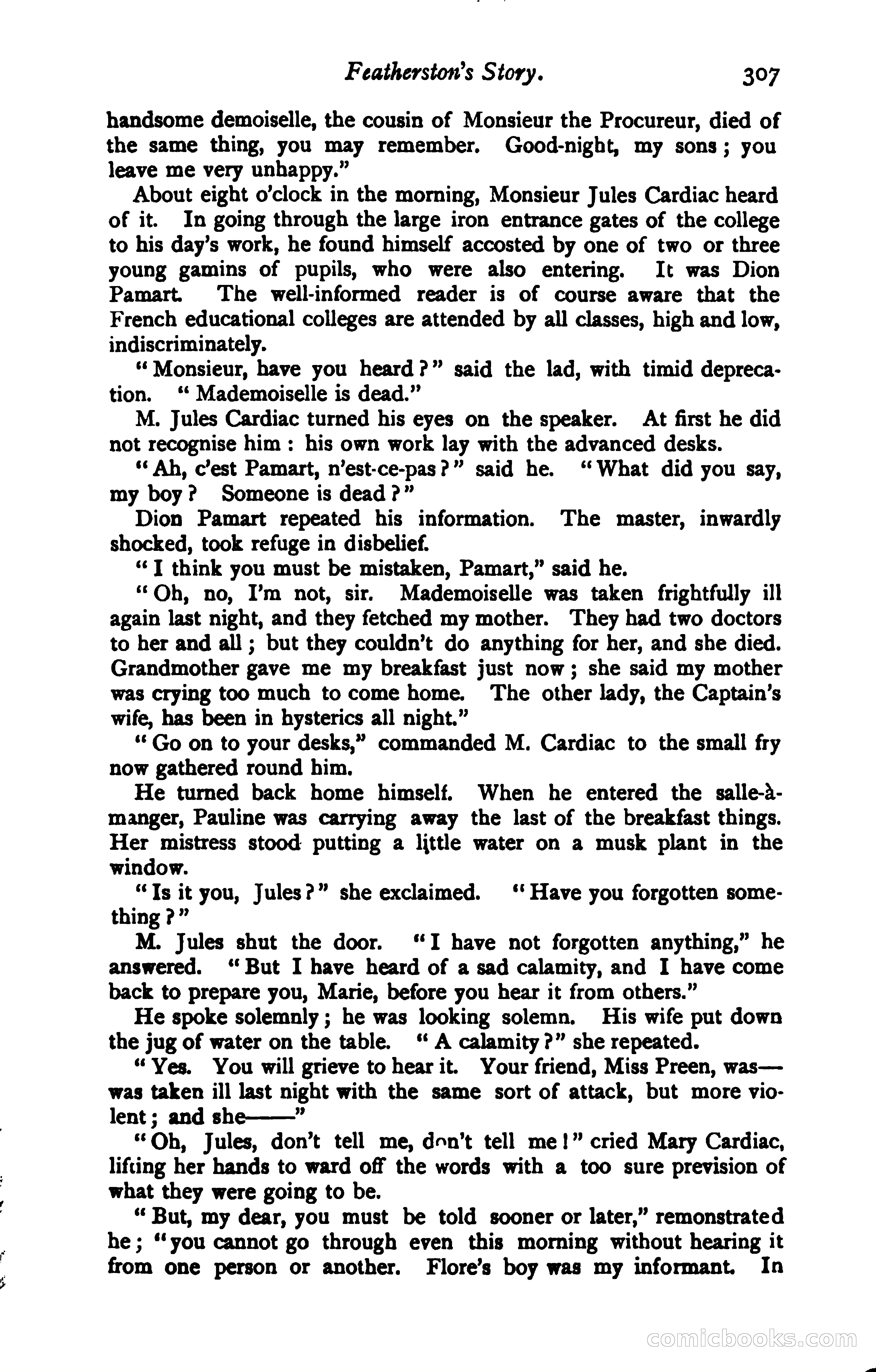
A restored page from Pulp Fiction, 1887. Page through the whole issue in the reader above.
📄 Transcribed text from this page (OCR, searchable)
Machine-transcribed from the original scan — historical spelling and the odd misread are preserved.
Featherston’s Story. 307 handsome demoiselle, the cousin of Monsieur the Procureur, died of the same thing, you may remember. Good-night, my sons; you leave me very unhappy.” About eight o’clock in the morming, Monsieur Jules Cardiac heard of it. In going through the large iron entrance gates of the college to his day’s work, he found himself accosted by one of two or three young gamins of pupils, who were also entering. It was Dion Pamart. The well-informed reader is of course aware that the French educational colleges are attended by all classes, high and low, indiscriminately. ‘Monsieur, have you heard?” said the lad, with timid depreca- tion. ‘*‘ Mademoiselle is dead.” M. Jules Cardiac turned his eyes on the speaker. At first he did not recognise him: his own work lay with the advanced desks. ‘* Ah, c’est Pamart, n’est-ce-pas?” said he. ‘‘What did you say, my boy? Someone is dead ?” Dion Pamart repeated his information. The master, inwardly shocked, took refuge in disbelief. ‘¢T think you must be mistaken, Pamart,” said he. ‘Qh, no, I’m not, sir. Mademoiselle was taken frightfully ill again last night, and they fetched my mother. They had two doctors to her and all ; but they couldn’t do anything for her, and she died. Grandmother gave me my breakfast just now; she said my mother was crying too much to come home. The other lady, the Captain’s wife, has been in hysterics all night.” ** Go on to your desks,” commanded M. Cardiac to the small fry now gathered round him. He turned back home himself. When he entered the salle-a- manger, Pauline was carrying away the last of the breakfast things. Her mistress stood putting a little water on a musk plant in the window. “Ts it you, Jules?” she exclaimed. ‘‘ Have you forgotten some- thing ?” M. Jules shut the door. “I have not forgotten anything,” he answered. ‘But I have heard of asad calamity, and I have come back to prepare you, Marie, before you hear it from others.” He spoke solemnly ; he was looking solemn. His wife put down the jug of water on the table. ‘ A calamity ?” she repeated. “Yes. You will grieve to hearit. Your friend, Miss Preen, was— was taken ill last night with the same sort of attack, but more vio- lent; and she——” Qh, Jules, don’t tell me, don’t tell me!” cried Mary Cardiac, lifing her hands to ward off the words with a too sure prevision of what they were going to be. “ But, my dear, you must be told sooner or later,” remonstrated he; “‘you cannot go through even this morning without hearing it from one person or another. Flore’s boy was my informant. In CORNICE LOOKS (GO)