
Pulp Fiction, 1887 · page 320 of 399
The Argosy — page 320: what you’re looking at
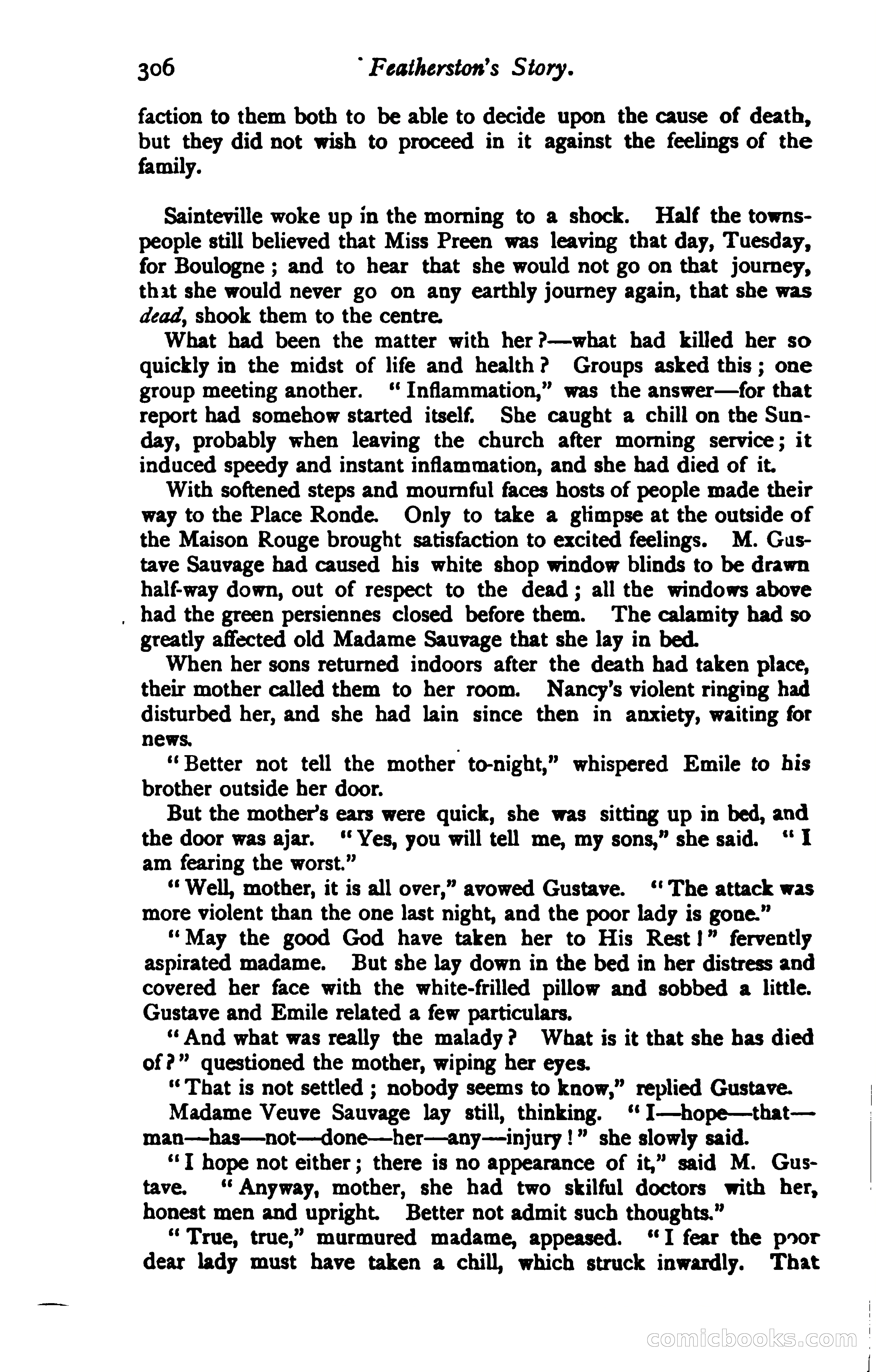
A restored page from Pulp Fiction, 1887. Page through the whole issue in the reader above.
📄 Transcribed text from this page (OCR, searchable)
Machine-transcribed from the original scan — historical spelling and the odd misread are preserved.
306 ' Featherston’s Story. faction to them both to be able to decide upon the cause of death, but they did not wish to proceed in it against the feelings of the family. Sainteville woke up in the morning to a shock. Half the towns- people still believed that Miss Preen was leaving that day, Tuesday, for Boulogne ; and to hear that she would not go on that journey, that she would never go on any earthly journey again, that she was dead, shook them to the centre. What had been the matter with her ?—what had killed her so quickly in the midst of life and health? Groups asked this; one group meeting another. ‘ Inflammation,” was the answer—for that report had somehow started itself. She caught a chill on the Sun- day, probably when leaving the church after morning service; it induced speedy and instant inflammation, and she had died of it. With softened steps and mournful faces hosts of people made their way to the Place Ronde. Only to take a ghmpse at the outside of the Maison Rouge brought satisfaction to excited feelings. M. Gus- tave Sauvage had caused his white shop window blinds to be drawn half-way down, out of respect to the dead; all the windows above _ had the green persiennes closed before them. The calamity had so greatly affected old Madame Sauvage that she lay in bed. When her sons returned indoors after the death had taken place, their mother called them to her room. Nancy’s violent ringing had disturbed her, and she had lain since then in anxiety, waiting for news. ‘Better not tell the mother to-night,” whispered Emile to his brother outside her door. But the mother’s ears were quick, she was sitting up in bed, and the door was ajar. ‘‘ Yes, you will tell me, my sons,” she said. “I am fearing the worst.” ‘* Well, mother, it is all over,” avowed Gustave. ‘' The attack was more violent than the one last night, and the poor lady is gone.” ‘‘ May the good God have taken her to His Rest!” fervently aspirated madame. But she lay down in the bed in her distress and covered her face with the white-frilled pillow and sobbed a little. Gustave and Emile related a few particulars, ** And what was really the malady? What is it that she has died of?” questioned the mother, wiping her eyes. ‘That is not settled ; nobody seems to know,” replied Gustave. Madame Veuve Sauvage lay still, thinking. ‘* l—hope—that— man—has—not—done—her—any—injury !” she slowly said. ‘I hope not either; there is no appearance of it,” said M. Gus- tave. ‘‘ Anyway, mother, she had two skilful doctors with her, honest men and upright. Better not admit such thoughts.” “True, true,” murmured madame, appeased. “I fear the p»or dear lady must have taken a chill, which struck inwardly. That ECOMICOOOKS. CO