
Pulp Fiction, 1901 · page 66 of 400
The Argosy — page 66: what you’re looking at
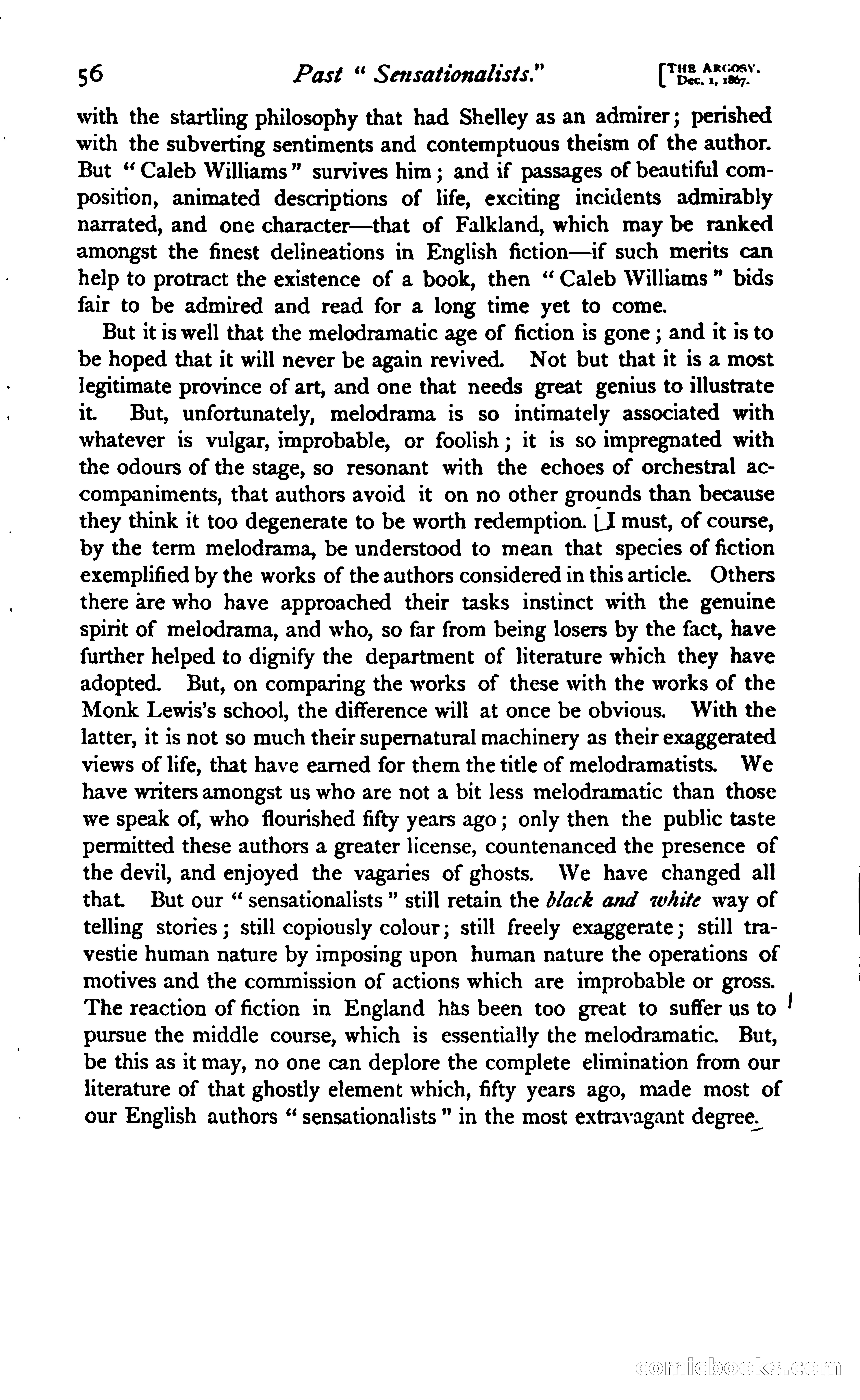
A restored page from Pulp Fiction, 1901. Page through the whole issue in the reader above.
📄 Transcribed text from this page (OCR, searchable)
Machine-transcribed from the original scan — historical spelling and the odd misread are preserved.
56 Past “ Sensattonalists.” Garena with the startling philosophy that had Shelley as an admirer; perished with the subverting sentiments and contemptuous theism of the author. But ‘Caleb Williams” survives him; and if passages of beautiful com- position, animated descriptions of life, exciting incidents admirably narrated, and one character—that of Falkland, which may be ranked amongst the finest delineations in English fiction—if such merits can help to protract the existence of a book, then “ Caleb Williams” bids fair to be admired and read for a long time yet to come. But it 1s well that the melodramatic age of fiction is gone ; and it 1s to be hoped that it will never be again revived. Not but that it is a most legitimate province of art, and one that needs great genius to illustrate it. But, unfortunately, melodrama is so intimately associated with whatever is vulgar, improbable, or foolish; it 1s so impregnated with the odours of the stage, so resonant with the echoes of orchestral ac- companiments, that authors avoid it on no other grounds than because they think it too degenerate to be worth redemption. | J must, of course, by the term melodrama, be understood to mean that species of fiction exemplified by the works of the authors considered in this article. Others there are who have approached their tasks instinct with the genuine spirit of melodrama, and who, so far from being losers by the fact, have further helped to dignify the department of literature which they have adopted. But, on comparing the works of these with the works of the Monk Lewis’s school, the difference will at once be obvious. With the latter, 1t is not so much their supernatural machinery as their exaggerated views of life, that have earned for them the title of melodramatists. We have wniters amongst us who are not a bit less melodramatic than those we speak of, who flourished fifty years ago; only then the public taste permitted these authors a greater license, countenanced the presence of the devil, and enjoyed the vagaries of ghosts. We have changed all that. But our “ sensationalists ” still retain the Slack and whife way of telling stories ; still copiously colour; still freely exaggerate; still tra- vestie human nature by imposing upon human nature the operations of motives and the commission of actions which are improbable or gross. The reaction of fiction in England has been too great to suffer us to | pursue the middle course, which is essentially the melodramatic. But, be this as it may, no one can deplore the complete elimination from our literature of that ghostly element which, fifty years ago, made most of our English authors “ sensationalists ” in the most extravagant degree. comicaocks (GO)