
Pulp Fiction, 1901 · page 369 of 400
The Argosy — page 369: what you’re looking at
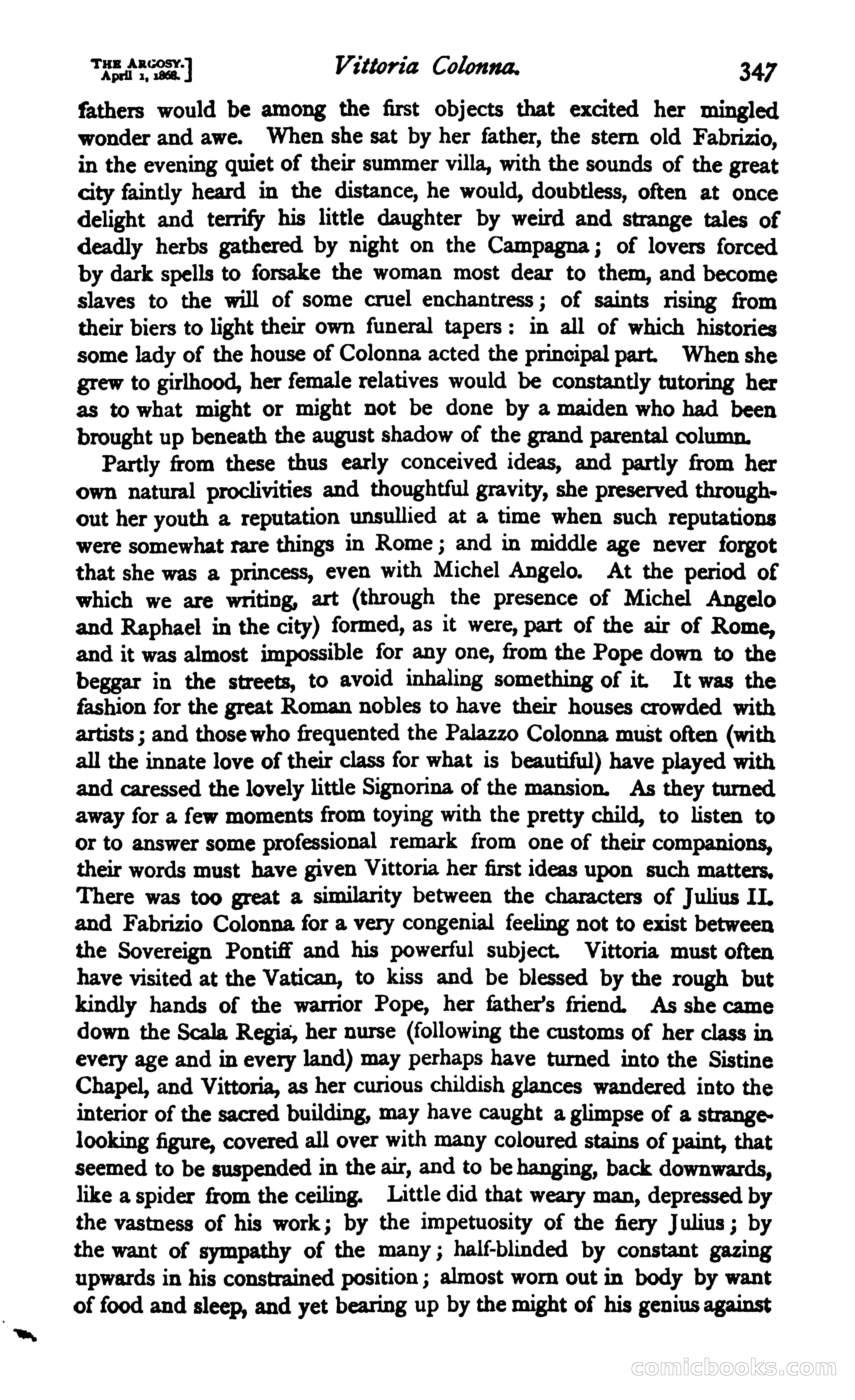
A restored page from Pulp Fiction, 1901. Page through the whole issue in the reader above.
📄 Transcribed text from this page (OCR, searchable)
Machine-transcribed from the original scan — historical spelling and the odd misread are preserved.
THE Anco} Vittoria Colonna. 347 fathers would be among the first objects that excited her mingled wonder and awe. When she sat by her father, the stern old Fabrizio, in the evening quiet of their summer villa, with the sounds of the great city faintly heard in the distance, he would, doubtless, often at once delight and terrify his little daughter by weird and strange tales of deadly herbs gathered by night on the Campagna; of lovers forced by dark spells to forsake the woman most dear to them, and become slaves to the will of some cruel enchantress; of saints rising from their biers to light their own funeral tapers: in all of which histories some lady of the house of Colonna acted the principal part. When she grew to girlhood, her female relatives would be constantly tutoring her as to what might or might not be done by a maiden who had been brought up beneath the august shadow of the grand parental column. Partly from these thus early conceived ideas, and partly from her own natural proclivities and thoughtful gravity, she preserved through- out her youth a reputation unsullied at a time when such reputations were somewhat rare things in Rome; and in middle age never forgot that she was a princess, even with Michel Angelo. At the period of which we are writing, art (through the presence of Michel Angelo and Raphael in the city) formed, as it were, part of the air of Rome, and it was almost impossible for any one, from the Pope down to the beggar in the streets, to avoid inhaling something of it. It was the fashion for the great Roman nobles to have their houses crowded with artists ; and those who frequented the Palazzo Colonna must often (with all the innate love of their class for what is beautiful) have played with and caressed the lovely little Signorina of the mansion. As they turned away for a few moments from toying with the pretty child, to listen to or to answer some professional remark from one of their companions, their words must have given Vittoria her first ideas upon such matters, There was too great a similarity between the characters of Julius II. and Fabrizio Colonna for a very congenial feeling not to exist between the Sovereign Pontiff and his powerful subject. Vittoria must often have visited at the Vatican, to kiss and be blessed by the rough but kindly hands of the warrior Pope, her father’s friend. As she came down the Scala Regia, her nurse (following the customs of her class in every age and in every land) may perhaps have turned into the Sistine Chapel, and Vittoria, as her curious childish glances wandered into the interior of the sacred building, may have caught a glimpse of a strange- looking figure, covered all over with many coloured stains of paint, that seemed to be suspended in the air, and to be hanging, back downwards, like a spider from the ceiling. Little did that weary man, depressed by the vastness of his work; by the impetuosity of the fiery Julius; by the want of sympathy of the many ; half-blinded by constant gazing upwards in his constrained position ; almost worn out in body by want of food and sleep, and yet bearing up by the might of his genius against comicloooks (CO)