
Pulp Fiction, 1897 · page 59 of 192
The Argosy, Vol. XXV, No. 3 — page 59: what you’re looking at
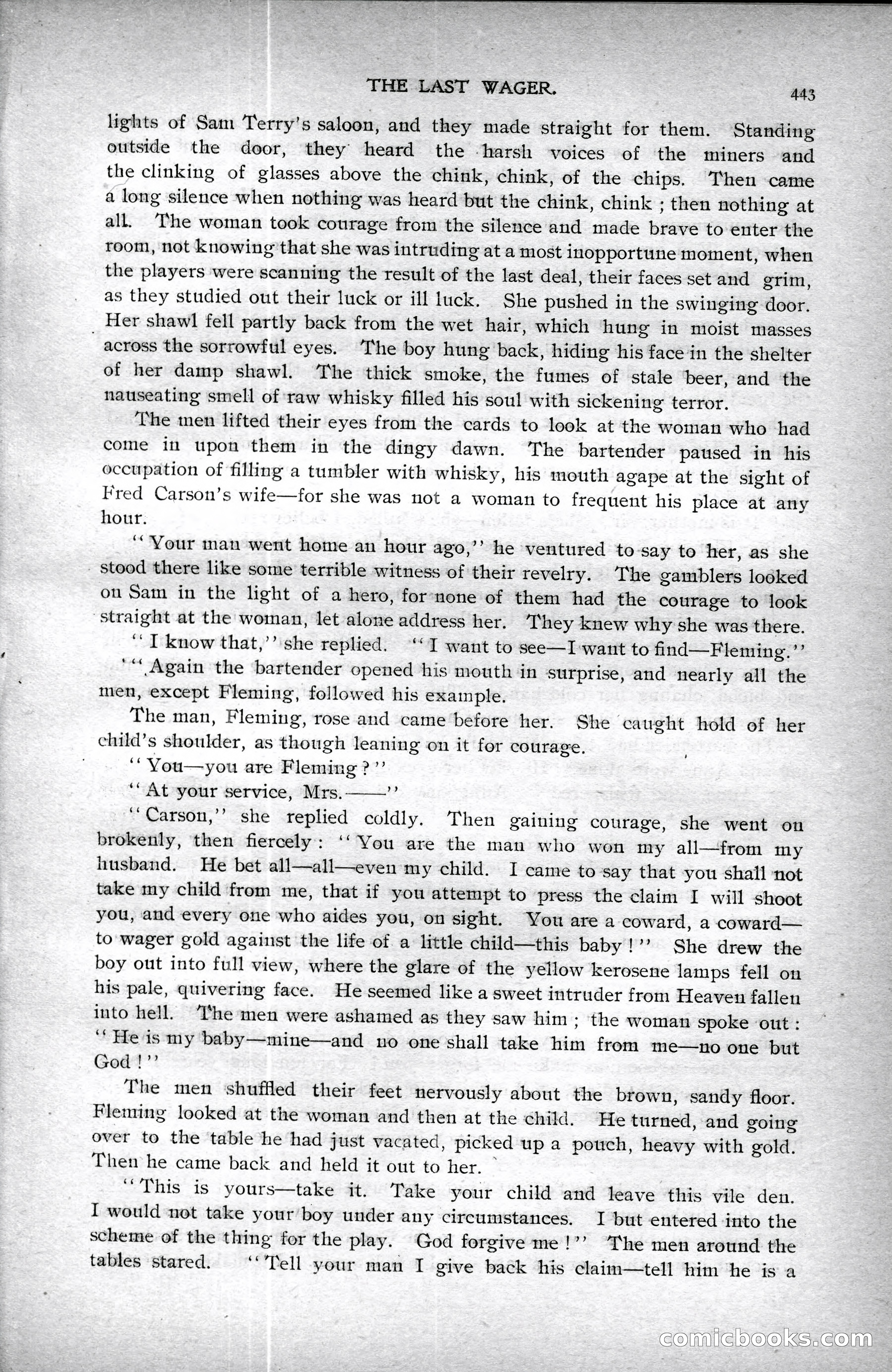
A restored page from Pulp Fiction, 1897. Page through the whole issue in the reader above.
📄 Transcribed text from this page (OCR, searchable)
Machine-transcribed from the original scan — historical spelling and the odd misread are preserved.
THE LAST WAGER. 443 lights of Sam Terry’s saloon, and they made straight for them. Standing outside the door, they heard the -harsh voices of the miners and the clinking of glasses above the chink, chink, of the chips. Then came a long silence when nothing was heard but the chink, chink ; then nothing at all. The woman took courage from the silence and made brave to enter the room, not knowing'that she was intruding at a most inopportune moment, when the players were scanning the result of the last deal, their faces set and grim, as they studied out their luck or ill luck. She pushed in the swinging door. Her shawl fell partly back from the wet hair, which hung in moist masses across the sorrowful eyes. The boy hung back, hiding his face in the shelter of her damp shawl. ‘The thick smoke, the fumes of stale beer, and the nauseating smell of raw whisky filled his soul with sickening terror. The men lifted their eyes from the cards to look at the woman who had come itt upon them in the dingy dawn. The bartender paused in his occupation of filing a tumbler with whisky, his mouth agape at the sight of Fred Carson’s wife—for she was not a woman to frequent his place at any hour. : ‘Your man went home an hour ago,’’ he ventured to-say to her, as she stood there like some terrible witness of their revelry. The gamblers looked ou Sam in the light of a hero, fornone of them had the courage to look straight at the woman, let alone address her. They knew why she was there. ‘‘ I know that,’’ she replied. ‘I want to see—I want to find—F leming.’’ ‘“ Again the bartender opened his mouth in surprise, and nearly all the men, except Fleming, followed his example. The man, Fleming, rose and came before her. She caught hold of her child’s shoulder, as though leaning on it for courage. se You—you are Fleming ?’’ ‘“At your service, Mrs. ‘‘Carson,’’ she replied coldly. Then gaining courage, she went on brokenly, then fiercely: ‘‘ You are the man who won my all—from my husband. He bet all—all—even my child. I came to say that you shall not take my child from me, that if you attempt to press the claim I will shoot you, and every one who aides you, on sight. You are a coward, a coward— to wager gold against the life of a little child—this baby !’’ She drew the boy out into full view, where the glare of the yellow kerosene lamps fell on his pale, quivering face. He seemed like a sweet intruder from Heaven fallen into hell. ‘The men were ashamed as they saw him: the woman spoke ‘out : ‘He is my baby—mine—and no one shall take him from me—no one but God !”’ The men shuffled their feet nervously about the brown, sandy floor. Fleming looked at the woman and then at the child. He turned, and going over to the table he had just vacated, picked up a pouch, heavy with gold. Then he came back and held it out to her. “This is yours—take it. Take your child and leave this vile den. I would not take your’ boy under any circumstances. I but entered into the scheme of the thing for the play. God forgive me!”’ ‘T‘he men around the tables stared. ‘Tell your man I give back his claim—tell him he is a ) Eomicbooks (S@)