
Pulp Fiction, 1897 · page 150 of 192
The Argosy, Vol. XXV, No. 3 — page 150: what you’re looking at
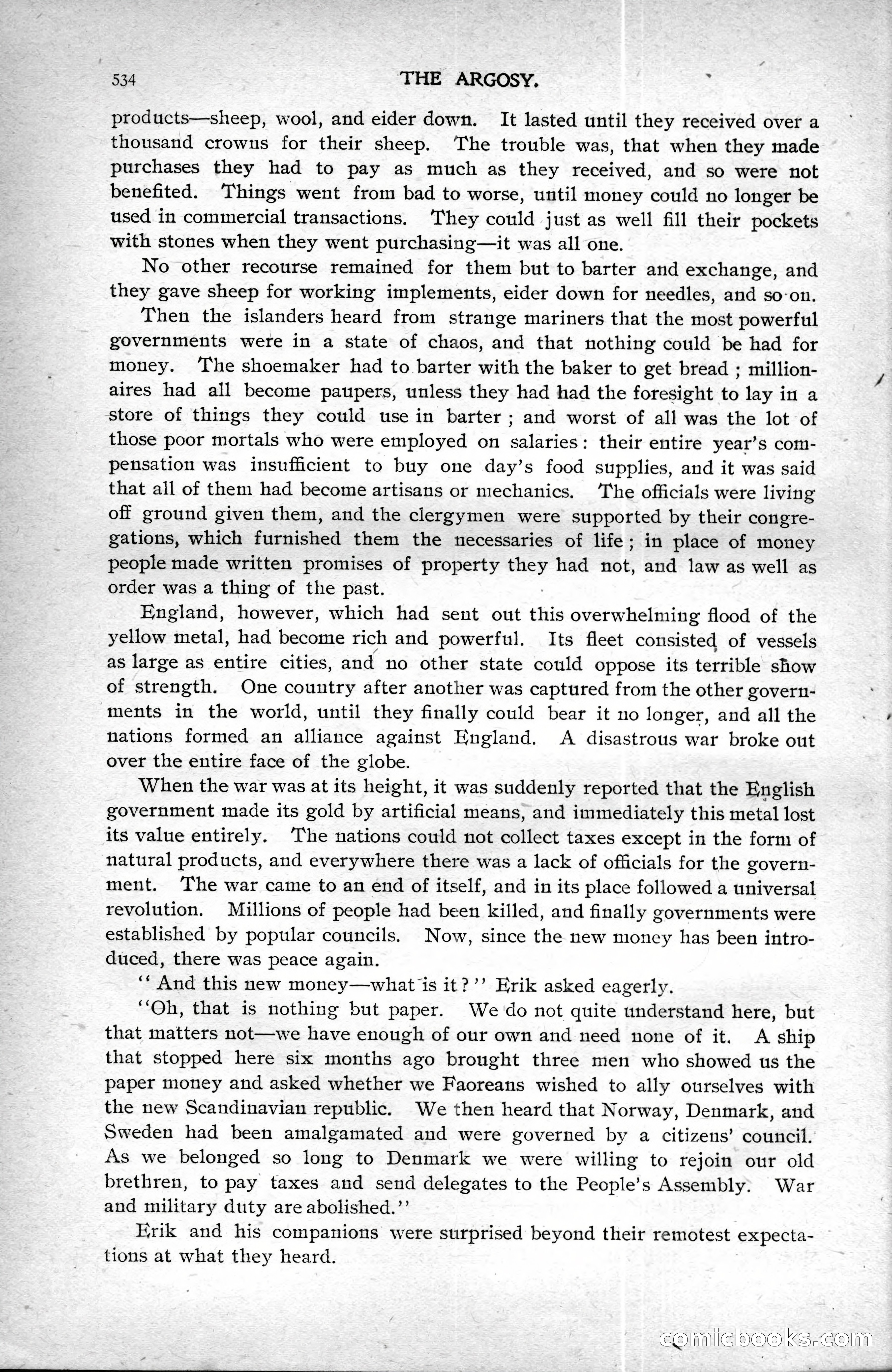
A restored page from Pulp Fiction, 1897. Page through the whole issue in the reader above.
📄 Transcribed text from this page (OCR, searchable)
Machine-transcribed from the original scan — historical spelling and the odd misread are preserved.
534 ‘THE ARGOSY, : products—sheep, wool, and eider down. It lasted until they received over a thousand crowns for their sheep. The trouble was, that when they made purchases they had to pay as much as they received, and so were not benefited. Things went from bad to worse, until money could no longer be used in commercial transactions. ‘They could just as well fill their pockets with stones when they went purchasing—it was all one. No other recourse remained for them but to barter and exchange, and they gave sheep for working implements, eider down for needles, and so-on. Then the islanders heard from strange mariners that the most powerful governments were in a state of chaos, and that nothing could be had for money. The shoemaker had to barter with the baker to get bread ; million- aires had all become paupers, unless they had had the foresight to lay in a store of things they could use in barter ; and worst of all was the lot of those poor mortals who were employed on salaries: their entire year’s com- pensation was insufficient to buy one day’s food supplies, and it was said that all of them had become artisans or mechanics. ‘The officials were living off ground given them, and the clergymen were supported by their congre- gations, which furnished them the necessaries of life; in place of money people made written promises of property sa had not, and law as well as order was a thing of the past. England, however, which had sent out this overwhelming flood of the yellow metal, had become rich and powerful. Its fleet consisted of vessels as large as entire cities, and no other state could oppose its terrible show of strength. One country after another was captured from the other govern- ments in the world, until they finally could bear it no longer, and all the nations formed an alliance against England. A disastrous war broke out over the entire face of the globe. When the war was at its height, it was suddenly reported that the English government made its gold by artificial means, and immediately this metal lost its value entirely. The nations could not collect taxes except in the form of natural products, and everywhere there was a lack of officials for the govern- ment. ‘The war came to an end of itself, and in its place followed a universal revolution. Millions of people had been killed, and finally governments were established by popular councils. Now, since the new money has been intro- duced, there was peace again. ‘‘ And this new money—what is it?’’ Erik asked eagerly. “Oh, that is nothing but paper. Wedo not quite understand here, but that matters not—we have enough of our own and need none of it. A ship that stopped here six months ago brought three men who showed us the paper money and asked whether we Faoreans wished to ally ourselves with the new Scandinavian republic. We then heard that Norway, Denmark, and Sweden had been amalgamated and were governed by a citizens’ council. As we belonged so long to Denmark we were willing to rejoin our old brethren, to pay taxes and send delegates to the People’s Assembly. War and military duty are abolished.’’ Erik and his companions were surprised beyond their remotest expecta- tions at what they heard. COMnicloOokxs (©)