
Pulp Fiction, 1897 · page 149 of 192
The Argosy, Vol. XXV, No. 3 — page 149: what you’re looking at
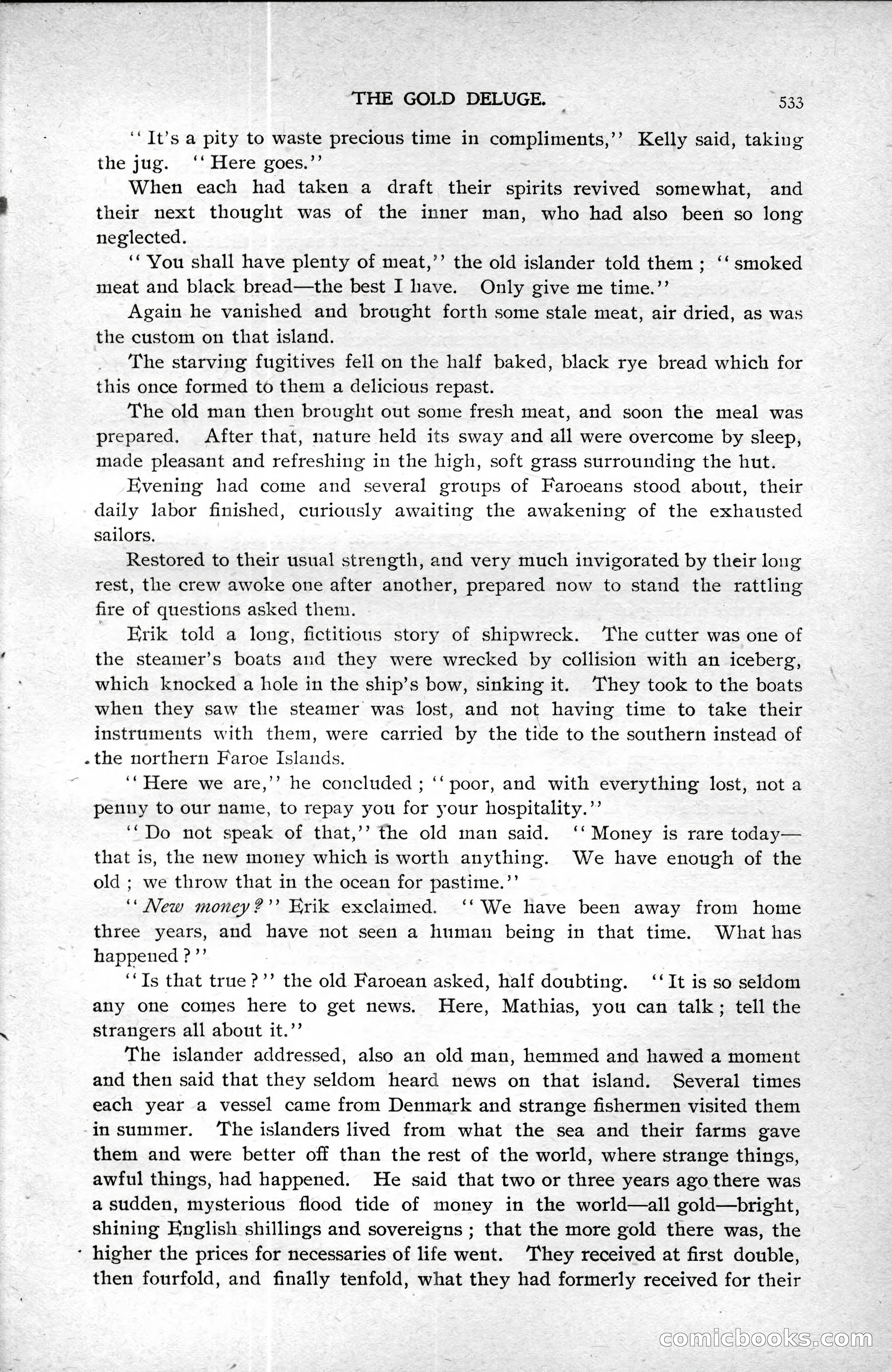
A restored page from Pulp Fiction, 1897. Page through the whole issue in the reader above.
📄 Transcribed text from this page (OCR, searchable)
Machine-transcribed from the original scan — historical spelling and the odd misread are preserved.
f THE GOLD DELUGE. 533 ‘‘It’s a pity to waste precious time in compliments,’’ Kelly said, taking the jug. ‘‘ Here goes.’’ When each had taken a draft their spirits revived somewhat, and their next thought was of the inner man, who had also been so long neglected. ‘You shall have plenty of meat,’’ the old islander told them; ‘‘ smoked meat and black bread—the best I have. Only give me time.”’ Again he vanished and brought forth some stale meat, air dried, as was the custom on that island. The starving fugitives fell on the half baked, black rye bread which for this once formed to them a delicious repast. The old man then brought out some fresh meat, and soon the meal was prepared, After that, nature held its sway and all were overcome by sleep, made pleasant and refreshing in the high, soft grass surrounding the hut. Evening had come and several groups of Faroeans stood about, their daily labor finished, curiously awaiting the awakening of the exhausted sailors. Restored to their usual strength, and very much invigorated by their long rest, the crew awoke one after another, prepared now to stand the rattling fire of questions asked them. Hrik told a long, fictitious story of shipwreck. ‘The cutter was one of the steamer’s boats and they were wrecked by collision with an iceberg, which knocked a hole in the ship’s bow, sinking it. They took to the boats when they saw the steamer was lost, and not having time to take their instruments with them, were carried by the tide to the southern instead of .the northern Faroe Islands. ‘‘Here we are,’’ he concluded ; ‘‘ poor, and with everything lost, not a penny to our name, to repay you for your hospitality.”’ ‘“Do not speak of that,’’ the old man said. ‘‘ Money is rare today— that is, the new money which is worth anything. We have enough of the old ; we throw that in the ocean for pastime.’’ ‘‘ New money?’ Erik exclaimed. ‘‘ We have been away from home What has three years, and have not seen a human being in that time. happened ?”’ ‘Ts that true ?’’ the old Faroean asked, half doubting. ‘‘It is so seldom any one comes here to get news. Here, Mathias, you can talk; tell the strangers all about it.’’ The islander addressed, also an old man, hemmed and hawed a moment and then said that they seldom heard news on that island. Several times each year a vessel came from Denmark and strange fishermen visited them insummer. ‘The islanders lived from what the sea and their farms gave them and were better off than the rest of the world, where strange things, awful things, had happened. He said that two or three years ago there was a sudden, mysterious flood tide of money in the world—all gold—bright, shining English shillings and sovereigns ; that the more gold there was, the ‘ higher the prices for necessaries of life went. They received at first double, then fourfold, and finally tenfold, what they had formerly received for their (S@ An G LOO) <S (S@)