
Pulp Fiction, 1897 · page 60 of 192
The Argosy — page 60: what you’re looking at
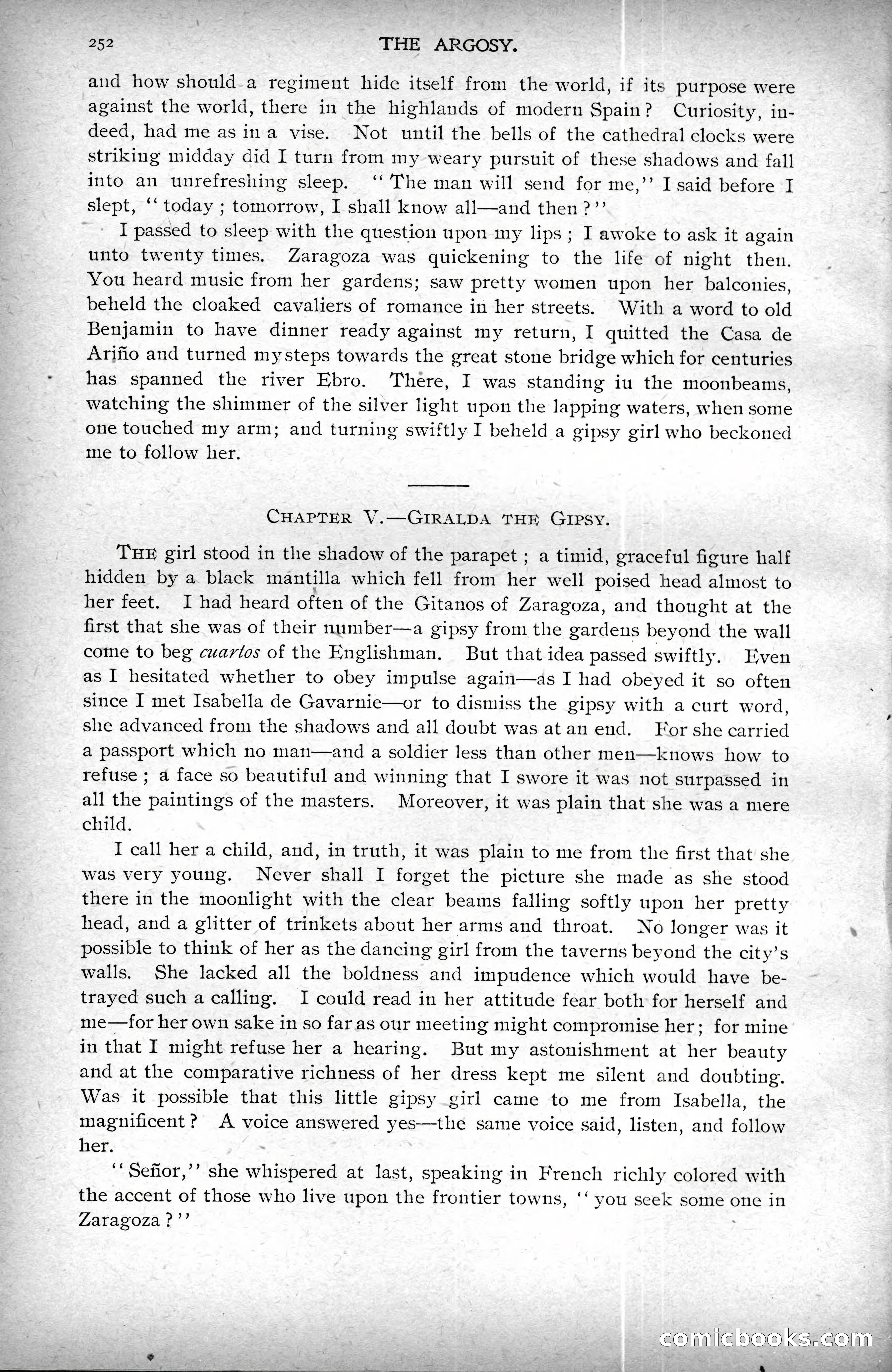
A restored page from Pulp Fiction, 1897. Page through the whole issue in the reader above.
📄 Transcribed text from this page (OCR, searchable)
Machine-transcribed from the original scan — historical spelling and the odd misread are preserved.
252 THE ARGOSY. and how shoulda regiment hide itself from the world, if its purpose were against the world, there in the highlands of modern Spain? Curiosity, in- deed, had me as ina vise. Not until the bells of the cathedral clocks were striking midday did I turn from my weary pursuit of these shadows and fall into an unrefreshing sleep. ‘‘’The man will send for me,’ I said before I slept, ‘‘ today ; tomorrow, I shall know all—and then ?”’ I passed to sleep with the question upon my lips ; I awoke to ask it again unto twenty times. Zaragoza was quickening to the life of night then. You heard music from her gardens; saw pretty women upon her balconies, beheld the cloaked cavaliers of romance in her streets. With a word to old Benjamin to have dinner ready against my return, I quitted the Casa de Arifio and turned my steps towards the great stone bridge which for centuries has spanned the river Ebro. ‘There, I was standing iu the moonbeams, watching the shimmer of the silver light upon the lapping waters, when some one touched my arm; and turning swiftly I beheld a gipsy girl who beckoned me to follow her. CHAPTER V.—GIRALDA THE GIPSY. THE girl stood in the shadow of the parapet ; a timid, graceful figure half hidden by a black mantilla which fell from her well poised head almost to her feet. I had heard often of the Gitanos of Zaragoza, and thought at the first that she was of their number—a gipsy from the gardens beyond the wall come to beg cwartos of the Englishman. But that idea passed swiftly. Even as I hesitated whether to obey impulse again—as I had obeyed it so often since I met Isabella de Gavarnie—or to dismiss the gipsy with a curt word, she advanced from the shadows and all doubt was at an end. For she carried a passport which no man—and a soldier less than other men—knows how to refuse ; a face so beautiful and winning that I swore it was not surpassed in all the paintings of the masters. Moreover, it was plain that she was a mere child. I call her a child, and, in truth, it was plain to me from the first that she was very young. Never shall I forget the picture she made as she stood there in the moonlight with the clear beams falling softly upon her pretty head, and a glitter of trinkets about her arms and throat. No longer was it possible to think of her as the dancing girl from the taverns beyond the city’s walls. She lacked all the boldness and impudence which would have be- trayed such a calling. I could read in her attitude fear both for herself and me—for her own sake in so faras our meeting might compromise her; for mine in that I might refuse her a hearing. But my astonishment at her beauty and at the comparative richness of her dress kept me silent and doubting. Was it possible that this little gipsy girl came to me from Isabella, the magnificent ? A voice answered yes—the same voice said, listen, and follow her. ‘* Sefior,’’? she whispered at last, speaking in French richly colored with the accent of those who live upon the frontier towns, ‘‘ you seek some one in Zaragoza ?”’ Eomichook (e(e)