
Pulp Fiction, 1897 · page 59 of 192
The Argosy — page 59: what you’re looking at
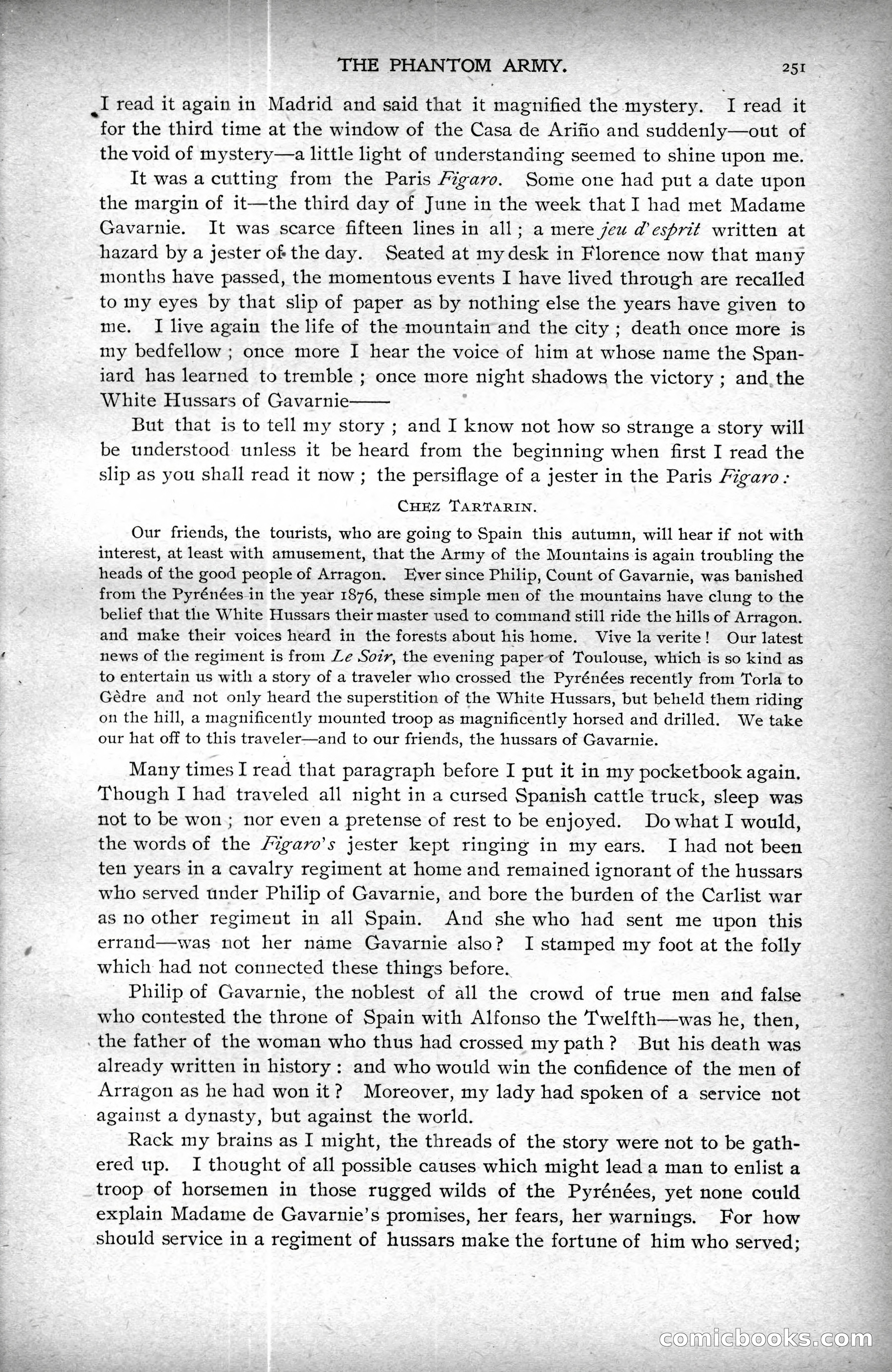
A restored page from Pulp Fiction, 1897. Page through the whole issue in the reader above.
📄 Transcribed text from this page (OCR, searchable)
Machine-transcribed from the original scan — historical spelling and the odd misread are preserved.
THE PHANTOM ARMY. 251 i read it again in Madrid and said that it magnified the mystery. I read it for the third time at the window of the Casa de Arifio and suddenly—out of the void of mystery—a little light of understanding seemed to shine upon me. It was a cutting from the Paris /zgaro. Some one had put a date upon the margin of it—the third day of June in the week that I had met Madame Gavarnie. It was scarce fifteen lines in all; a mere eu d’esprit written at hazard by a jester of the day. Seated at mydesk in Florence now that many months have passed, the momentous events I have lived through are recalled to my eyes by that slip of paper as by nothing else the years have given to me. I live again the life of the mountain and the city ; death once more is my bedfellow ; once more I hear the voice of him at whose name the Span- iard has learned to tremble ; once more night shadows the victory ; and.the White Hussars of Gavarnie But that is to tell my story ; and I know not how so strange a story will be understood unless it be heard from the beginning when first I read the slip as you shall read it now; the persiflage of a jester in the Paris /igaro: CHEZ TARTARIN. Our friends, the tourists, who are going to Spain this autumn, will hear if not with interest, at least with amusement, that the Army of the Mountains is again troubling the heads of the good people of Arragon. Ever since Philip, Count of Gavarnie, was banished from the Pyrénées in the year 1876, these simple men of the mountains have clung to the belief that the White Hussars their master used to command still ride the hills of Arragon. and make their voices heard in the forests about his home. Vive la verite! Our latest news of the regiment is from Le Soir, the evening paper-‘of Toulouse, which is so kind as to entertain us with a story of a traveler who crossed the Pyrénées recently from Torla to Gédre and not only heard the superstition of the White Hussars, but beheld them riding on the hill, a magnificently mounted troop as magnificently horsed and drilled. We take our hat off to this traveler—and to our friends, the hussars of Gavarnie. Many times I read that paragraph before I put it in my pocketbook again, Though I had traveled all night in a cursed Spanish cattle truck, sleep was not to be won ; nor even a pretense of rest to be enjoyed. Do what I would, the words of the /“garo’s jester kept ringing in my ears. I had not been ten years in a cavalry regiment at home and remained ignorant of the hussars who served under Philip of Gavarnie, and bore the burden of the Carlist war as no other regiment in all Spain. And she who had sent me upon this errand—was not her name Gavarnie also? I stamped my foot at the folly which had not connected these things before. | Philip of Gavarnie, the noblest of all the crowd of true men and false who contested the throne of Spain with Alfonso the T'welfth—was he, then, the father of the woman who thus had crossed my path? But his death was already written in history : and who would win the confidence of the men of Arragon as he had won it? Moreover, my lady had spoken of a service not against a dynasty, but against the world. Rack my brains as I might, the threads of the story were not to be gath- ered up. I thought of all possible causes which might lead a man to enlist a troop of horsemen in those rugged wilds of the Pyrénées, yet none could explain Madame de Gavarnie’s promises, her fears, her warnings. For how should service in a regiment of hussars make the fortune of him who served; CoOMmcooolxs (S@)