
Pulp Fiction, 1923 · page 48 of 196
Argosy All-Story Weekly, October 6, 1923 — page 48: what you’re looking at
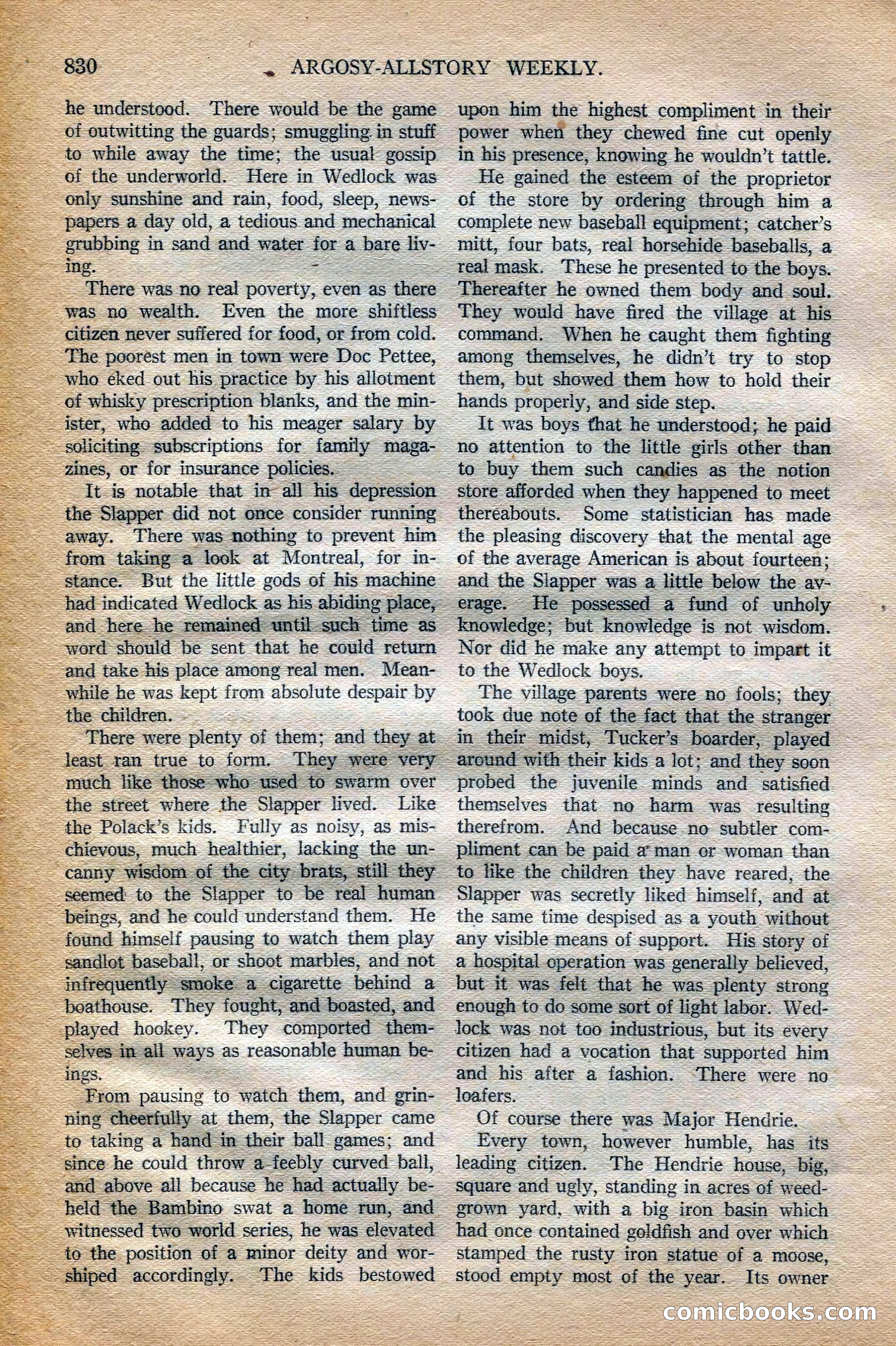
A restored page from Pulp Fiction, 1923. Page through the whole issue in the reader above.
📄 Transcribed text from this page (OCR, searchable)
Machine-transcribed from the original scan — historical spelling and the odd misread are preserved.
= or ‘for insurance > policies. — ak himself pausing to —— ent play 3 zo ee or shoot marbles, and not Saar ae eee ed ax — series, he was clevated aes is. : notable: that in-all his — he Slappe r did not once consider: running: in their midst, Tucker’s- r, pla’ : y around with AES kids a lot: and they soon : 2] —— a Pe behind a : = ad | above all berate 7 ea actually be- Id the Bambino swat a home run, and — in his presence, knowing he wouldn’t tattle. He gained the esteem of the proprietor of the store by ordering through him a complete new baseball equipment; catcher’ S _ mitt, four bats, real horsehide baseballs, a - real mask. ‘These he presented to the boys. Thereafter he owned them body and soul. They would have fired the village at his : command. When he caught them fighting among themselves, he didn’t try to stop them but showed them how to hold their hands properly, and side step. It was boys that he understood; he paid — no attention to the little girls. other. than 7 buy them such candies as the notion store afforded when they happened to meet _theréabouts. Some statistician has made the pleasing discovery that the mental age of the average American is about fourteen; and the ‘Slapper_ was a little below the ay= S ee but Sere is not wisdom. Nor did he make any attempt to impart it —_ to the Wediock boys. The village parents were no fools; they took due note of the fact that the stranger — probed the juvenile minds and satisfied. themselves that no harm was resulting therefrom. And because . no subtler com- pliment can be paid aman er woman than to like the children they have reared, the Slapper was secretly liked himself, and a the same time despised as a youth. without — any visible means of support. His story « of a hospital operation was generally believed, but it was felt that he was plenty strong d- enough to do some sort of light labor. Wed- = lock was not too industrious, but its every - citizen had a vocation that supported him and his after a fashion. There were no- loafers. Of course there was Major fendi : Every town, however humble, has its. leading citizen. The Hendrie house, big, “Square and ugly, standing in acres. of ed= ‘grown yard, with a bia. iron basin. which had once contained goldfish and over which stamped the rusty iron statue of a ce es erp most SE the: Se — “upon. him the es ciepliaent t in ick = : _ power when they chewed fine cut openly = = = ear. Its owner =