
Pulp Fiction, 1920 · page 145 of 160
Argosy, Vol. 120, No. 1 — page 145: what you’re looking at
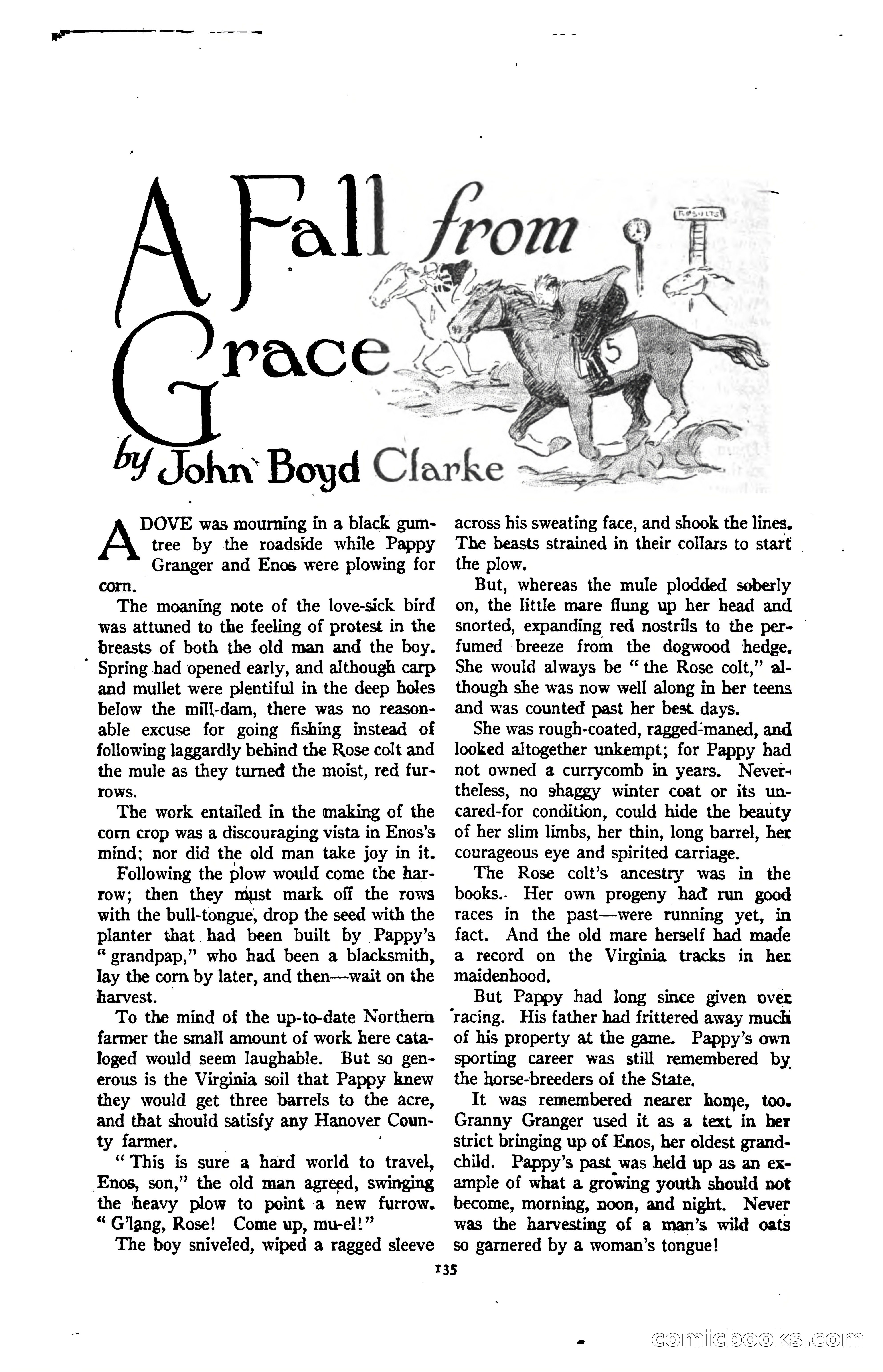
A restored page from Pulp Fiction, 1920. Page through the whole issue in the reader above.
📄 Transcribed text from this page (OCR, searchable)
Machine-transcribed from the original scan — historical spelling and the odd misread are preserved.
bY John Boyd Clarke 22% DOVE was mourning in a black gum- tree by the roadside while Pappy Granger and Enos were plowing for corn. The moaning note of the love-sick bird was attuned to the feeling of protest in the breasts of both the old man and the boy. ’ Spring had opened early, and although carp and mullet were plentiful in the deep holes below the mill-dam, there was no reason- able excuse for going fishing instead of following laggardly behind the Rose colt and the mule as they turned the moist, red fur- rows. The work entailed in the making of the corn crop was a discouraging vista in Enos’s mind; nor did the old man take joy in it. Following the plow would come the har- row; then they must mark off the rows with the bull-tongue, drop the seed with the planter that had been built by Pappy’s “ grandpap,”’ who had been a blacksmith, lay the corn by later, and then—wait on the harvest. To the mind of the up-to-date Northern farmer the small amount of work here cata- Ioged would seem laughable. But so gen- erous is the Virginia soil that Pappy knew they would get three barrels to the acre, and that should satisfy any Hanover Coun- ty farmer. “This is sure a hard world to travel, Enos, son,” the old man agreed, swinging the heavy plow to point a new furrow. “ G’lang, Rose! Come up, miw-el!” The boy sniveled, wiped a ragged sleeve ‘racing. across his sweating face, and shook the lines. The beasts strained in their collars to start ~ the plow. But, whereas the mule plodded soberly on, the little mare flung up her head and snorted, expanding red nostrils to the per- — fumed -breeze from the dogwood hedge. She would always be “the Rose colt,” al- though she was now well along in her teens and was counted past her best days. She was rough-coated, ragged-maned, and looked altogether unkempt; for Pappy had not owned a currycomb in years. Never- theless, no shaggy winter coat or its un- cared-for condition, could hide the beauty of her slim limbs, her thin, long barrel, her courageous eye and spirited carriage. The Rose colt’s ancestry was in the books.. Her own progeny had run good races in the past—were running yet, in fact. And the old mare herself had made a record on the Virginia tracks in her maidenhood, But Pappy had long since given over His father had frittered away much of his property at the game. Pappy’s own sporting career was still remembered by the horse-breeders of the State. It was remembered nearer home, too. Granny Granger used it as a text in her strict bringing up of Enos, her oldest grand- child. Pappy’s past was held up as an ex- ample of what a growing youth should not become, morning, noon, and night. Never was the harvesting of a man’s wild oats so garnered by a woman’s tongue! 135 ws COMicdoo S CO@