
Pulp Fiction, 1920 · page 51 of 188
Argosy, Vol. 117, No. 3 — page 51: what you’re looking at
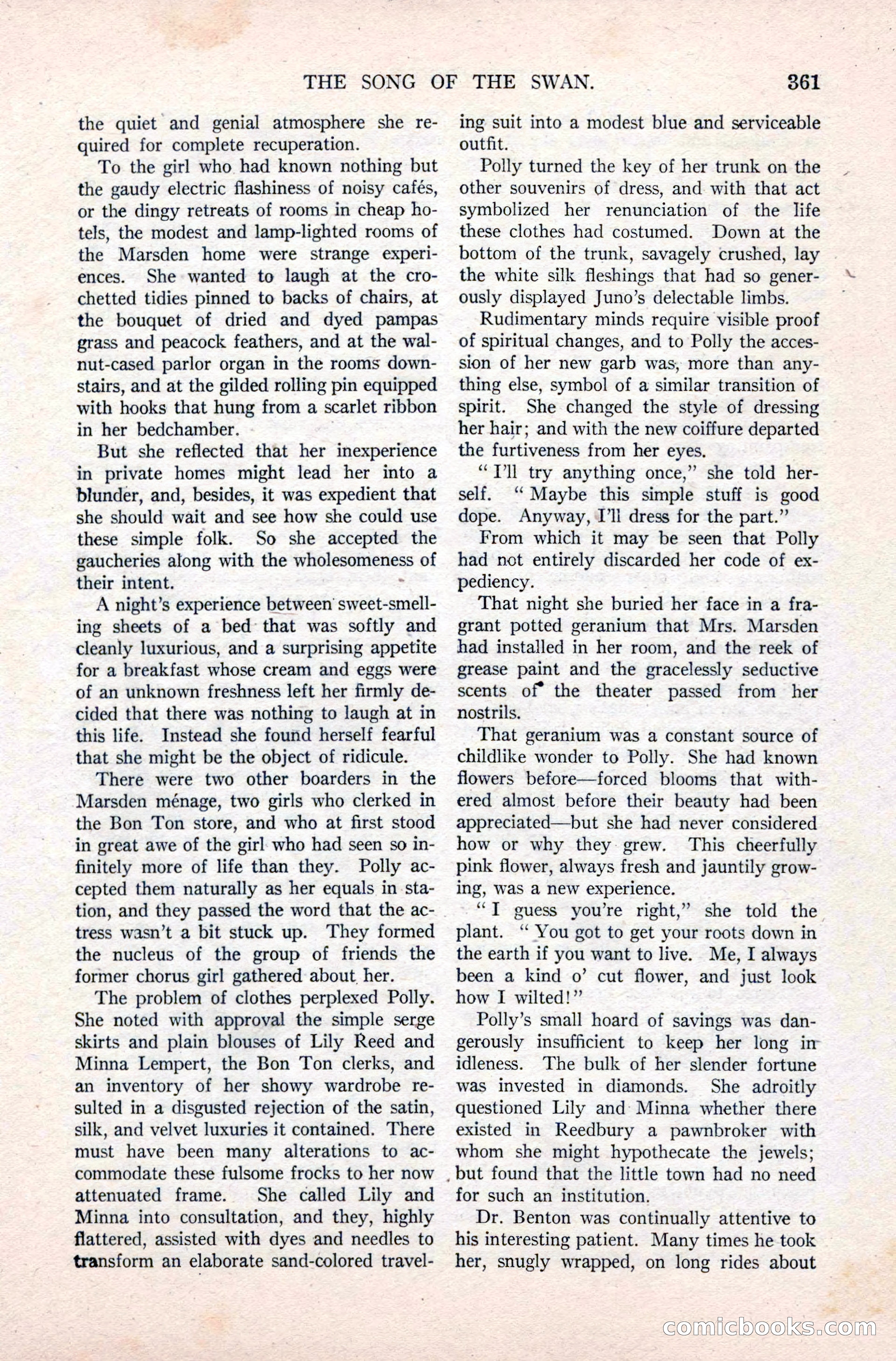
A restored page from Pulp Fiction, 1920. Page through the whole issue in the reader above.
📄 Transcribed text from this page (OCR, searchable)
Machine-transcribed from the original scan — historical spelling and the odd misread are preserved.
THE SONG OF the quiet and genial atmosphere she re- quired for complete recuperation. To the girl who had known nothing but the gaudy electric flashiness of noisy cafés, or the dingy retreats of rooms in cheap ho- tels, the modest and lamp-lighted rooms of the Marsden home were strange experi- ences. She wanted to laugh at the cro- chetted tidies pinned to backs of chairs, at the bouquet of dried and dyed pampas grass and peacock feathers, and at the wal- nut-cased parlor organ in the rooms down- stairs, and at the gilded rolling pin equipped with hooks that hung from a scarlet ribbon in her bedchamber. But she reflected that her inexperience in private homes might lead her into a blunder, and, besides, it was expedient that she should wait and see how she could use these simple folk. So she accepted the gaucheries along with the wholesomeness of their intent. : A night’s experience between sweet-smell- ing sheets of a bed that was softly and cleanly luxurious, and a surprising appetite for a breakfast whose cream and eggs were of an unknown freshness left her firmly de- cided that there was nothing to laugh at in this life. Instead she found herself fearful that she might be the object of ridicule. There were two other boarders in the Marsden ménage, two girls who clerked in the Bon Ton store, and who at first stood in great awe of the girl who had seen so in- finitely more of life than they. Polly ac- cepted them naturally as her equals in sta- tion, and they passed the word that the ac- tress wasn’t a bit stuck up. They formed the nucleus of the group of friends the former chorus girl gathered about, her. The problem of clothes perplexed Polly. She noted with approval the simple serge skirts and plain blouses of Lily Reed and Minna Lempert, the Bon Ton clerks, and an inventory of her showy wardrobe re- sulted in a disgusted rejection of the satin, silk, and velvet luxuries it contained. There must have been many alterations to ac- commodate these fulsome frocks to her now attenuated frame. She called Lily and Minna into consultation, and they, highly flattered, assisted with dyes and needles to transform an elaborate sand-colored travel- THE SWAN. 361 ing suit into a modest blue and serviceable outfit. Polly turned the key of her trunk on the other souvenirs of dress, and with that act symbolized her renunciation of the life these clothes had costumed. Down at the bottom of the trunk, savagely crushed, lay | the white silk fleshings that had so gener- ously displayed Juno’s delectable limbs. Rudimentary minds require visible proof of spiritual changes, and to Polly the acces- sion of her new garb was, more than any- thing else, symbol of a similar transition of spirit. She changed the style of dressing her hair; and with the new coiffure departed the furtiveness from her eyes. “T’ll try anything once,” she told her- self. ‘“ Maybe this simple stuff is good dope. Anyway, I’ll dress for the part.” From which it may be seen that Polly had not entirely discarded her code of ex- pediency. That night she buried her face in a fra- grant potted geranium that Mrs. Marsden had installed in her room, and the reek of grease paint and the gracelessly seductive scents of the theater passed from her nostrils. That geranium was a constant source of childlike wonder to Polly. She had known flowers before—forced blooms that with- ered almost before their beauty had been appreciated—but she had never considered how or why they grew. This cheerfully pink flower, always fresh and jauntily grow- ing, was a new experience. ‘““T guess you're right,” she told the plant. “ You got to get your roots down in the earth if you want to live. Me, I always been a kind o’ cut flower, and just look how I wilted!” Polly’s small hoard of savings was dan- gerously insufficient to keep her long im idleness. The bulk of her slender fortune was invested in diamonds. She adroitly questioned Lily and Minna whether there existed in Reedbury a pawnbroker with whom she might hypothecate the jewels; _ but found that the little town had no need for such an institution. Dr. Benton was continually attentive to his interesting patient. Many times he took her, snugly wrapped, on long rides about (EO) OOOKS AMNG (C@