
Pulp Fiction, 1920 · page 49 of 188
Argosy, Vol. 117, No. 3 — page 49: what you’re looking at
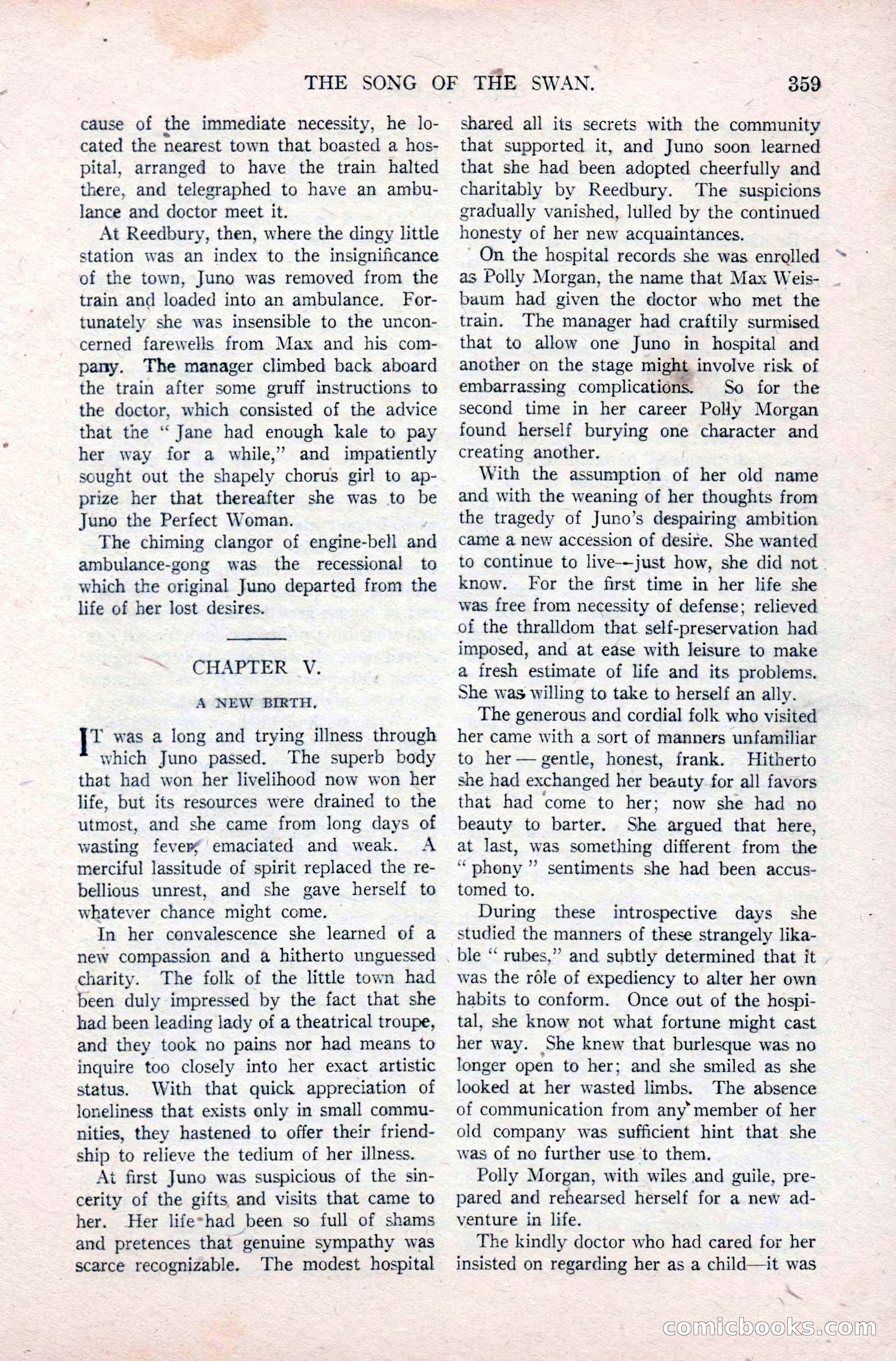
A restored page from Pulp Fiction, 1920. Page through the whole issue in the reader above.
📄 Transcribed text from this page (OCR, searchable)
Machine-transcribed from the original scan — historical spelling and the odd misread are preserved.
THE SONG OF THE SWAN. cause of the immediate necessity, he lo- cated the nearest town that boasted a hos- pital, arranged to have the train halted there, and telegraphed to have an ambu- lance and doctor meet it. At Reedbury, then, where the dingy little station was an index to the insignificance of the town, Juno was removed from the train and loaded into an ambulance. For- tunately she was insensible to the uncon- cerned farewells from Max and his com- pany. The manager climbed back aboard the train after some gruff instructions to the doctor, which consisted of the advice that the ‘‘ Jane had enough kale to pay her way for a while,” and impatiently sought out the shapely chorus girl to ap- prize her that thereafter she was to be Juno the Perfect Woman. The chiming clangor of engine-bell and ambulance-gong was the recessional to which the original Juno departed from the life of her lost desires. CHAPTER V. A NEW BIRTH. jt was a long and trying illness through which Juno passed. The superb body that had won her livelihood now won her life, but its resources were drained to the utmost, and she came from long days of wasting feverpg emaciated and weak. A merciful lassitude of spirit replaced the re- bellious unrest, and she gave herself to whatever chance might come. In her convalescence she learned of a new compassion and a hitherto unguessed charity. The folk of the little town had - been duly impressed by the fact that she had been leading lady of a theatrical troupe, and they took no pains nor had means to inquire too closely into her exact artistic status. With that quick appreciation of loneliness that exists only in small commu- nities, they hastened to offer their friend- ship to relieve the tedium of her illness. At first Juno was suspicious of the sin- cerity of the gifts and visits that came to her. Her lifeshad been so full of shams and pretences that genuine sympathy was scarce recognizable. The modest hospital 309 shared all its secrets with the community that supported it, and Juno soon learned that she had been adopted cheerfully and charitably by Reedbury. The suspicions gradually vanished, lulled by the continued honesty of her new acquaintances. On the hospital records she was enrolled as Polly Morgan, the name that Max Weis- baum had given the doctor who met the train. The manager had craftily surmised that to allow one Juno in hospital and another on the stage might involve risk of embarrassing complications. So for the second time in her career Polly Morgan found herself burying one character and creating another. With the assumption of her old name and with the weaning of her thoughts from the tragedy of Juno’s despairing ambition came a new accession of desire. She wanted to continue to live-—just how, she did not know. For the first time in her life she was free from necessity of defense; relieved of the thralldom that self-preservation had imposed, and at ease with leisure to make a fresh estimate of life and its problems. She was willing to take to herself an ally. The generous and cordial folk who visited her came with a sort of manners unfamiliar to her she had exchanged her beauty for all favors that had come to her; now she had no beauty to barter. She argued that here, at last, was something different from the ‘phony ” sentiments she had been accus- tomed to. During these introspective days she studied the manners of these strangely lika- _ble “ rubes,” and subtly determined that it was the role of expediency to alter her own habits to conform. Once out of the hospi- tal, she know not what fortune might cast her way. She knew that burlesque was no longer open to her; and she smiled as she looked at her wasted limbs. The absence of communication from any’ member of her old company was sufficient hint that she was of no further use to them. Polly Morgan, with wiles and guile, pre- pared and rehearsed herself for a new ad- venture in life. The kindly doctor who had cared for her insisted on regarding her as a child—it was \ ~ CORMICLOOOKS (C@)