
Pulp Fiction, 1920 · page 47 of 188
Argosy, Vol. 117, No. 3 — page 47: what you’re looking at
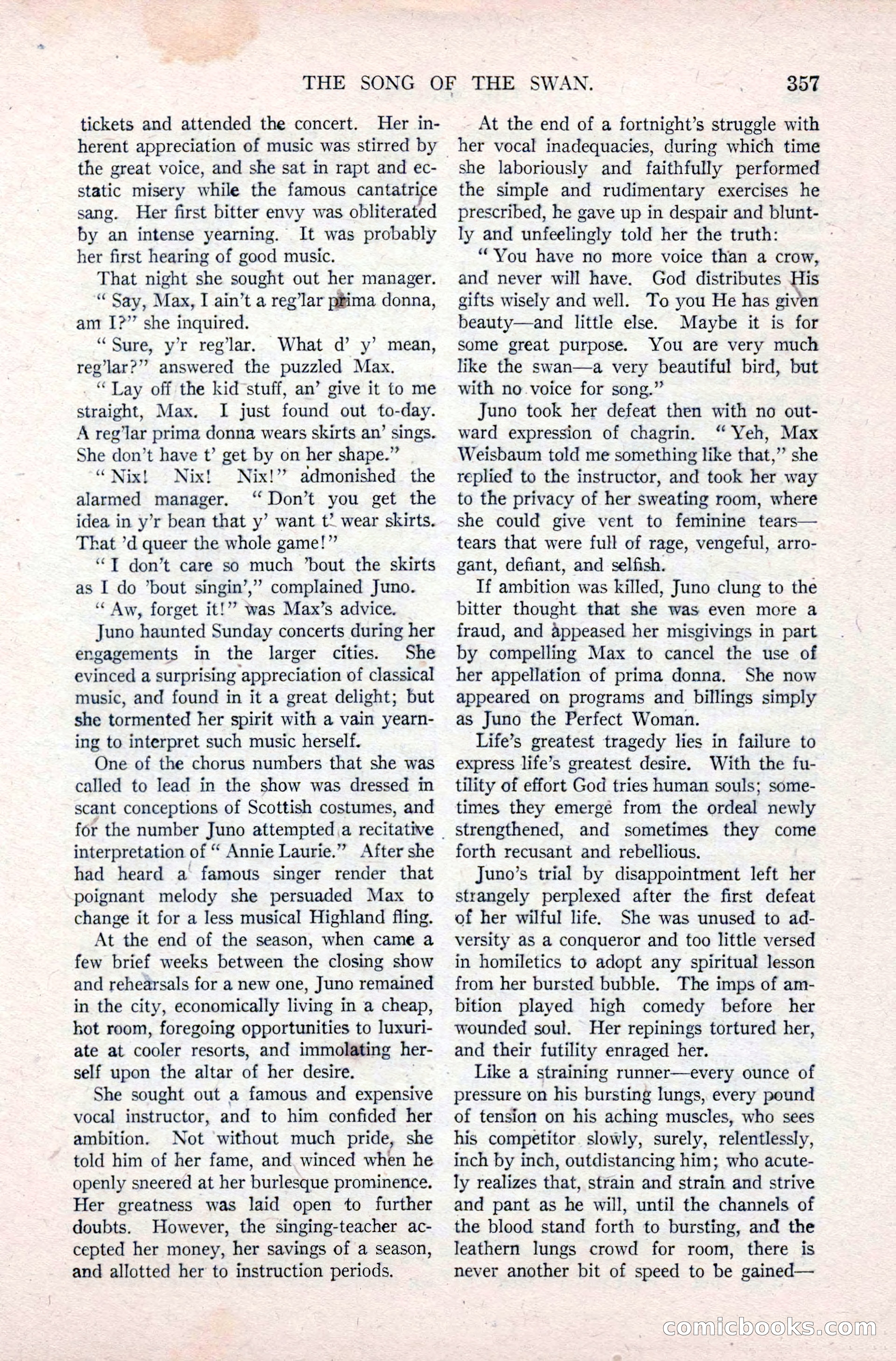
A restored page from Pulp Fiction, 1920. Page through the whole issue in the reader above.
📄 Transcribed text from this page (OCR, searchable)
Machine-transcribed from the original scan — historical spelling and the odd misread are preserved.
THE SONG OF THE SWAN. tickets and attended the concert. Her in- herent appreciation of music was stirred by — the great voice, and she sat in rapt and ec- static misery while the famous cantatrice sang. Her first bitter envy was obliterated by an intense yearning. It was probably her first hearing of good music. That night she sought out her manager. “Say, Max, I ain’t a reg’lar ptima donna, am I?” she inquired. “ Sure, y’r reg’lar. What d’ y’ mean, reg’lar?”’ answered the puzzled Max. _ “Lay off the kid stuff, an’ give it to me straight, Max. I just found out to-day. A reg’lar prima donna wears skirts an’ sings. She don’t have t’ get by on her shape.” “Nix! Nix! Nix!’? admonished the alarmed manager. ‘‘ Don’t you get the idea in y’r bean that y’ want t? wear skirts. That ’d queer the whole game!” ‘“T don’t care so much ’bout the skirts as I do "bout singin’, complained Juno. ‘““ Aw, forget it!”’ was Max’s advice. Juno haunted Sunday concerts during her engagements in the larger cities. She evinced a surprising appreciation of classical music, and found in it a great delight; but she tormented her spirit with a vain yearn- ing to interpret such music herself. One of the chorus numbers that she was called to lead in the show was dressed in scant conceptions of Scottish costumes, and for the number Juno attempted,a recitative _ interpretation of “ Annie Laurie.” After she had heard a famous singer render that poignant melody she persuaded Max to change it for a Jess musical Highland fling. At the end of the season, when came a few brief weeks between the closing show and rehearsals for a new one, Juno remained in the city, economically living in a cheap, hot room, foregoing opportunities to luxuri- ate at cooler resorts, and immolating her- self upon the altar of her desire. She sought out a famous and expensive vocal instructor, and to him confided her ambition. Not without much pride, she told him of her fame, and. winced when he openly sneered at her burlesque prominence. Her greatness was laid open to further doubts. However, the singing-teacher ac- cepted her money, her savings of a season, and allotted her to instruction periods. 307 At the end of a fortnight’s struggle with her vocal inadequacies, during which time she laboriously and faithfully performed the simple and rudimentary exercises he prescribed, he gave up in despair and blunt- ly and unfeelingly told her the truth: “You have no more voice than a crow, and never will have. God distributes His gifts wisely and well. To you He has given beauty—and little else. Maybe it is for some great purpose. You are very much like the swan—a very beautiful bird, but with no voice for song.” Juno took her defeat then with no out- ward expression of chagrin. “ Yeh, Max Weisbaum told me something like that,” she replied to the instructor, and took her way to the privacy of her sweating room, where she could give vent to feminine tears— tears that were full of rage, vengeful, arro- gant, defiant, and selfish. If ambition was killed, Juno clung to the bitter thought that she was even more a fraud, and appeased her misgivings in part by compelling Max to cancel the use of her appellation of prima donna. She now appeared on programs and billings simply as Juno the Perfect Woman. Life’s greatest tragedy lies in failure to express life’s greatest desire. With the fu- tility of effort God tries human souls; some- times they emerge from the ordeal newly strengthened, and sometimes they come forth recusant and rebellious. Juno’s trial by disappointment left her strangely perplexed after the first defeat of her wilful life. She was unused to ad- versity as a conqueror and foo little versed in homiletics to adopt any spiritual lesson from her bursted bubble. The imps of am- bition played high comedy before her wounded soul. Her repinings tortured her, and their futility enraged her. Like a straining runner—every ounce of pressure on his bursting lungs, every pound of tension on his aching muscles, who sees his competitor slowly, surely, relentlessly, inch by inch, outdistancing him; who acute- ly realizes that, strain and strain and strive and pant as he will, until the channels of the blood stand forth to bursting, and the leathern lungs crowd for room, there is never another bit of speed to be gained— Gomichdooks (C@