
Pulp Fiction, 1919 · page 100 of 188
Argosy, Vol. 111, No. 1 — page 100: what you’re looking at
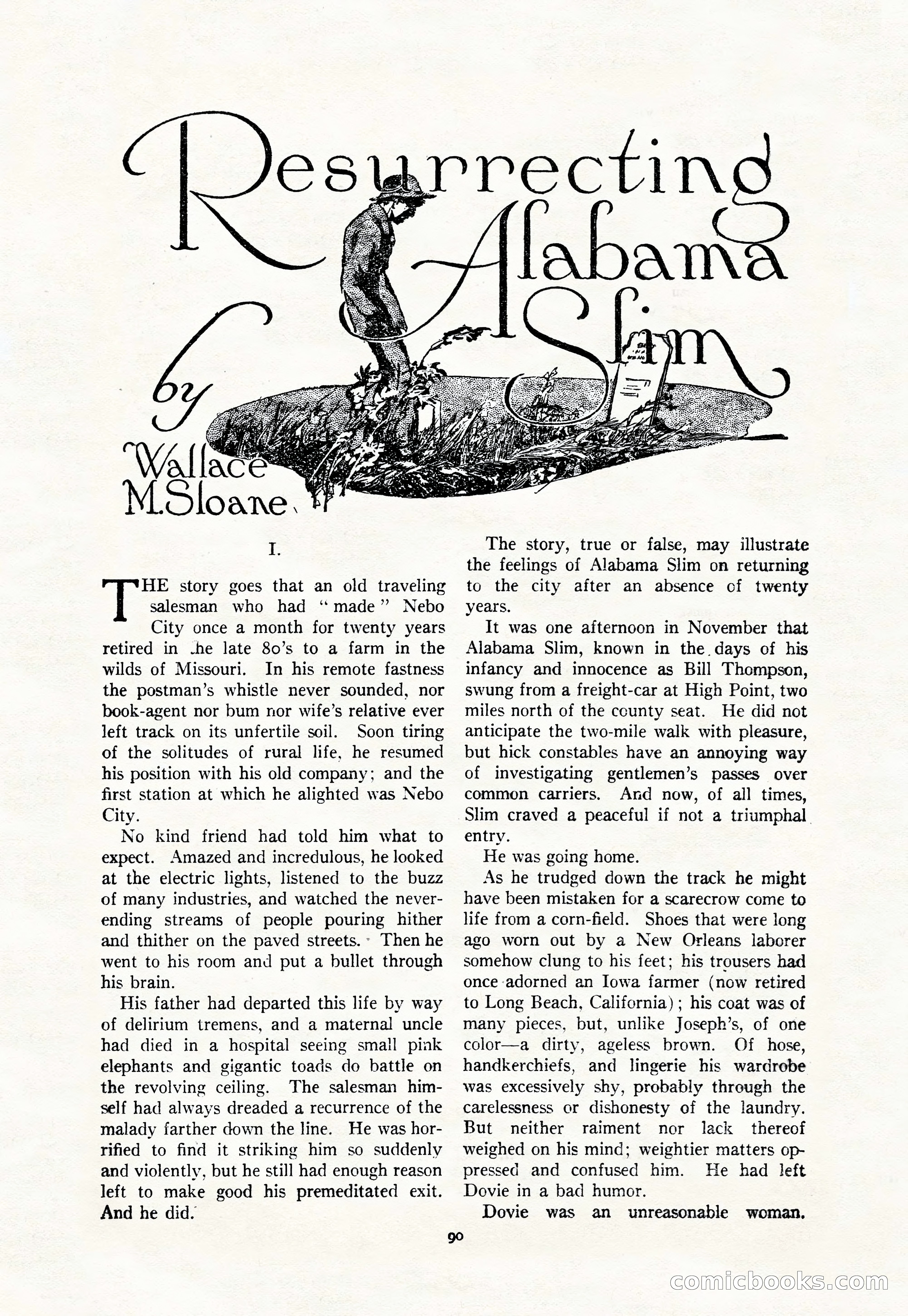
A restored page from Pulp Fiction, 1919. Page through the whole issue in the reader above.
📄 Transcribed text from this page (OCR, searchable)
Machine-transcribed from the original scan — historical spelling and the odd misread are preserved.
I. HE story goes that an old traveling salesman who had ‘‘ made” Nebo City once a month for twenty years retired in -he late 80’s to a farm in the wilds of Missouri. In his remote fastness the postman’s whistle never sounded, nor book-agent nor bum nor wife’s relative ever left track on its unfertile soil. Soon tiring of the solitudes of rural life, he resumed his position with his old company; and the first station at which he alighted was Nebo City. No kind friend had told him what to expect. Amazed and incredulous, he looked at the electric lights, listened to the buzz of many industries, and watched the never- ending streams of people pouring hither and thither on the paved streets. - Then he went to his room and put a bullet through his brain. His father had departed this life by way of delirium tremens, and a maternal uncle had died in a hospital seeing small pink elephants and gigantic toads do battle on the revolving ceiling. The salesman him- self had always dreaded a recurrence of the malady farther down the line. He was hor- rified to find it striking him so suddenly and violently, but he still had enough reason left to make good his premeditated exit. And he did. ia, f°. gos 44 SE = a < —— Fe. - , <i, es a 3 2 = The story, true or false, may illustrate the feelings of Alabama Slim on returning to the city after an absence of twenty years. It was one afternoon in November that Alabama Slim, known in the days of his infancy and innocence as Bill Thompson, swung from a freight-car at High Point, two miles north of the ccunty seat. He did not anticipate the two-mile walk with pleasure, but hick constables have an annoying way of investigating gentlemen’s passes over common carriers. And now, of all times, Slim craved a peaceful if not a triumphal entry. He was going home. As he trudged down the track he might have been mistaken for a scarecrow come to life from a corn-field. Shoes that were long ago worn out by a New Orleans laborer somehow clung to his feet; his trousers had once adorned an Iowa farmer (now retired to Long Beach, California) ; his coat was of many pieces, but, unlike Joseph’s, of one color—a dirty, ageless brown. Of hose, handkerchiefs, and lingerie his wardrobe was excessively shy, probably through the carelessness or dishonesty of the laundry. But neither raiment nor lack thereof weighed on his mind; weightier matters op- pressed and confused him. He had left Dovie in a bad humor. Dovie was an unreasonable woman. 90 Comiclooolk (C(O) 3}