
Pulp Fiction, 1917 · page 137 of 192
The Argosy, Vol. 84 No. 2 — page 137: what you’re looking at
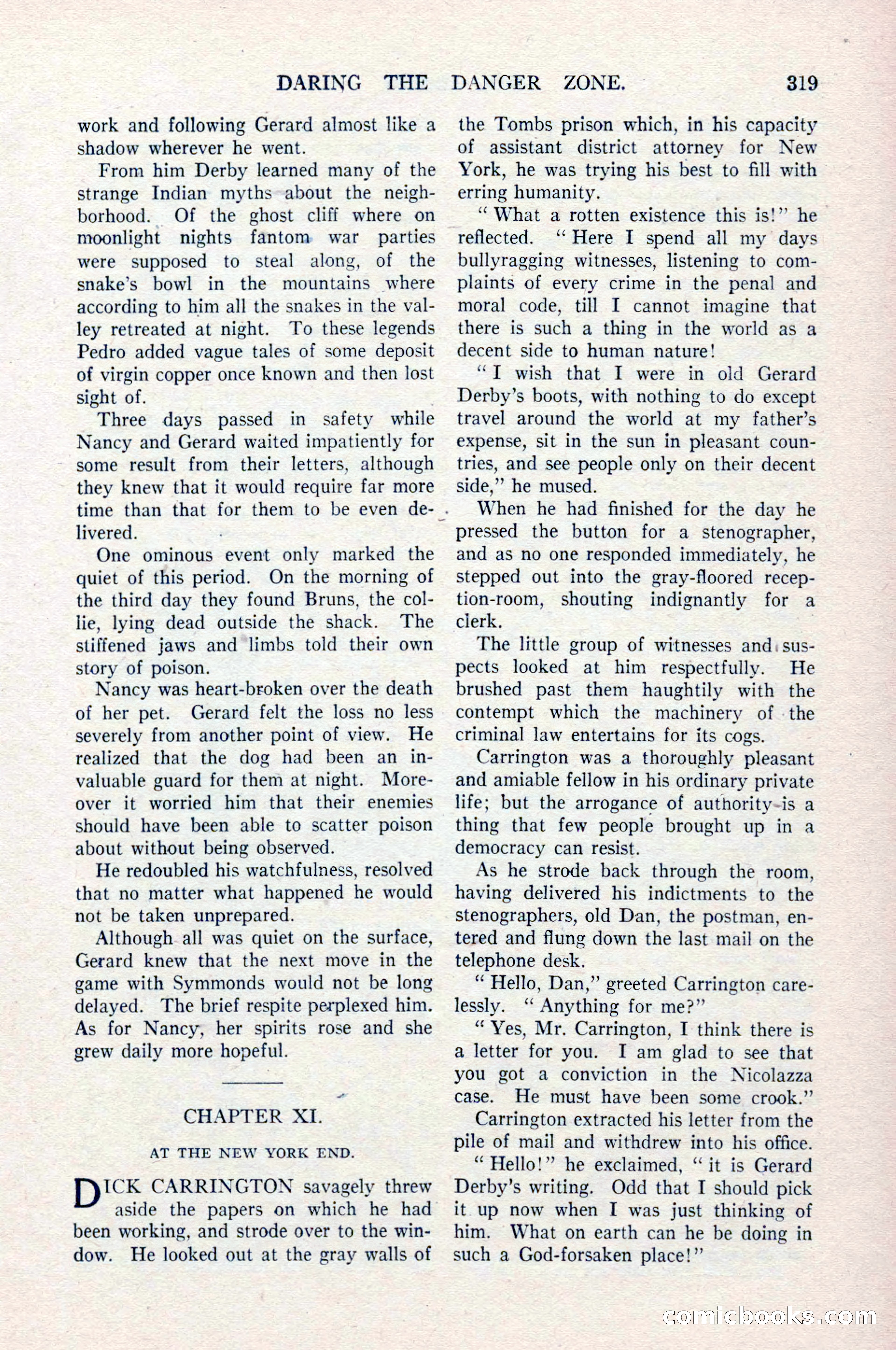
A restored page from Pulp Fiction, 1917. Page through the whole issue in the reader above.
📄 Transcribed text from this page (OCR, searchable)
Machine-transcribed from the original scan — historical spelling and the odd misread are preserved.
DARING THE DANGER work and following Gerard almost like a shadow wherever he went. From him Derby learned many of the strange Indian myths about the neigh- borhood. Of the ghost cliff where on moonlight nights fantom war parties were supposed to steal along, of the snake’s bowl in the mountains where according to him all the snakes in the val- ley retreated at night. To these legends Pedro added vague tales of some deposit of virgin copper once known and then lost sight of. Three days passed in safety while Nancy and Gerard waited impatiently for some result from their letters, although they knew that it would require far more time than that for them to be even de- . livered. : One ominous event only marked the quiet of this period. On the morning of the third day they found Bruns, the col- lie, lying dead outside the shack. The stiffened jaws and limbs told their own story of poison. Nancy was heart-broken over the death of her pet. Gerard felt the loss no less severely from another point of view. He realized that the dog had been an in- valuable guard for them at night. More- over it worried him that their enemies should have been able to scatter poison about without being observed. He redoubled his watchfulness, resolved that no matter what happened he would not be taken unprepared. Although all was quiet on the surface, Gerard knew that the next move in the game with Symmonds would not be long delayed. The brief respite perplexed him. As for Nancy, her spirits rose and she grew daily more hopeful. CHAPTER XI. AT THE NEW YORK END. ICK CARRINGTON savagely threw aside the papers on which he had been working, and strode over to the win- dow. He looked out at the gray walls of ZONE, 319 the Tombs prison which, in his capacity of assistant district attorney for New York, he was trying his best to fill with erring humanity. “What a rotten existence this is!” he reflected. ‘‘ Here I spend all my days bullyragging witnesses, listening to com- plaints of every crime in the penal and moral code, till I cannot imagine that there is such a thing in the world as a decent side to human nature! ‘““T wish that I were in old Gerard Derby’s boots, with nothing to do except travel around the world at my father’s expense, sit in the sun in pleasant coun- tries, and see people only on their decent side,” he mused. When he had finished for the day he pressed the button for a stenographer, and as no one responded immediately, he stepped out into the gray-floored recep- tion-room, shouting indignantly for a clerk. The little group of witnesses and: sus- pects looked at him respectfully. He brushed past them haughtily with the contempt which the machinery of the criminal law entertains for its cogs. Carrington was a thoroughly pleasant and amiable fellow in his ordinary private life; but the arrogance of authority-is a thing that few people brought up in a democracy can resist. As he strode back through the room, having delivered his indictments to the stenographers, old Dan, the postman, en- tered and flung down the last mail on the telephone desk. “ Hello, Dan,” greeted Carrington care- lessly. ‘ Anything for me?” “Yes, Mr. Carrington, I think there is a letter for you. I am glad to see that you got a conviction in the Nicolazza case. He must have been some crook.” Carrington extracted his letter from the pile of mail and withdrew into his office. “Hello!” he exclaimed, “‘ it is Gerard Derby’s writing. Odd that I should pick it up now when I was just thinking of him. What on earth can he be doing in such a God-forsaken place!” CORMMICLOOOK (C@)